
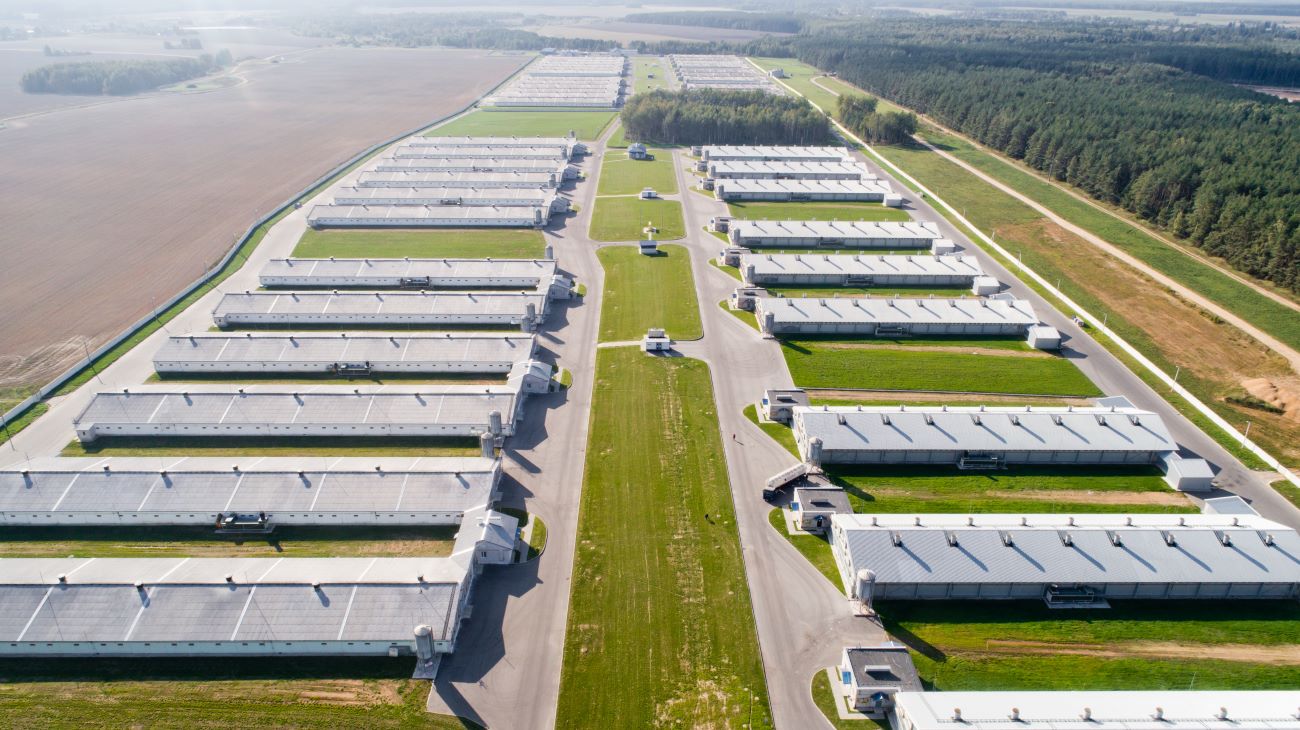
©Anton Zolotukhin/Shutterstock Industrial Poultry Farm.
I recently visited a pig farmer at Benso with our Chief Technical Officer and we had a very lengthy conversation with him (the pig farmer). Upon our conversation, the farmer complained bitterly about how difficult it was for him to find farmhands to work on his farm and worst of all, the ones (farmhands) he could get wouldn’t stick around for even a year.
Hearing this, I felt sad for the farmer of course, so I decided to find out the root cause of the matter. I went to speak to one of the farmhands and asked him how much he was receiving monthly as wages. To my surprise, it turns out he was receiving only GH₵ 450 per month without any form of Social Security (SSNIT) contribution from his employer. Upon further investigation, I found out that there were some small scale mining activities (galamsey) going on in the area and this was a real eye-opener.
Even though these galamsey operations are very risky for the obvious reasons, most people will still prefer to do a job where they could potentially make as much as GH₵ 100 in a day than to toil all day and make a measly GH₵ 450 per month.
Without further ado let’s delve straight into some of the very good reasons why you should pay your farmhands an above-average salary.
- To attract top talent: Assuming you are a poultry farmer, you’d realize that certain aspects of the business are quite technical. For instance in administering certain drugs or vaccines, certain calculations have to be made and if your farmhand isn’t smart enough to make such calculations, you could end up with unusually high mortality rates or decreased meat and egg production rates. If you offer wages between GH₵ 600 and GH₵ 800 per month depending on which part of the country your farm is located, you a very likely to attract someone who has graduated from an agricultural training college to work for you but if you offer very low salaries, say between GH₵ 350 and GH₵ 500 be rest assured that you’ll struggle to find yourself any qualified individual to assist you with your farming operations.
- Farmhands will stick around longer: More important than being able to attract top talent to your farm is your ability to retain them. For instance, in the current climate where there is high unemployment, you could still manage to employ reasonably skilled talent for very low pay. But what happens when you employ someone who is unhappy and struggles to meet his/her basic needs? They won’t give their 100% when they are working because they are probably spending more time looking for a job with better prospects than focusing on making your farm successful. Eventually, they will leave your farm and you will be left with the task of rehiring another employee and training him/or her. The advantage of keeping farmhands long-term is that they fully understand the systems and how things are done in your establishment hence productivity is higher but when you always have to rehire and train employees, you know that a lot of valuable time and money will be lost.
- More dedication to work: When you pay your workers a higher salary you can expect higher output and commitment from them. Normally, farmhands who are well-compensated go the extra mile in certain situations. For instance, in a poultry farm, a well-compensated farmhand may notice that some of the birds are unusually inactive. He or she would quickly separate the suspect birds from the rest of the stock and carry out further investigations. A negligent and poorly paid farmhand could ignore these signs and if the problem happened to be an infection in the birds, the problem could spread to the rest of the flock causing decreased production of eggs or meat.
- Reduced Incidence of Theft: Another problem of paying your workers poorly is, of course, they may try to steal from you to make up the difference in their lack of financial stability. You’ll be surprised that certain situations may tempt otherwise good people to engage in unethical activities so to greatly reduce or eliminate the likelihood of theft on your farm, you can do well to pay your workers a livable wage.
 Pkom
Pkom 
Quite useful and informative.
LikeLike