
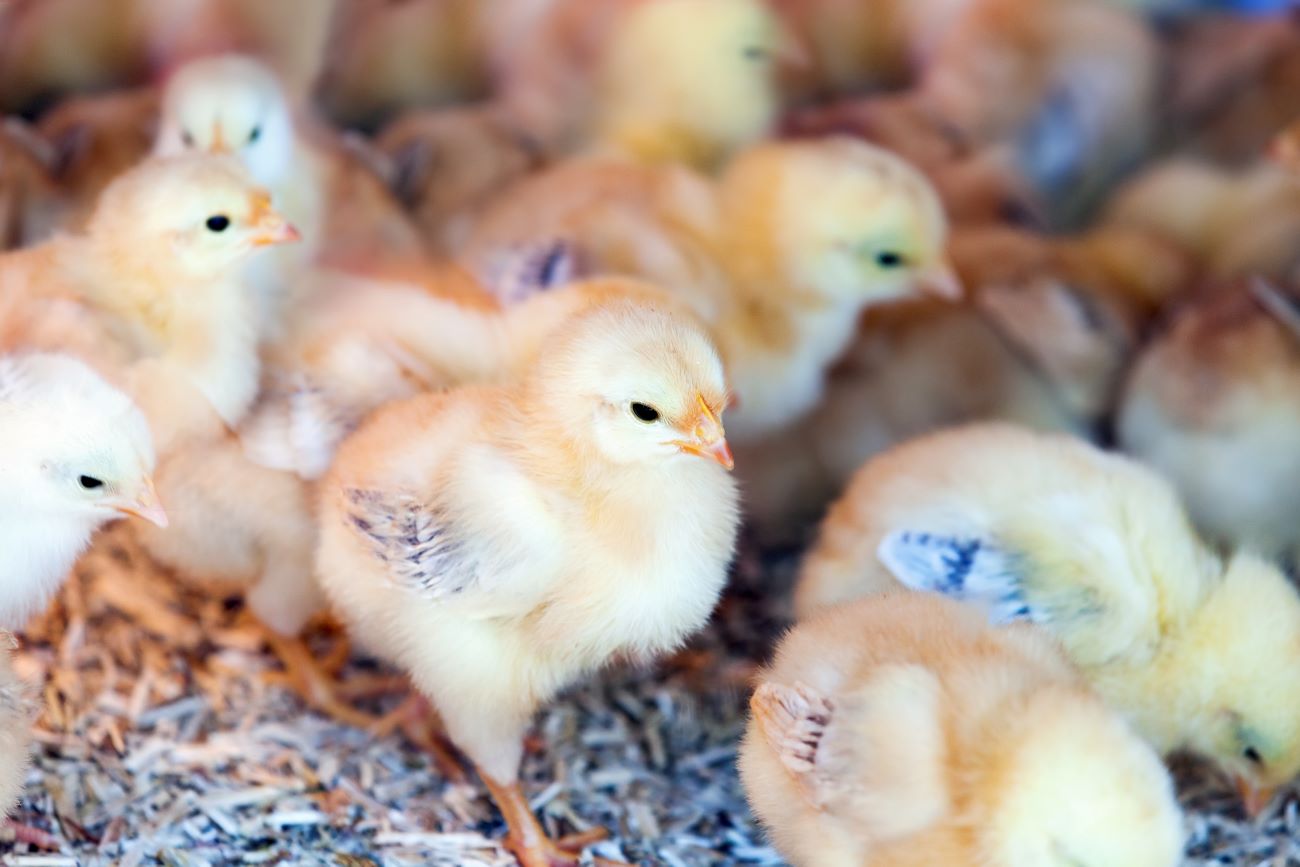
Baby photo created by bearfotos – www.freepik.com
Recently, a poultry farmer complained to me about how his poultry farm was draining him financially. Believe it or not, his farm was making progress. You must be wondering how a farm can be making absolutely nothing for its owner, but still, be considered as “making progress”. You’ll soon find out why.
Now, let’s assume you raised GH₵ 112,000 to start a 1000-layer farm. This amount was able to cover your farm for the first five months since you needed GH₵ 75,000 to purchase fixed assets and GH₵ 37,000 to cover operating expenses. At this point, you are very excited because your birds have started to lay eggs, but there is a small problem. In the initial stages, not all your birds will be laying eggs, so you may have to wait another three months before your farm reaches its full potential in terms of revenue generation. Assuming within these three months, revenue from the sale of eggs is GH₵ 14,480 and expenses are GH₵ 31,396.08, you would need to invest another GH₵ 17,000.00.
Now, imagine if you earned GH₵ 3,000 per month from your job, you would face some financial struggle. This is because even if you chose to plough all of your monthly salary into the farm you would only be able to cover just GH₵ 9,000 of the extra GH₵ 17,000 required to keep the farm running.
Even though you might have accumulated debt to your eyeballs by this time, your farm would have made significant progress because it could be making monthly profits of around GH₵ 2,400 on average from the 8th month to the 11th month.
At this point, there is the likelihood that the demand for your products will be well beyond what you supply so you may decide to bring in another 500 day-old chicks at the beginning of the 12th month. The extra 500 day-old chicks will require feed, water, medications, etc. Also, since these new birds would not be mature enough to lay eggs, revenue from the older birds would be used to cater for the new ones hence we assume that you would break even for the 12th month.
To sum everything up, in the first year, you can project a total revenue of GH₵ 82,880 and expenses of GH₵ 91,106. This means your farm would have made a loss of GH₵ 8,226.
Fast forward to year 2, you still have 1,500 layers. However, the 500 layers that would be added later on in the first year will start laying eggs in month 4 of the second year. Again, you must understand that keeping layers for eggs will not be perpetually economically viable, therefore, you will have to sell off the first batch of 1000 layers as spent layers latest by the end of December. In anticipation of the sale of spent layers, it would make sense to order 1000 new day-old chicks around the 6th month so you can replace those that are going to be sold. Due to this, total revenue for the second year is projected to be GH₵ 207,520, while expenses are expected to be GH₵ 233,000. Therefore, a loss of GH₵ 25,480 is expected.
Notice that even though back-to-back losses are were recorded for years 1 and 2, total revenue grew by 150% from year 1 to year 2. Furthermore, going into year 3, 1500 birds would be laying eggs and this could yield a monthly profit of GH₵ 4,500.
In a nutshell, you can tell your farm is progressing if there is significant revenue and bird-population growth. However, this progress may come at a price because looking at the example illustrated in this article, the amount of money required to start with 1000 birds alone is well over GH₵ 100,000. You must also note that, whenever there was expansion (i.e. addition of new birds), I only spoke about the operating expenses, however, in reality, you may have to expand your structure, purchase more feeders, drinkers, etc. This would mean that in two years, the total amount of money that would need to be invested could well surpass GH₵ 200,000.
It would be painful to know that your farm is making significant progress, but you don’t have the capital to keep it running. One way to prevent this from happening is to write a good business plan to guide you on the correct farm capacity for your budget. Having challenges writing a good business plan for yourself? Worry no more. Contact us for your professionally drafted business plan on poultry farming to increases your chances of success.
 Pkom
Pkom 