
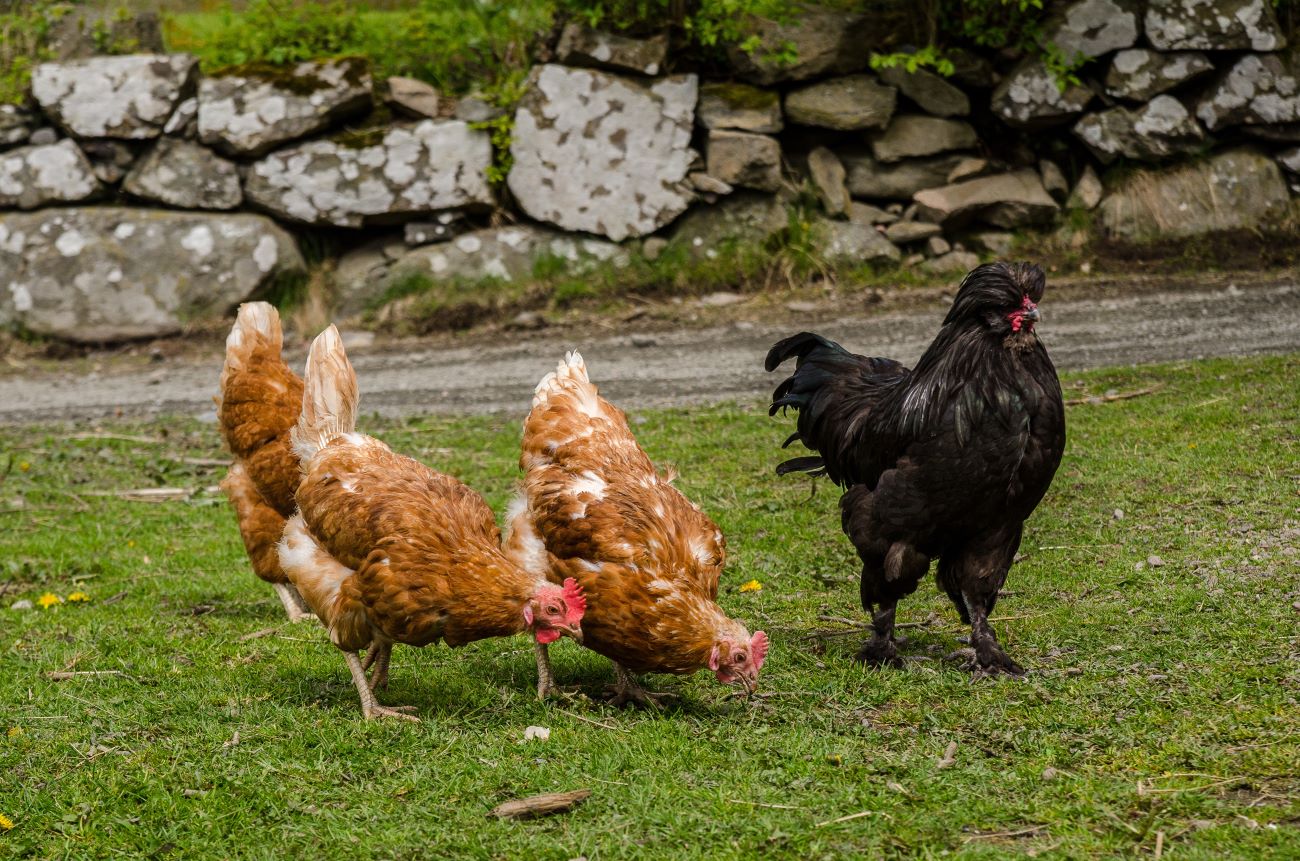
Chicken farm photo created by wirestock – http://www.freepik.com
So, I recently made a post on Facebook asking Ghanaian poultry farmers what they need to do to achieve success. And two main points were raised:
1. Farmers should grow and prepare their own feed.
2. Farmers should deal directly with consumers.
Now, I will analyze the various points raised and look at their merits and demerits and see how farmers can apply the suggestions to improve their operations.
On Farmers Growing and Preparing Their Own Feed:
Let’s take a look at farmers growing and preparing their own feed. Cereal grains usually make up 60-70% of chicken feed for broiler (The proportion is higher for layers). Maize, wheat, barley and Sorghum are examples of cereals used for poultry feed production. However, in Ghana, maize is more widespread, so it is usually the main carbohydrate component of the poultry feeds. So for every 50kg of chicken feed, let’s assume maize comprises 35Kg. A farmer rearing 1000 egg-laying birds will have to feed his birds with at least 100kg of feed every day, assuming the birds are above six months old.
So, if the farmer were to keep his 1000 birds for 14 more months after they turn six months old, he would need at least 27.44 metric tons of maize to adequately feed his birds for that period. Now, let’s assume that 1 acre of land can yield 3.5 metric tons of maize. This quantity of maize can’t even take care of the birds’ carbohydrate requirements for two months. So, if you had 1 acre of land, would you rather use it to potentially rear 8,000 birds? Or you would rather use the 1-acre of land to cultivate maize and rear the birds in your bedroom? The choice is yours.
Asking individual farmers to cultivate their own raw materials for feed production may not be very smart, but it is a different story when farmers come together to do so. Maybe, the Poultry Farmers’ Association of Ghana might task its members to come up with a certain monthly contribution which will be accumulated and invested into a huge piece of land for maize cultivation (Maybe 1000s of acres, who knows). In addition to the land, they may use some of the funds to set up an ultramodern feed production facility. Of course, asking poultry farmers to contribute to mass preparing their own feed is easier said than done, but at least, this is a far better suggestion than expecting every individual farmer to cultivate and manufacture his or her own feed.
On Farmers Dealing Directly With Consumers:
Finding the right market for products, especially eggs, is one issue facing many poultry farmers in Ghana. Usually, most poultry farmers in Ghana produce the eggs, accumulate them and then sell them off to middlemen, who then sell them off to end-users or consumers. Around 2020, most farmers found this marketing strategy ok, because feed prices were relatively stable, so they were able to make decent profits. However, from 2021 to date, feed prices have been increasing at a very alarming rate. To put things into perspective, around November 2020, you could get a 50kg Layer mash for GH₵ 93. As of writing this article, the price for layer mash can go as much as GH₵ 180 (A 100% increase in less than two years).
You may be thinking that the farmers can just increase the price of their eggs to offset rising feed prices. However, things are not as simple as they seem. Assuming in a particular month, you are able to sell 22.39 crates of eggs for GH₵ 26 each daily on average, your total daily revenue would be GH₵ 582.14. Furthermore, 2.21 bags of layer mash may have been purchased at GH₵ 180.00 each, taking feeding costs to GH₵ 397.80. Let’s assume the rest of the expenses amount to GH₵ 74.70. This would take the total daily expenses (including feed) to GH₵ 472.50. Hence your average daily profit is GH₵ 109.64. Now, if the cost of the layer mash is increased to GH₵ 185.00, the total daily expenses now become GH₵ 483.55 (profit = GH₵ 98.59). Notice how the profit has dropped by 10.1% just by feed prices increasing by GH₵ 5.00 per bag. Given this, the sensible thing you should do is to increase the price of your crate of eggs by GH₵ 0.50 (Gps 50). However, since middlemen are very sensitive to price changes, they may decide to look for a farmer offering cheaper prices. And they may find one who is willing to allow his daily profit to drop by 10%, which could put you in a tight spot. So you can imagine if feed prices increase three times in one month. You’ll very likely face financial struggles if your customers are not willing to accept increased prices from you.
But what if you decide to sell just 15% of your daily egg output directly to consumers? Assuming you sell three crates for GH₵ 30.00 each, your daily revenue now becomes GH₵ 594.14. As you can see, maintaining the price for your middlemen customers wouldn’t have any negative impact on your finances because the retail sales offset the reduction in profits from the middlemen (GH₵ 594.14 – GH₵ 483.55 = GH₵110.59). Hence, with this strategy, you can maintain your profit margin or even improve it while at the same time keeping your core customers happy.
Ideally, you should try and sell all your eggs directly to end consumers as this method is guaranteed to fetch you higher profit margins. However, some farmers have rightly pointed out that it is a bit stressful to sell all your eggs on your own. This is why I have pointed out earlier that even if you manage to sell 15% of your products through this method, you are good to go.
If reading this article piqued your interest in starting your poultry venture, it will be in your best interest to write a good business plan. Even if you don’t necessarily have the time to write your own, don’t worry. Just send us a WhatsApp message. And we’ll draft a professional business plan for you at a very reasonable price.
 Pkom
Pkom 