
Food photo created by tawatchai07 – www.freepik.com
Have you ever wondered why your competitors’ products may be significantly cheaper than yours, yet they continue to make massive profits margins? During the recent hike in chicken feed prices, there were calls to enforce a fixed pricing strategy for all Ghanaian poultry farmers. Despite the increase in feed prices, larger poultry farms were still charging relatively lower prices for their eggs.
This forced some smaller farmers to attempt replicating the low-price strategy to compete with their larger counterparts (this, of course, was a wrong decision). As you’d imagine, many small-scale poultry farmers had to close down their farms since it was unsustainable for them to keep charging extremely low prices while the cost of production kept skyrocketing. With that out of the way, let’s delve straight into some reasons why larger-scale operations almost always incur a relatively lower cost per unit production.
First of all, let’s assume in your area, the least amount of land one can purchase is 2 plots which cost around GH₵ 40,000.00. Now, these two plots of land can be used to rear more than 4,000 layers (assuming you are utilizing the deep litter system). But the problem is the capital you have may only allow you to rear 200 layers. Therefore, it would take longer for you to make a return on your investment since both you and someone who could potentially make 20 times your revenue is spending the same amount of money. To put things into perspective, one farmer is using two plots of land to produce 50,000 eggs (for 200 layers) in a year while the other is producing 1,000,000+ eggs (for 4000 layers+) in the same period.
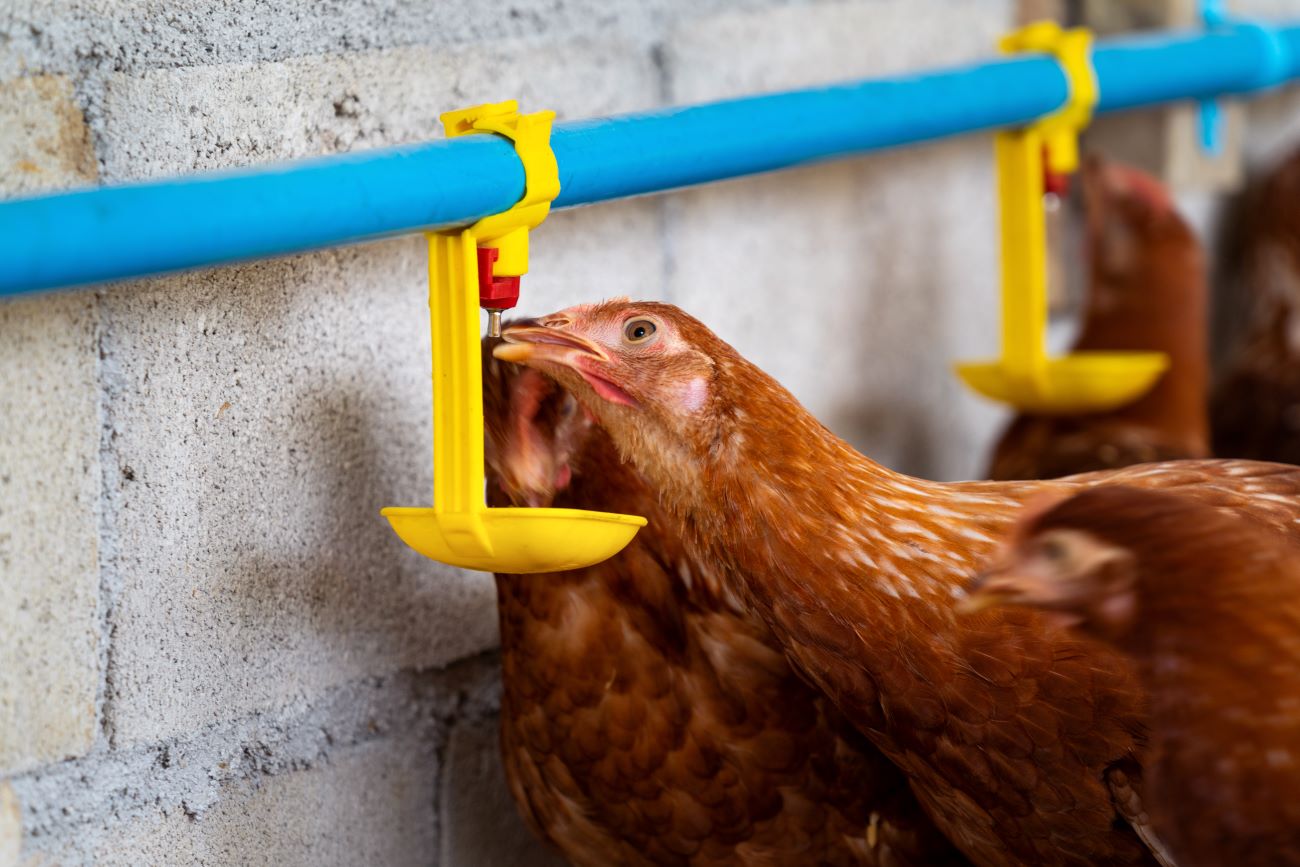
Another reason why a bigger farm may incur fewer expenses per product produced is automation. For instance, a smaller farmer may be using manual drinkers for his birds. Therefore, he may need an employee to fill up the drinkers daily and keep them clean by washing them. However, a larger farming operation could just invest money upfront to purchase a water tank and use an automated water delivery system.
This would eliminate the need for constant filling of drinkers and washing them. For instance, a farm manager running a 5000-layer capacity farm could decide to invest GH₵ 25,000 to set up an automated borehole and water delivery system. GH₵ 25,000 may look like a pretty steep amount to spend. However, considering that 1,250,000 eggs can be produced by such a farm in a year, this is a very good investment.
Over five years, it is possible that this farmer would have produced 6.25 million eggs translating to GH₵ 0.004 spent per egg produced (almost nothing). Meanwhile, a smaller farmer may not necessarily have such an amount upfront, so may decide to hire someone to perform this same task. If the farmer had to pay even GH₵ 600 per month on labour for this purpose, the amount spent in 5 years will be GH₵ 36,000, which is far more expensive than paying 25,000 upfront for the automated water distribution system.
Feed expense could sometimes be as high as 70% of your total operating expenses. For this reason, your ability to keep feed costs as low as possible will inevitably boost your profits. This is the advantage large-scale farming operations have because they have the resources to invest in their feed milling facilities and drive down the cost per bag of feed by 10% of what they would have paid for commercially prepared feed. Also, these farmers can purchase large swaths of land to cultivate the feed’s raw materials such as maize, further driving down costs. This is not to say smaller farms cannot prepare their feed, but they may not necessarily have the right personnel to mix the various components of the feed, in their right proportions.
In a nutshell, even though operating a large farm could help you cut down on cost per unit production, you must understand that a huge upfront investment would be required. That means failure to raise the required capital could result in the collapse of your farm. If you have limited resources, you need to start rearing the number of birds you can afford. Then, later on, you gradually expand your operations.
If reading this article piques your interest in starting your poultry venture, it will be in your best interest to write a good business plan. Even if you don’t necessarily have the time to write your own, don’t worry. Just send us a WhatsApp message by following this link https://wa.me/233592239127. And we’ll draft a professional business plan for you at a very reasonable price.
Are you tired of too much paperwork involved in keeping records on feed, egg collection, vaccination, mortality, profit and loss, etc.? Worry no more. We are developing a software application that simplifies poultry management. Follow this link if you are interested.
Finally, are you ready to start your dream poultry farm, but don’t know how to construct the chicken house, brood the chicks, source the right materials, etc.? Just follow this link https://wa.me/233592239127 for more inquiries.
 Pkom
Pkom 