Featured

What is Poultry Farming?

The Fundamentals

Poultry farming refers to the agricultural practice of raising domesticated birds such as chickens, turkeys, ducks, quails and guinea fowls for the purpose of meat and egg production. Chickens raised for the sole purpose of egg production are known as layers while those raised primarily for their meat are known as broilers. The White Leghorn is famous for egg production while the Cornish Cross is a popular breed of chicken for meat production. Commercial hens usually begin laying from 16 to 21 weeks of age. Meanwhile, broilers typically reach slaughter weight at 5-9 weeks of age. Furthermore, productivity of commercial chicken farms in recent times is especially high – approximately 1kg of feed is converted into 0.5kg of broiler while 1kg of feed typically produces half a dozen eggs.

Types of poultry farming systems

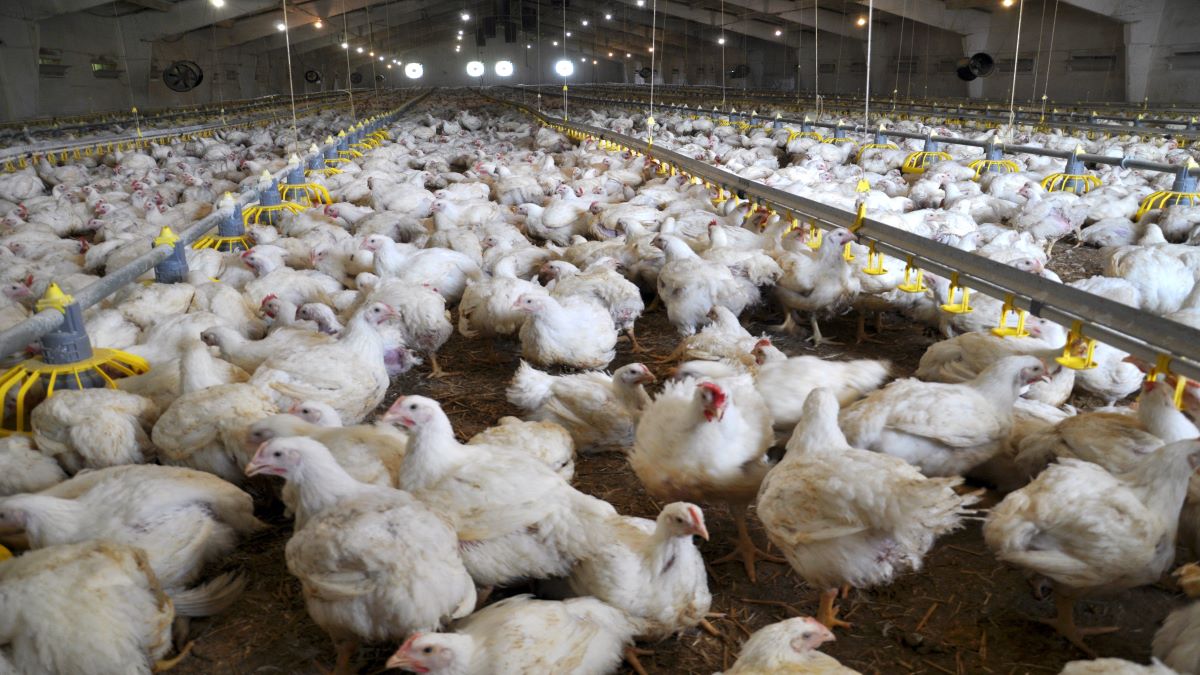
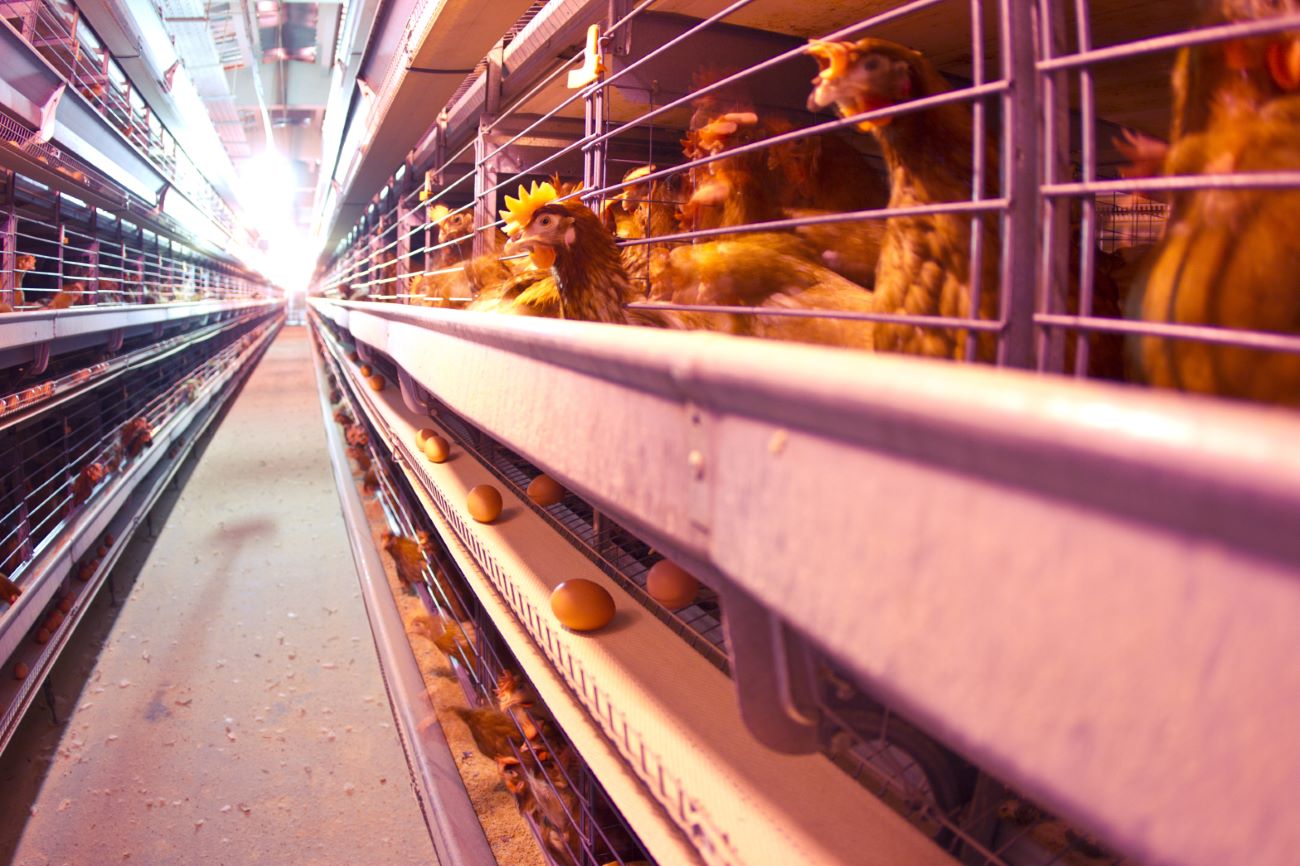
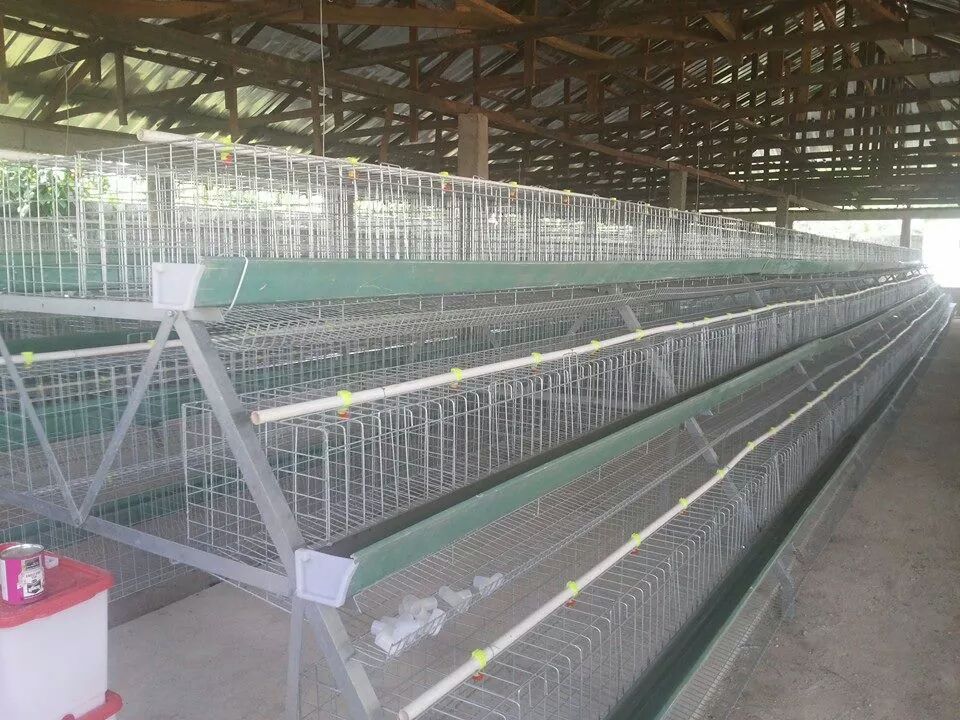
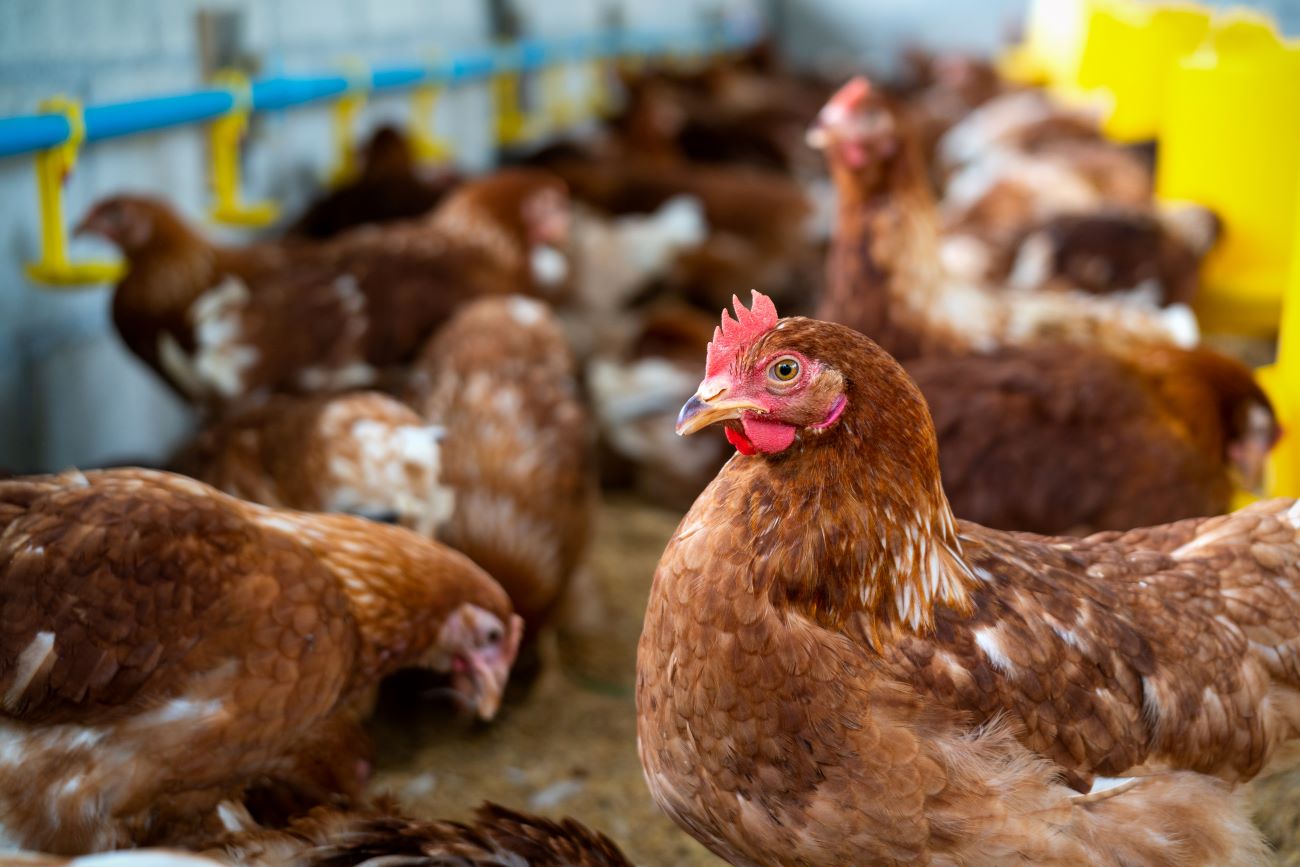
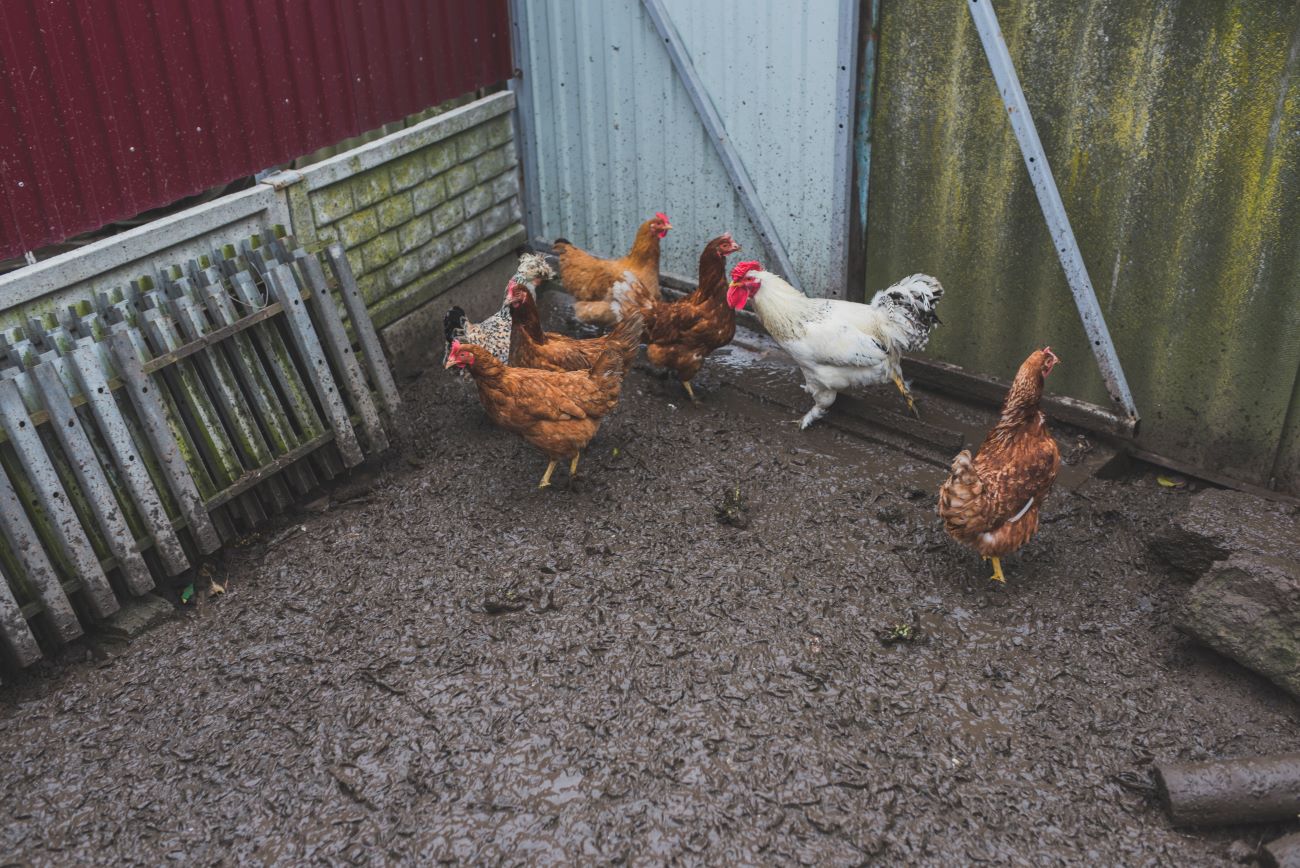
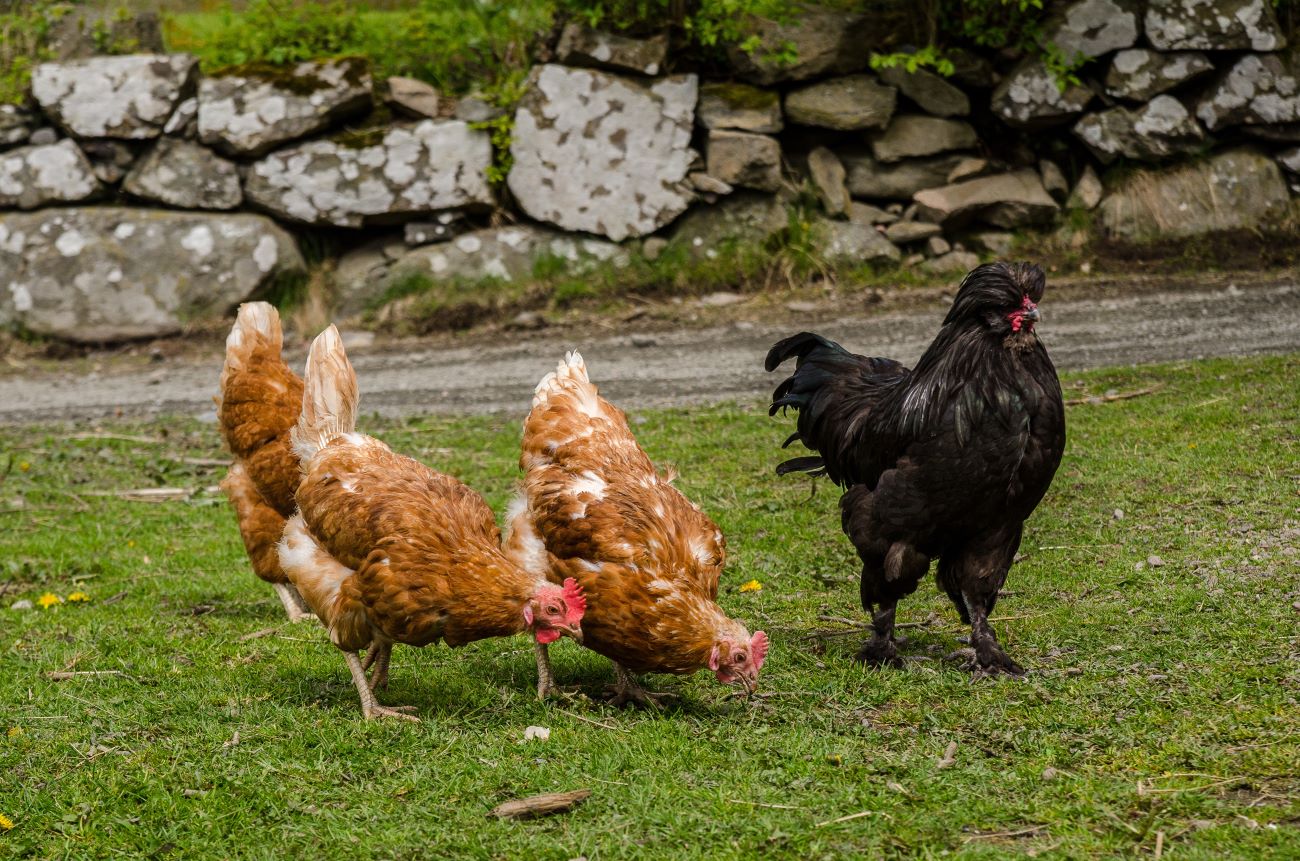
The two most popular poultry farming systems practiced in Ghana are the intensive and extensive systems. Under intensive system chickens are bred in house; under the intensive system, we have the battery cage system and the deep-litter system. The battery cage system is usually preferred for housing layers since this is the most efficient system for egg production because energy derived from feed is mainly directed towards egg production since the birds are in confinement as opposed to the deep-litter system whereby birds are allowed some freedom of movement which utilizes some of the energy derived from feed. Broilers however, are usually being raised by the deep-litter system. Extensive system of poultry production is also known as free-range whereby birds are allowed to roam freely and forage for their food – sometimes these birds are given additional feed to supplement what they had foraged in a day.

Composition of chicken feed

Feed is the highest expense in commercial poultry farming for most farmers and can cost upwards of 50% of revenues and rightly so since the quality of produce farmers obtain is as good as the nutrition they provide for their birds. Farmers can decide to purchase already prepared feed from established companies or prepare their own. Poultry feed typically comprises of maize as a carbohydrate source, soya beans a protein source, fish meal for proteins and omega 3 fatty acids and other supplementary ingredients depending on geography and availability.

Some management practices in poultry farming

Management practices in poultry include brooding, vaccination and debeaking. Brooding involves the process of providing heat necessary for the development of chicks, right from the day they are hatched to about six weeks of age. Usually commercial farmers in Ghana do not hatch the chicks on the farm but rather purchase them day-old from established hatcheries. In poultry production, one of the greatest threats to profitability and sustainability is posed by infectious diseases – diseases such as Newcastle, fowl pox and avian influenza spread very quickly and could easily wipe out all birds in the farm. By administering the right vaccines in a timely manner, the risk of some of these disease outbreaks could be significantly reduced. Debeaking is the process whereby part of the beak of a chicken is removed in order to prevent or reduce cannibalistic tendencies such as feather and vent pecking. Vent pecking is particularly very dangerous because it can lead to birds bleeding to death or disembowelment.

Marketing of farm produce

After working very hard in brooding, vaccination and undertaking all the necessary management practices, all your efforts will be vain if at the end of the day, no one buys your products – for this reason, it is very necessary that you properly research your market before you start. Typically, broilers are more difficult to sell in Ghana than eggs because majority of Ghanaians prefer to purchase frozen imported chicken since it is much cheaper than locally reared broilers but the exception is that during festive seasons such as Easter and Christmas, locally reared broilers are in high demand. Eggs on the other hand are very easy to sell and are in high demand all year round.
How Much Money Do You Need To Start a Pig Farm?

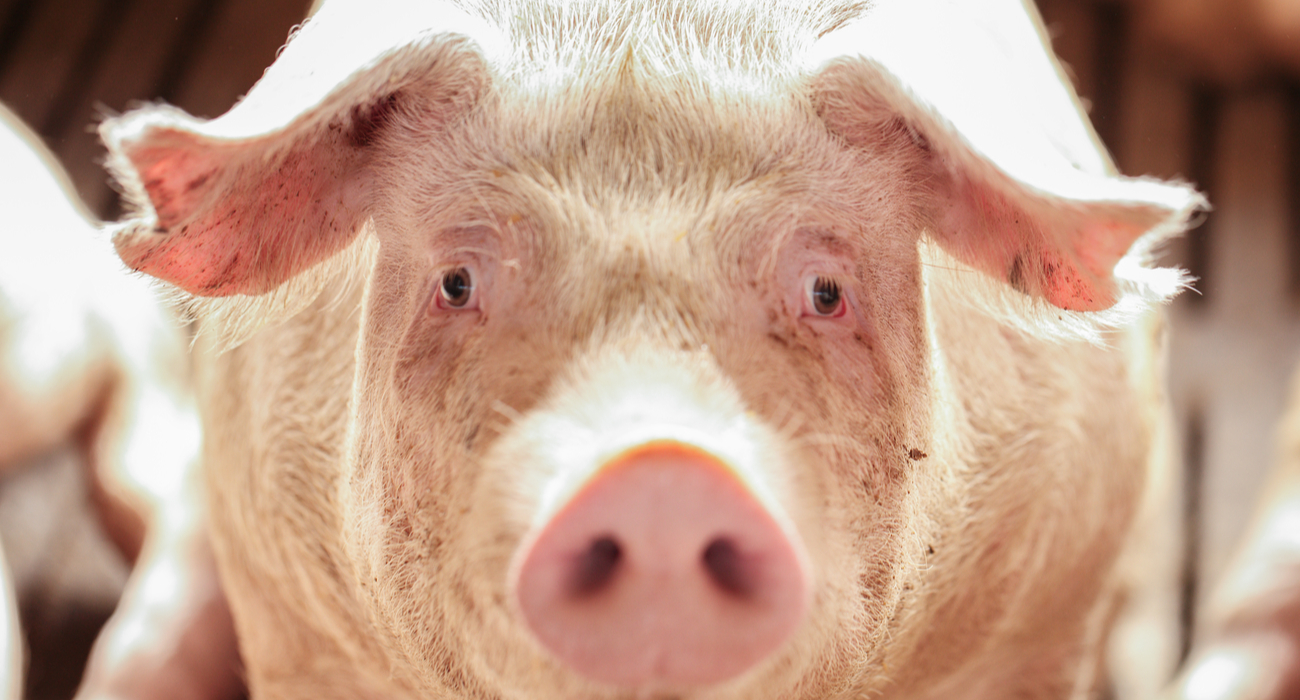
©Shutterstock Closeup of a pig on livestock farm.

Pork is considered a delicacy by many in Ghana. When pork is used in light soup, it gives the soup a nice aroma and flavour. Pork can also be roasted and served as a snack alongside a bottle of beer or any other chilled drink. This is evident by the increasing number of pubs which have roasted pork as the main menu. At this point, it is safe to say that the demand for pork is on the upward trend in Ghana hence pig farming has become a very lucrative business. Before you start raising pigs, here are some of the important things you need to consider.

Carefully determine the breed of pig and the total number you want to start with

You need to select a breed that has a high feed to meat conversion ratio and is well adapted to local climatic conditions. One of the most popular breeds which meet these criteria is the Large White breed. A sow (female pig) can give birth to as many as ten piglets at a go twice a year. Assuming you start with 20 pigs (ie. 18 sows and 2 boars), you could potentially end up with 380 pigs in just one year. These 360 extra pigs will need space therefore, you would have to expand the existing structure, spend more money on feed, water, veterinary costs and other expenses. Not fully understanding how fast pigs can breed and just starting with an unplanned parent stock means you could potentially be setting yourself up for failure.

You’ll need to acquire certain assets

You also need to acquire certain assets which would facilitate the successful running the farm. Firstly, you would need a piece of land to rear your animals. Pigs usually smell a lot therefore the land needs to be located far from a residential location. A rural setting which is accessible to a motorable road for easy transportation of your products to the market center will be very suitable. After acquiring the land, you need to put up the structure. You need to make sure that there is enough ventilation and protection from sunlight for your pigs. Water is an essential nutrient for pigs therefore you may need to construct a well and get a water tank that is capable of storing at least 2 days water requirement for the pigs. You will need to acquire a water pump to pump the water and some nipple drinkers and PVC pipes to connect the water to the sty.

Operational costs

In your day to day running of the pig farm, there are some expenses your farm is going to incur. Examples of such expenses include feed expense, veterinary services, farmhand wages and marketing expense. Before you decide on pricing your pigs you need to consider the operational expenses involved in raising an individual pig. This way, your pricing will be low enough to keep you competitive but high enough to keep your operations profitable.

Breakdown of pig farm startup costs

For this article, we are going to prepare a budget starting with 5 pigs (4 sows 1 boar) as our initial breeding stock.

1. Land: 4 sows could potentially give us 10 piglets each meaning in 10 months we could be having 45 pigs hence we need a sizeable enough piece of land and a standard 2 plots of land will do. Two plots of land in Ghana will probably cost as high as GH₵ 40.000.00 depending on your location.

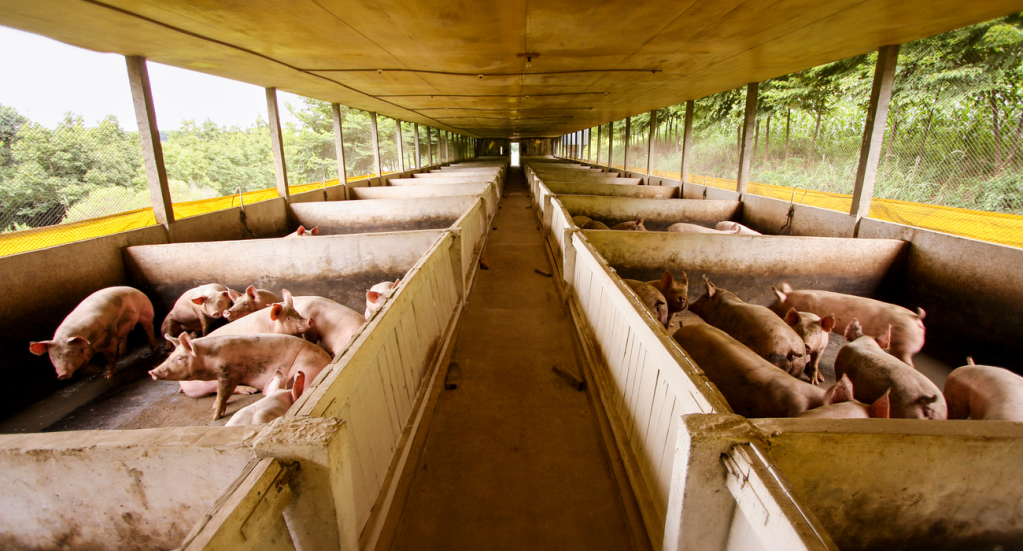
2. Structure: Since we are projecting to have a total of 45 pigs in 10 months, we can build a structure which can house 50 growers. We estimate the cost of this structure as GH₵ 70,000.00.

©Raphael Tomazi / Shutterstock: Photo of pigsty or pig structure in Curitiba, Brazil.

3. Drilling of well: Pigs require a lot of water not only to drink but also to cool themselves. This explains why they need to wallow in water or mud. To provide a clean source of water which is reliable and inexpensive, it is advisable to dig up a well. The cost of drilling a well is estimated to be GH₵ 3,000.00

4. PolyTank: For our purposes, we would purchase a 5,000L PolyTank. This will help us store water and deliver it to our pigs via pipes. This would cost us around GH₵ 4,000.00.

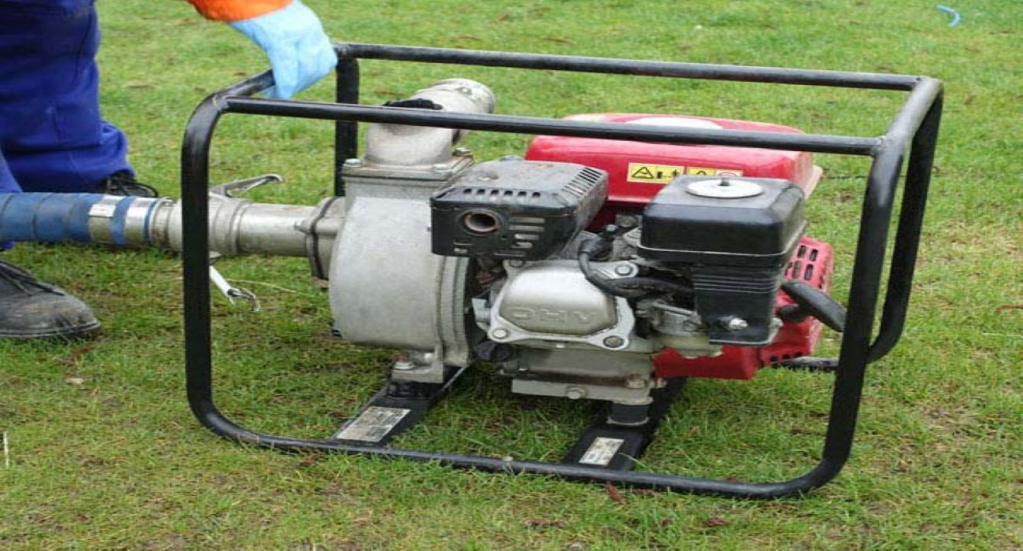
5. Water pump: GH₵ 2,000.00 could be required to purchase a water pump.

Image of a water pump: https://tinyurl.com/yyhnldgt

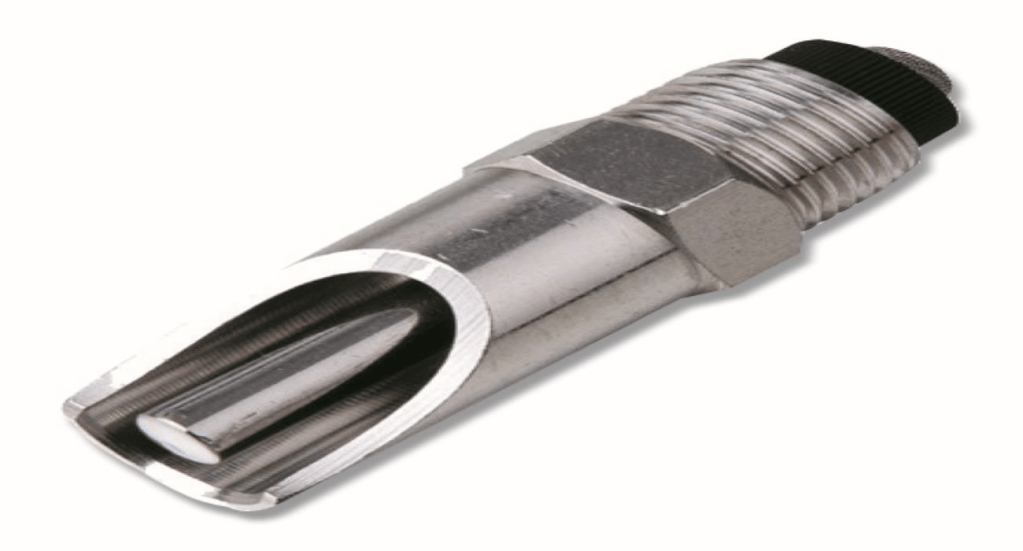
6. Nipple drinkers: We would want four pigs to share a nipple drinker and since we are projecting to have 45 pigs, we have to purchase about 11 nipple drinkers. Since one nipple drinker costs around GH₵ 15.00, 11 of them will cost us GH₵ 165.00.

Image of a nipple drinker: https://tinyurl.com/yykeebuu.

7. Breeding Stock: For breeding stock, pigs that are four months old will be chosen hence five of such pigs could cost us GH₵ 800.00 each making a total of GH₵ 4,000.00.

8. Operational Costs:

i. Feed: According to Pastured Proof, the average porker pig will consume around 2kg of feed per day from over the period from birth to slaughter (pigs typically reach slaughter weight after 6 months. Since our breeding pigs are only 4 months old we may have to wait for six months before the sows produce piglets. Assuming the average price for a bag (50kg) of pig feed is GH₵ 350.00 Our projected 45 pigs will consume GH₵ 82,320.00 in 10 months.

ii. Veterinary Services: I interviewed a veterinary expert and he told me that piglets need to be given an iron injection 3 or 4 days after birth which will cost GH₵ 5 per pig. Hence the iron shot for 40 piglets would cost GH₵ 200.00. He also added that pigs need to be dewormed once every month after they’ve been weaned. Again, the cost per pig for the deworming is around GH₵ 5 which implies that estimated cost of deworming for the 45 pig over the course of ten months is GH₵ 1450.00. In view of this, we estimate the cost of veterinary services for our projected 45 pigs at GH₵ 1,650.00 for ten months.

iii. Farmhand wages: Two farmhands are going to work on the farm and let’s assume we are going pay those monthly wages of GH₵ 600.00 each. Hence for the first 10 months, we are projecting a wage expense of GH₵ 12,000.00.

Summary

From the breakdown of the costs above, if you are thinking of starting a pig farm with four sows and a boar, chances are you may need to raise at least GH₵ 179,135.00 in the space of ten months.

If reading this article piqued your interest in starting your piggery venture, it will be in your best interest to write a good business plan. Even if you don’t necessarily have the time to write your own, don’t worry. Just send us a WhatsApp message by following this link https://wa.me/233592239127. And we’ll draft a professional business plan for you at a very reasonable price.

How Much Profit Can You Make from 200 Broilers?

©Shutterstock Farm for growing broiler chickens to the age of one and a half months.

In a previous article, we did a comparison between broilers and layers to ascertain which one is more profitable, and from our findings, we realized that each of them had its pros and cons. One very important advantage rearing broilers has over rearing layers is that broilers need a relatively short period (2 months) to reach slaughter weight whereas you need to keep layers for over 16 weeks before they start laying any eggs.

So, now that we’ve established some facts about broiler production, let’s delve straight into how much profit can be made.

Total Revenue26,000.00100%
Broiler Sales26,000.00100%
Total Cost of Day-old Broilers3,400.0013.1%
Gross Profit22,600.0086.9%
Operating Expenses
Advertising & Marketing780.003%
Farmhand Net Salaries1,200.004.6%
Utilities (water & electricity)420.541.6%
Feed 15,473.8159.5%
Vaccines90.000.3%
Miscellaneous1,796.446.9%
Total Operating Expenses19,760.7976.0%
Net Income (GH₵)2,839.2110.9%
Table 1.0 – Sample Income Statement for 200 Broilers

From Table 1.0 above, you can deduce that the 200 broilers were sold for GH₵ 130.00 each. This is why the broiler sales entry in the table has a value of GH₵ 26,000.00. Those 200 broilers sold were brought in as day-old chicks at GH₵ 17.00 each, so the total cost of day-old broilers entry has a value of GH₵ 3,400.00.

In Table 1.0, there is a gross profit entry with a value of GH₵ 22,600.00, which was obtained by subtracting the amount used to purchase the broilers when they were a day old from the total revenue. Remember, the gross profit doesn’t factor in the operating expenses – it only factors in the cost of the goods you are selling, which in this case are your broilers.

There is an advertising & marketing (you can run Facebook ads) entry that has a value of GH₵ 780.00. And also, one farmhand will be enough to take care of 200 broilers. In this income statement, we are estimating that the farmhand will take a salary of GH₵ 600.00 per month, and since the broilers reach slaughter-weight in two months, the two-month allocation for a single farmhand’s salary is GH₵ 1200.00 as indicated in the income statement.

For the utilities, the cost items that are considered here are water and electricity. 200 broilers are estimated to be able to consume 2737 liters of water in two months. And since 1000 liters of water costs around 30 per PUBLIC UTILITIES REGULATORY COMMISSION (PURC) Other Commercial rate, 2737 liters of water will cost GH₵ 82.11. Also, there is a monthly water service charge of GH₵ 100.00 by the PURC, which amounts to GH₵ 200.00 for two months. This means the amount to spend on water alone is 282.11.

For electricity, we assume that infrared bulbs will be utilized for brooding. And since one infrared bulb is enough to provide adequate heat for 200 birds, we can make the following calculations: Assuming an infrared bulb consumes 0.25kW of power when plugged in, in two weeks, which is a good duration for brooding chickens, then the energy consumption within this period is 84KWh: this value is obtained by multiplying the power consumption of 0.25KW by the number of hours the device is being used. In our case, the number of hours is 336.

Since 1 kWh costs around GH₵ 1.09 according to PURC Non-Residential electricity rate, electricity will cost GH₵ 91.56 just for using the infrared bulbs. Also, we estimate that a 15W energy-saving light bulb will consume 20.16KWh of electricity in two months, which means the cost for the electricity consumption of one energy-saving bulb is around GH₵ 21.97.

Electricity usage also comes with a monthly service charge of GH₵ 12.43, so for two months that will amount to GH₵ 24.86. This means the total cost for electricity in the two months is GH₵ 138.43. If you combine the total electricity cost with the total water cost in an earlier paragraph, you will get GH₵ 420.54, which is the value for the utilities entry in the sample income statement.

For the feed cost, we estimate that the 200 broilers will consume 2041.4kg of feed before they reach slaughter weight. Now, if 50kg of broiler feed costs GH₵ 379.00, the total cost of feed for these two months is GH₵ 15,473.81.

For the vaccine cost, in the first, second, third, and fourth weeks respectively, we give the broilers the following vaccines: 1st Gumboro, 1st Newcastle, 2nd Gumboro, and 2nd Newcastle. But in the eighth week, we give them their 1st Fowlpox vaccine. The prices of Gumboro, Newcastle, and Fowlpox vaccines for 200 birds are around GH₵ 20.00, GH₵ 15.00, and GH₵ 20.00, respectively. Hence the total cost of vaccines is estimated at GH₵ 90.00.

Finally, certain unforeseen expenses can emerge later on, and we have included a miscellaneous entry with a value of GH₵ 1,796.44 to handle those. Summing up all the operating expenses, we obtain a total operating expense value of GH₵ 19,760.79.

Finally, to calculate the net income or profit, we have to sum up the cost of broilers sold and the total operating expenses to get GH₵ 23,160.79 and subtract it from the total revenue of GH₵ 26,000.00 to give us the figure of GH₵ 2,839.21 (10.9% margin). NB: All the financial values in the table are expressed as percentages of the total revenue.

The caveat, however, regarding the raising of broilers is that if you’re unable to sell all the birds within 2 months, their operating expenses start eating into your profit. A simple mathematical analysis of the operating expenses shows that the birds consume more than GH₵ 7,000.00 worth of feed per month on average. This means if you keep the majority of the birds for 3 months+, you are going to incur heavy losses. Broilers are relatively harder to sell than eggs. This is because there is an abundance of cheap frozen imported chicken in the market which is a cheaper alternative to broilers.

In conclusion, you could be making around the sum of GH₵ 2,839.21 as profit in just two months only from the rearing and sale of 200 broilers. Now imagine if you could rear and sell not just 200 broilers but 2000 broilers three times in a year, the amount of money you could potentially make would be phenomenal, wouldn’t it?

If reading this article piques your interest in starting your poultry venture, it will be in your best interest to write a good business plan. Even if you don’t necessarily have the time to write your own, don’t worry. Just send us a WhatsApp message by following this link https://wa.me/233592239127. And we’ll draft a professional business plan for you at a very reasonable price.

Are you tired of too much paperwork involved in keeping records on feed, egg collection, vaccination, mortality, profit and loss, etc.? Worry no more. We are developing a software application that simplifies poultry management. Follow this link if you are interested.

Finally, are you ready to start your dream poultry farm, but don’t know how to construct the chicken house, brood the chicks, source the right materials, etc.? Just follow this link https://wa.me/233592239127 for more inquiries.

Reasons Why Large-Scale Poultry Farms Have Lower Production Costs

Food photo created by tawatchai07 – www.freepik.com

Have you ever wondered why your competitors’ products may be significantly cheaper than yours, yet they continue to make massive profits margins? During the recent hike in chicken feed prices, there were calls to enforce a fixed pricing strategy for all Ghanaian poultry farmers. Despite the increase in feed prices, larger poultry farms were still charging relatively lower prices for their eggs.

This forced some smaller farmers to attempt replicating the low-price strategy to compete with their larger counterparts (this, of course, was a wrong decision). As you’d imagine, many small-scale poultry farmers had to close down their farms since it was unsustainable for them to keep charging extremely low prices while the cost of production kept skyrocketing. With that out of the way, let’s delve straight into some reasons why larger-scale operations almost always incur a relatively lower cost per unit production.

First of all, let’s assume in your area, the least amount of land one can purchase is 2 plots which cost around GH₵ 40,000.00. Now, these two plots of land can be used to rear more than 4,000 layers (assuming you are utilizing the deep litter system). But the problem is the capital you have may only allow you to rear 200 layers. Therefore, it would take longer for you to make a return on your investment since both you and someone who could potentially make 20 times your revenue is spending the same amount of money. To put things into perspective, one farmer is using two plots of land to produce 50,000 eggs (for 200 layers) in a year while the other is producing 1,000,000+ eggs (for 4000 layers+) in the same period.

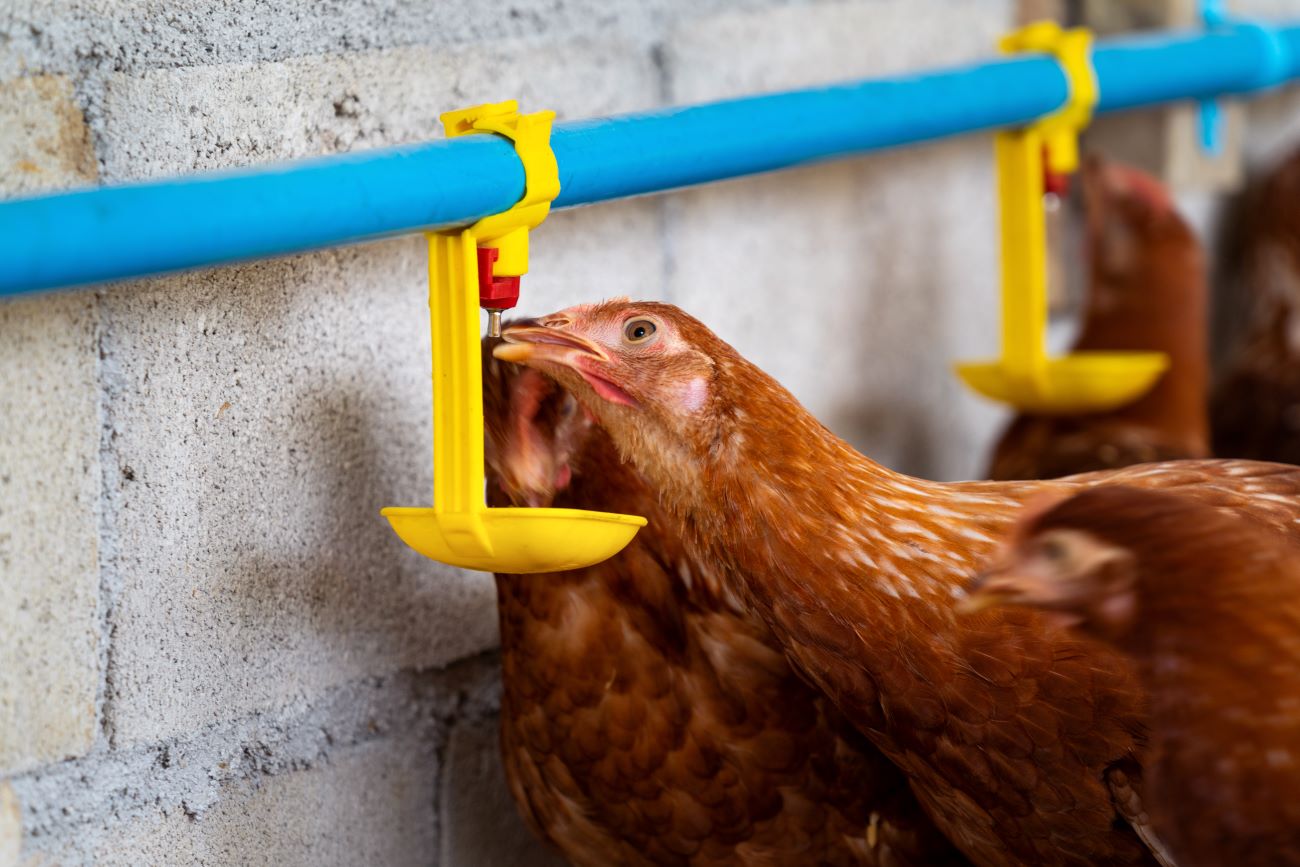
Another reason why a bigger farm may incur fewer expenses per product produced is automation. For instance, a smaller farmer may be using manual drinkers for his birds. Therefore, he may need an employee to fill up the drinkers daily and keep them clean by washing them. However, a larger farming operation could just invest money upfront to purchase a water tank and use an automated water delivery system.

This would eliminate the need for constant filling of drinkers and washing them. For instance, a farm manager running a 5000-layer capacity farm could decide to invest GH₵ 25,000 to set up an automated borehole and water delivery system. GH₵ 25,000 may look like a pretty steep amount to spend. However, considering that 1,250,000 eggs can be produced by such a farm in a year, this is a very good investment.

Over five years, it is possible that this farmer would have produced 6.25 million eggs translating to GH₵ 0.004 spent per egg produced (almost nothing). Meanwhile, a smaller farmer may not necessarily have such an amount upfront, so may decide to hire someone to perform this same task. If the farmer had to pay even GH₵ 600 per month on labour for this purpose, the amount spent in 5 years will be GH₵ 36,000, which is far more expensive than paying 25,000 upfront for the automated water distribution system.

Feed expense could sometimes be as high as 70% of your total operating expenses. For this reason, your ability to keep feed costs as low as possible will inevitably boost your profits. This is the advantage large-scale farming operations have because they have the resources to invest in their feed milling facilities and drive down the cost per bag of feed by 10% of what they would have paid for commercially prepared feed. Also, these farmers can purchase large swaths of land to cultivate the feed’s raw materials such as maize, further driving down costs. This is not to say smaller farms cannot prepare their feed, but they may not necessarily have the right personnel to mix the various components of the feed, in their right proportions.

In a nutshell, even though operating a large farm could help you cut down on cost per unit production, you must understand that a huge upfront investment would be required. That means failure to raise the required capital could result in the collapse of your farm. If you have limited resources, you need to start rearing the number of birds you can afford. Then, later on, you gradually expand your operations.

If reading this article piques your interest in starting your poultry venture, it will be in your best interest to write a good business plan. Even if you don’t necessarily have the time to write your own, don’t worry. Just send us a WhatsApp message by following this link https://wa.me/233592239127. And we’ll draft a professional business plan for you at a very reasonable price.


Are you tired of too much paperwork involved in keeping records on feed, egg collection, vaccination, mortality, profit and loss, etc.? Worry no more. We are developing a software application that simplifies poultry management. Follow this link if you are interested.


Finally, are you ready to start your dream poultry farm, but don’t know how to construct the chicken house, brood the chicks, source the right materials, etc.? Just follow this link https://wa.me/233592239127 for more inquiries.

How much money do you need to start a poultry farm?

Poultry farming is one of the most lucrative businesses, and you do not necessarily need a high-level formal education to venture into it. However, some farmers do not understand the financial implications of the business they want to start, which can be disastrous. For example, a farmer I know, who was not financially prepared, decided to rear layer birds. He soon had to find out the hard way that layers need to be fed for at least four months before he gets even a sniff of revenue. Frustrated about how his farm was draining him financially, he gave up and sold his birds when they reached three months of age.

Carefully determine the type of bird and the total number you want to start with

As you already know, poultry farming involves rearing domestic birds like chickens, ducks, guinea fowls, and turkeys. I suggest that if you are living in Ghana, start with 200 layer chicks and choose the battery cage system of production since this is a more efficient method of converting almost all the energy derived from feed into egg production.

I am advocating that you start with layers because eggs are relatively easy to sell in Ghana compared to meat. Furthermore, the number of birds you start rearing as a beginner is very important. For example, if you intend rearing layers, you should bear in mind that the birds take quite a long time before they start laying. So if you order more day-old layer chicks than you can afford to cater for, their feeding requirement may overwhelm you financially.

Some equipment will have to be purchased

After determining the number of birds to raise, you should also budget for poultry equipment. Equipment you may need includes drinkers, feeders, and heat-producing equipment for brooding. However, if you want to produce layers, you might also budget for a battery cage with a 200-bird capacity. Since drinkers and feeders are typically in-built into the battery cage system, we get to eliminate those costs.

Operational costs

Poultry farming is a very interesting business. Unlike merchandising businesses where you only purchase the inventory and then sell at your store for a profit, poultry farming goes beyond that. During your operations, you may have to pay staff salaries, vaccination and veterinary visits, and probably marketing costs as you attempt to sell off your broilers or eggs. All these come at a price, so you should be thoroughly prepared before you start.

Breakdown of poultry farm startup costs

Even though layers begin to lay eggs after four months, it is not the best of ideas to raise money that would help your farm run for just four months. This is because immediately after four months, only a small percentage of your birds will start laying eggs. Also, the few eggs produced in that period may not necessarily be of marketable size. Therefore, it is advisable to raise money that can cater to your farm for the first eight months, since by then, the revenue generated from the sale of eggs could be enough to keep the farm financially self-sufficient. With that out of the way, let’s jump straight into the breakdown (This breakdown is accurate as of the time of updating this article on the 17th of May, 2023).

  1. Land: I didn’t mention land in the introductory paragraphs because I assumed you have some backyard space at home, but if you don’t, you’ll need to purchase some. It is advisable to purchase the land outright instead of leasing it because you don’t want your landlord kicking you out when you least expected it. Depending on your location in Ghana, a decent two plots of land may cost you not less than GH₵ 40,000.00.
  2.  Structure: The structure for a 200-bird capacity farm may cost around GH₵ 12,000.00 if the deep litter system is used. However, less space is required to raise birds using the battery cage system, so the budget for the structure can be halved to GH₵ 6,000.
  3.  Battery cage: A 200-bird capacity layer cage would probably set you back in the region of GH₵ 5,000.00.

Fig 1: Image of a battery cage. Source: https://tinyurl.com/yypkabne.

  1. Drinkers and feeders: As I said earlier, feeding and drinking systems are typically in-built into battery cage systems, therefore we don’t expect to spend money on that.
  2. Heating equipment for brooding: There are numerous heating equipment to choose from, but I recommend the infrared light bulb which costs around GH₵ 100.

Fig 3: Image of an infrared light bulb

6. Day-old chicks: In Ghana, the price of a day-old chick imported from the E.U is around GH₵ 18.00 and since we plan to raise 200 birds, our total cost for this will be GH₵ 3,600.00.

7. Operational costs:

i. Feed: It is estimated that 200 layers will consume not less than 3,000 kg of feed in the first 8 months of their life so that will cost you around GH₵ 21,000.00.

ii. Salaries: Since the battery cage system is highly efficient, you will not need much labour. Therefore, only one farmhand or yourself will be required, consequently, we estimate salaries for eight months at GH₵ 4,800.00.

iii. Utilities: You are going to need electricity and water to run your poultry farm and since we are starting with only 200 birds, you should expect to spend around GH₵ 600.00

iv. Veterinary Services: Birds are living things so you’ll need to vaccinate them against diseases. For this reason, you’ll need to spend around GH₵ 150.00 for the first eight months.

Summary

From the breakdown of the costs above, it is estimated that a 200-bird layer farm will cost you at least GH₵ 81,250.00 for the first 8 months if you do not already own land. However, if you already have land, then GH₵ 41,250.00 could be enough.

If reading this article piques your interest in starting your poultry venture, it will be in your best interest to write a good business plan. Even if you don’t necessarily have the time to write your own, don’t worry. Just send us a WhatsApp message by following this link https://wa.me/233592239127. And we’ll draft a professional business plan for you at a very reasonable price.


Are you tired of too much paperwork involved in keeping records on feed, egg collection, vaccination, mortality, profit and loss, etc.? Worry no more. We are developing a software application that simplifies poultry management. Follow this link if you are interested.


Finally, are you ready to start your dream poultry farm, but don’t know how to construct the chicken house, brood the chicks, source the right materials, etc.? Just follow this link https://wa.me/233592239127 for more inquiries.

Which One is More Profitable, Poultry Farming or Pig Farming?

A lot of farmers would love to raise both chickens and pigs on a commercial scale simultaneously, however, the capital required to start both business ventures is more than what most farmers can afford. Farmers are therefore forced to choose between poultry or pig farming. Before the choice is made, the farmer would definitely want to know the venture that offers the biggest return on investment within the shortest possible time. In this article, we are going to compare the two livestock ventures based on certain parameters so that you can decide as to which one is more profitable for you.

First of all, let’s consider how long it takes to start making revenue. If you decide to rear egg-laying birds which are popularly known as layers, you will have to wait for about 18 to 20 weeks before the birds start laying eggs, however, for pig farming, you may have to wait for a year before selling your first set of pigs. For instance, if you purchase 1 boar (male pig) and 2 sows (female pigs), all at 4 months of age, you have to wait at least 2 months for the sows to reach full sexual maturity. Assuming the sows get pregnant at six months of age, it would take another 4 months before they give birth. After the piglets are given birth to they reach slaughter weight at around six months of age hence you may have to wait for as long as 12 months before you start making revenue when rearing pigs but you only need to wait between four to five months before making revenue with poultry farming when raising layers. If generating revenue quickly is what you want, then raising layers may be a better choice for you.

The next thing we would consider is how often you can make revenue and the profit margin. When you rear layers, you know that the egg production rate increases steadily till it reaches its peak and then gradually declines until keeping the birds is no longer economically viable. However, when you raise pigs, you may only be able to sell just 1 set of market-ready pigs in the first year, but you can sell two sets of market-ready pigs per year in the subsequent years. To put things into perspective, if you started with 1 boar and two sows as stated in the previous paragraph, you could have 20 pigs available for sale during the first 12 months, however in the second year, you have 2 batches of 20 pigs amounting to 40 pigs assuming you maintain the 2 sows and 1 boar breeding stock. A bigger profit margin can be obtained from selling pigs as compared to selling eggs. This is because eggs tend to have fixed prices depending on their size while pork can be sold for as much as possible depending on how well it’s packaged.

Finally, we have to consider which of the two ventures has a more ready market. Both eggs and pig products have a high demand in Ghana but generally, it is easier to sell eggs in large quantities as compared to live pigs, pork or other pig products. One of the reasons for this is that not all religions allow their adherents to consume pig products so you may struggle to make sales if let’s say, for example, you find yourself in a Muslim dominated area.

In a nutshell, both of the ventures are very profitable. In selecting the one that is more suitable for you, many different factors come to play and all of these factors need to be examined on a case by case basis to ascertain the best choice. For instance, you can charge relatively higher prices for neatly packaged pork but you need to have the required skills and patience to efficiently market them. If you want to rear layers instead, you may not need too much in terms of marketing skills to sell eggs. At the end of the day, there is no clear-cut winner as to which one is more profitable so it is best that you analyze both livestock ventures properly to find out the pros and cons before selecting the one that best suits you.

If reading this article piqued your interest in starting your poultry or piggery venture, it will be in your best interest to write a good business plan. Even if you don’t necessarily have the time to write your own, don’t worry. Just send us a WhatsApp message by following this link https://wa.me/233592239127. And we’ll draft a professional business plan for you at a very reasonable price.

Are you tired of too much paperwork involved in keeping records on feed, egg collection, vaccination, mortality, profit and loss, etc.? Worry no more. We are developing a software application that simplifies poultry management. Follow this link if you are interested.

Finally, are you ready to start your dream poultry farm, but don’t know how to construct the chicken house, brood the chicks, source the right materials, etc.? Just follow this link https://wa.me/233592239127 for more enquiries.

How Many Birds Should You Start Rearing as a Beginner?

Food photo created by tawatchai07 – www.freepik.com

People usually ask me for advice on the advisable number of birds, especially layers, to start rearing as a beginner poultry farmer. In the past, I used to advise them to begin by raising 200 layers. Because 200 layers could potentially bring in a monthly profit of GH₵ 700.00 so in my opinion, this is the minimum number of birds you should raise if you want to make any significant financial return from poultry farming. However, I have now toned down on this advice. Because for instance, if someone has GH₵ 200,000.00+ that she’s willing to lose, then it is not a bad idea for her to rear 1000 birds as a starter.

One could argue that if a massive disease outbreak occurs, the one who started with 1000 birds stands to lose more than the one who started with 200 birds. However, one must not forget that there are reasons why disease outbreaks happen in the first place. Even if you have 5000 layers and adhere to strict biosafety procedures, you aren’t going to start magically losing your birds. Also, you must ensure to vaccinate your birds on schedule and hopefully, you don’t suffer excessive mortality rates.

Furthermore, starting from a relatively large number of birds could help make your business more appealing to investors and financial institutions such as banks. For instance, if you are starting with 1000 layers, you could make as much as GH₵ 23,000.00 in a month in revenue. Now, this is more attractive than probably making GH₵ 4,600.00 revenue in a month from 200 layers. So once you’ve invested your own cash to start with 1000 birds, it would be relatively easier to gain access to funding to expand your farm even further.

Is telling poultry farmers to start small good advice? Well, it depends on the context the word “small” is used. If it is used in the context of starting with an amount of money you are comfortable losing, then that’s fantastic. But if it is used in the context of starting with a specific number of birds, say 200, the advice may be great for certain people but not necessarily good for everyone because different people have different financial situations.

Don’t get me wrong, starting a poultry farm with even as little as 200 birds is no mean feat because that could cost around GH₵ 70,000.00+ to run for the first eight months. Therefore, don’t just purchase some day-old chicks and begin raising them. Make sure you plan adequately before you start.

If reading this article piqued your interest in starting your poultry venture, it will be in your best interest to write a good business plan. Even if you don’t necessarily have the time to write your own, don’t worry. Just send us a WhatsApp message by following this link https://wa.me/233592239127. And we’ll draft a professional business plan for you at a very reasonable price.


Are you tired of too much paperwork involved in keeping records on feed, egg collection, vaccination, mortality, profit and loss, etc.? Worry no more. We are developing a software application that simplifies poultry management. Follow this link if you are interested.


Finally, are you ready to start your dream poultry farm, but don’t know how to construct the chicken house, brood the chicks, source the right materials, etc.? Just follow this link https://wa.me/233592239127 for more enquiries.

Is It a Good Idea to Rent a Poultry Farm?

Image by Freepik

Around December 2021, I had a client who I was helping with record-keeping. She’s a poultry farmer, and what I found striking about her operations is that she was renting her poultry houses. Initially, I thought renting a poultry farm was a terrible idea, but upon careful reflection, I realized there was more to this than meets the eye. So I urge you to keep reading and have an open mind while I discuss the merits and demerits of renting a poultry farm.

The farmer in question at the time had around 1,600 layers. The birds were kept in 5 separate pens. The amount she was paying for rent each month for each poultry pen was GH₵ 100.00. Meaning she was paying GH₵ 500 in total every month as rent.

Now, let’s analyze this. If you were to start a layer farm of around 1600 layers in December 2021, you probably had to spend GH₵ 15,000 (could even be more depending on your location) to acquire land and at least GH₵ 48,000 for the poultry housing. 

In total, a new farmer wanting to start raising this number of birds had to splash at least GH₵ 63,000.00 on land and housing alone (for the deep litter system of farming). We’ve not yet spoken about feed, labour, vaccines, etc.

So this begs the question: “Is renting a poultry farm a good idea?” Well, it depends. Because from the example above, spending GH₵ 500.00 monthly means it would take 126 months (10.5 years) for the monthly rent to accumulate to GH₵ 63,000.00.

To put things into perspective, if you were to start a poultry farm around that period and decided to put up your own structure, you were required to cough up an amount someone else had to pay in instalments for 10 years. However, you must note that your landlord may raise rent prices every year. Hence monthly rent may instead take 7 years and 6 months to accumulate to GH₵ 63,000.00, assuming monthly rent increases by 10% after every year. Therefore, you can clearly see that in this case, it is a good idea to rent a poultry farm.

However, what if after one year of renting the farm, the landlord decides he doesn’t want you as a tenant anymore? This can put you in a sticky situation, because you may need at least two years for your farm to be reasonably profitable. And if after one year and your rental contract or lease isn’t renewed, you may have to move all your birds out. From this perspective, it makes sense to get your own land and poultry housing to avoid unnecessary inconvenience.

It is important to understand that the need to purchase land and build poultry houses are some of the major contributing factors to why poultry farming is an extremely capital-intensive venture. Maybe, if you don’t have too much capital to start a poultry farm, you may consider renting one, as that may help reduce your startup costs. Also, make sure you and your landlord sign an agreement that would give you the option to extend your lease for another year to prevent you from being kicked out.

If reading this article piqued your interest in starting your poultry venture, it will be in your best interest to write a good business plan. Even if you don’t necessarily have the time to write your own, don’t worry. Just send us a WhatsApp message by following this link https://wa.me/233592239127. And we’ll draft a professional business plan for you at a very reasonable price.

Are you tired of too much paperwork involved in keeping records on feed, egg collection, vaccination, mortality, profit and loss, etc.? Worry no more. We are developing a mobile app that simplifies poultry management. Follow this link https://wa.me/233592239127 if you are interested.

Finally, are you ready to start your dream poultry farm, but don’t know how to construct the chicken house, brood the chicks, source the right materials, etc.? Just follow this link https://wa.me/233592239127 for more enquiries.

Which One Is More Profitable, Broilers, or Layers?

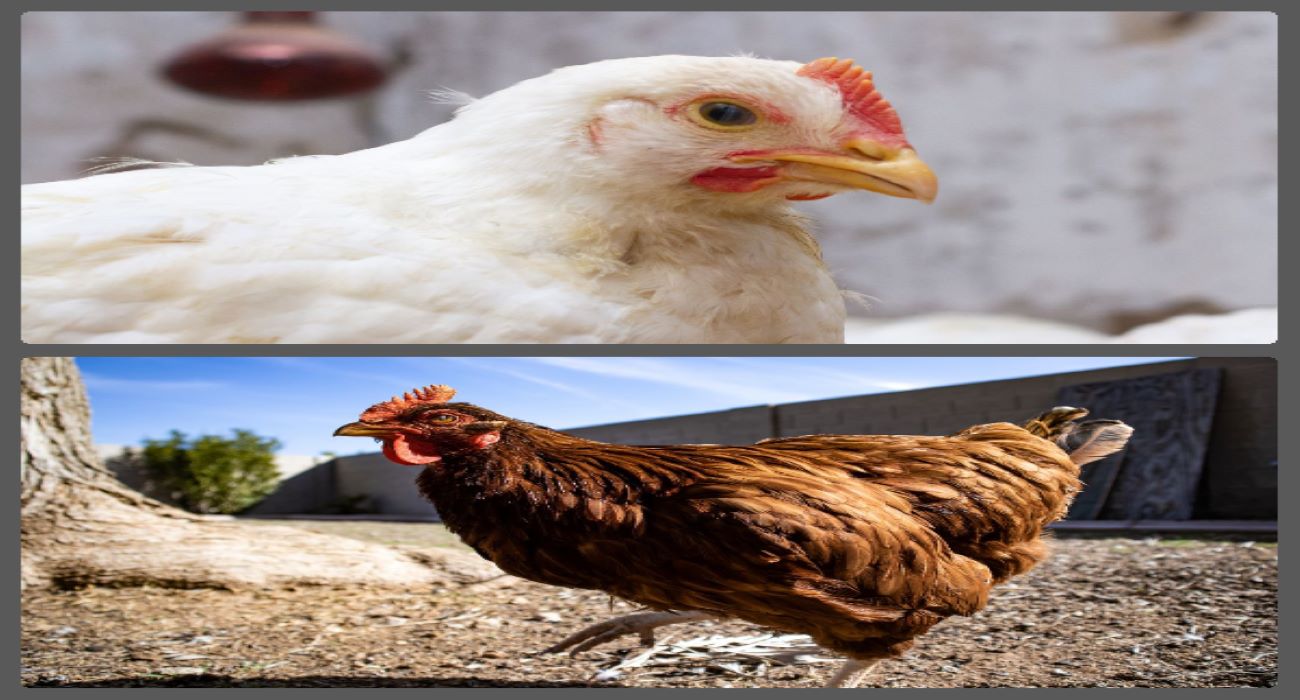
Photo Grid collage image showing a broiler on top and a layer hen at the bottom.

Poultry farming is a very profitable venture in fact, I documented four reasons why this is the case in this post, https://tinyurl.com/y7h6lhuu. There are two main reasons why people choose to rear chickens one being to produce eggs and the other being to produce meat. Usually, chickens reared purposely for the production of eggs are known as layers while those reared for meat are known as broilers. The more profitable of the two will be judged based on the following criteria.

1. Space required: Layers can be reared conveniently using the battery cage system but the same cannot be said of broilers. Even if you can rear broilers using a cage you’ll need a larger one. So this means less space is required to rear layers as compared to the same number of broilers. On this occasion, layers win so Layers 1:0 Broilers.

2. Feed: Because broilers need to make a certain weight in a relatively short period, they need to consume a significant amount of specially prepared feed which is generally more expensive than layer mash. Even though Layers take at least four months before they start laying any eggs they still consume less feed in that period as compared to that consumed by broilers in 2 months. For 200 broilers, you are probably going to spend GH₵ 9,600.00 on feed for two months while for 200 layers, you are going to spend around GH₵ 5,000.00 for the first 4 months. Therefore, layers win this round so Layers 2:0 Broilers.

3. Return on investment: Even though you are likely to spend more on broiler feed, you can recover your investment relatively quickly, since broilers reach market weight after only two months. Let’s assume you sell each of the 200 broilers for GH₵ 90.00 you make a profit of GH₵ 8,400.00 (NB: there are other expenses but in this case, we only considered feed expense of GH₵ 9,600.00) while in that same period, you make nothing from raising layers. Layers 2:1 Broilers.

4. Profit Margins: Remember in point #2 we made a profit of GH₵ 8,400.00 on the sale of broilers. Well, if we consider other expenses apart from the feed, we can further revise the profit down to GH₵ 2,000.00 since total expenses become GH₵ 16,000.00 assuming feed is 60% of all expenses. On the other hand, on average, we can expect 200 layers to bring in a revenue of GH₵ 4,200.00 and expenses of GH₵ 3,800.00 per month hence, bringing a profit of GH₵ 400.00. Even though broilers show an overwhelmingly higher profit rate, it is quite difficult to market as compared to eggs. But I still give this round to broilers. Therefore, final score, Layers 2:2 Broilers.

Conclusion

In my opinion, how one will be profitable over the other, will depend on the particular area, the demand for the products and competition. In Ghana, for instance, the market is flooded with cheap imported chicken making it difficult for local farmers to establish a foothold in the broiler industry while the local egg industry, on the other hand, faces little external competition. Even with this fact, if one properly invests in marketing and packaging, they would be able to sell more broilers so for me, I think a draw is a fair result in this contest.

If reading this article piqued your interest in starting your poultry venture, it will be in your best interest to write a good business plan. Even if you don’t necessarily have the time to write your own, don’t worry. Just send us a WhatsApp message by following this link https://wa.me/233592239127. And we’ll draft a professional business plan for you at a very reasonable price.


Are you tired of too much paperwork involved in keeping records on feed, egg collection, vaccination, mortality, profit and loss, etc.? Worry no more. We are developing a mobile app that simplifies poultry management. Follow this link https://wa.me/233592239127 if you are interested.


Finally, are you ready to start your dream poultry farm, but don’t know how to construct the chicken house, brood the chicks, source the right materials, etc.? Just follow this link https://wa.me/233592239127 for more enquiries.

 How To Succeed As a Poultry Farmer In Ghana

Chicken farm photo created by wirestock – http://www.freepik.com

So, I recently made a post on Facebook asking Ghanaian poultry farmers what they need to do to achieve success. And two main points were raised: 

1. Farmers should grow and prepare their own feed. 

2. Farmers should deal directly with consumers.

Now, I will analyze the various points raised and look at their merits and demerits and see how farmers can apply the suggestions to improve their operations.

On Farmers Growing and Preparing Their Own Feed:

Let’s take a look at farmers growing and preparing their own feed. Cereal grains usually make up 60-70% of chicken feed for broiler (The proportion is higher for layers). Maize, wheat, barley and Sorghum are examples of cereals used for poultry feed production. However, in Ghana, maize is more widespread, so it is usually the main carbohydrate component of the poultry feeds. So for every 50kg of chicken feed, let’s assume maize comprises 35Kg. A farmer rearing 1000 egg-laying birds will have to feed his birds with at least 100kg of feed every day, assuming the birds are above six months old. 

So, if the farmer were to keep his 1000 birds for 14 more months after they turn six months old, he would need at least 27.44 metric tons of maize to adequately feed his birds for that period. Now, let’s assume that 1 acre of land can yield 3.5 metric tons of maize. This quantity of maize can’t even take care of the birds’ carbohydrate requirements for two months. So, if you had 1 acre of land, would you rather use it to potentially rear 8,000 birds? Or you would rather use the 1-acre of land to cultivate maize and rear the birds in your bedroom? The choice is yours.

Asking individual farmers to cultivate their own raw materials for feed production may not be very smart, but it is a different story when farmers come together to do so. Maybe, the Poultry Farmers’ Association of Ghana might task its members to come up with a certain monthly contribution which will be accumulated and invested into a huge piece of land for maize cultivation (Maybe 1000s of acres, who knows). In addition to the land, they may use some of the funds to set up an ultramodern feed production facility. Of course, asking poultry farmers to contribute to mass preparing their own feed is easier said than done, but at least, this is a far better suggestion than expecting every individual farmer to cultivate and manufacture his or her own feed.

On Farmers Dealing Directly With Consumers:

Finding the right market for products, especially eggs, is one issue facing many poultry farmers in Ghana. Usually, most poultry farmers in Ghana produce the eggs, accumulate them and then sell them off to middlemen, who then sell them off to end-users or consumers. Around 2020, most farmers found this marketing strategy ok, because feed prices were relatively stable, so they were able to make decent profits. However, from 2021 to date, feed prices have been increasing at a very alarming rate. To put things into perspective, around November 2020, you could get a 50kg Layer mash for GH₵ 93. As of writing this article, the price for layer mash can go as much as GH₵ 180 (A 100% increase in less than two years).

You may be thinking that the farmers can just increase the price of their eggs to offset rising feed prices. However, things are not as simple as they seem. Assuming in a particular month, you are able to sell 22.39 crates of eggs for GH₵ 26 each daily on average, your total daily revenue would be GH₵ 582.14. Furthermore, 2.21 bags of layer mash may have been purchased at GH₵ 180.00 each, taking feeding costs to GH₵ 397.80. Let’s assume the rest of the expenses amount to GH₵ 74.70. This would take the total daily expenses (including feed) to GH₵ 472.50. Hence your average daily profit is GH₵ 109.64. Now, if the cost of the layer mash is increased to GH₵ 185.00, the total daily expenses now become GH₵ 483.55 (profit = GH₵ 98.59). Notice how the profit has dropped by 10.1% just by feed prices increasing by GH₵ 5.00 per bag. Given this, the sensible thing you should do is to increase the price of your crate of eggs by GH₵ 0.50 (Gps 50). However, since middlemen are very sensitive to price changes, they may decide to look for a farmer offering cheaper prices. And they may find one who is willing to allow his daily profit to drop by 10%, which could put you in a tight spot. So you can imagine if feed prices increase three times in one month. You’ll very likely face financial struggles if your customers are not willing to accept increased prices from you.

But what if you decide to sell just 15% of your daily egg output directly to consumers? Assuming you sell three crates for GH₵ 30.00 each, your daily revenue now becomes GH₵ 594.14. As you can see, maintaining the price for your middlemen customers wouldn’t have any negative impact on your finances because the retail sales offset the reduction in profits from the middlemen (GH₵ 594.14 – GH₵ 483.55 = GH₵110.59). Hence, with this strategy, you can maintain your profit margin or even improve it while at the same time keeping your core customers happy.

Ideally, you should try and sell all your eggs directly to end consumers as this method is guaranteed to fetch you higher profit margins. However, some farmers have rightly pointed out that it is a bit stressful to sell all your eggs on your own. This is why I have pointed out earlier that even if you manage to sell 15% of your products through this method, you are good to go.

If reading this article piqued your interest in starting your poultry venture, it will be in your best interest to write a good business plan. Even if you don’t necessarily have the time to write your own, don’t worry. Just send us a WhatsApp message. And we’ll draft a professional business plan for you at a very reasonable price.

How Much Money Do You Need To Start a Grasscutter Farm?

Image source: agricdemy.com

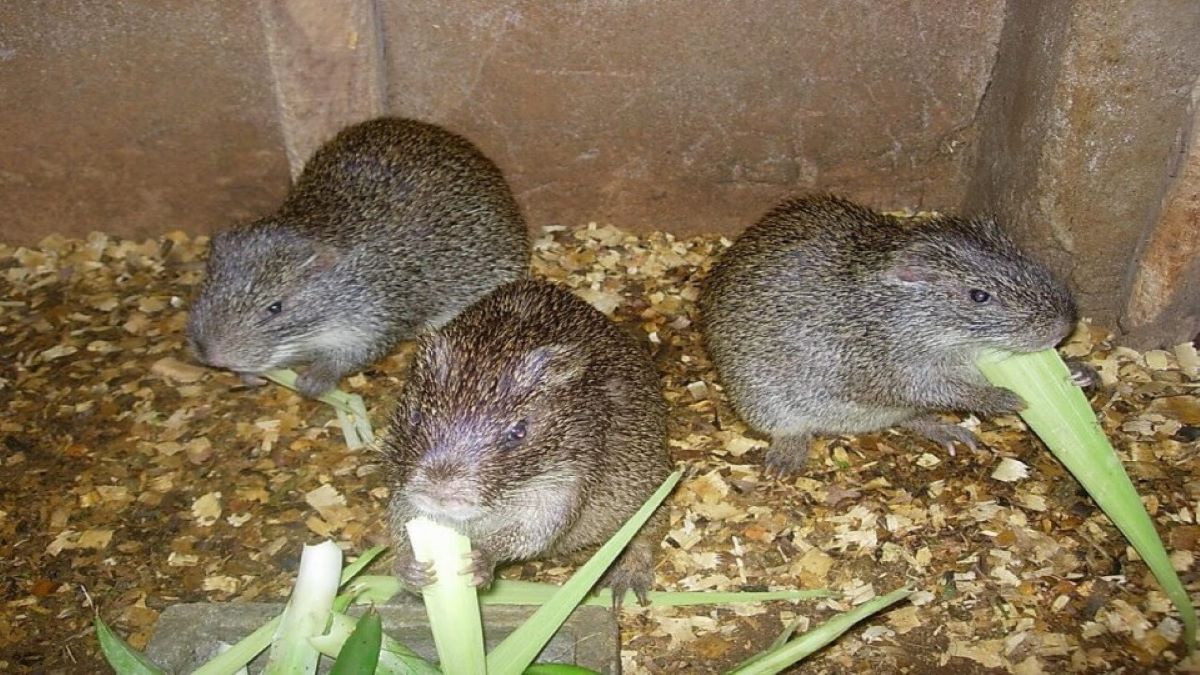
According to numerous studies, grasscutter farming is one of the most lucrative forms of livestock production in Ghana. Furthermore, many people agree that its profitability is comparable to poultry farming. Judging from how grasscutter meat is one of the most popular “bush meats” on the menu of many local restaurants (“chop bars”) in Ghana, it is not hard to see why grasscutters can be so lucrative to rear. Mind you, the meat of this animal is considered a delicacy. Therefore, their prices don’t come cheap, especially in urban areas. With a breeding stock of one buck (male grasscutter) and four does (female grasscutters), a farmer can produce as much as 40 grasscutters in a year. Hence assuming your farm experiences a 15% mortality rate, you now have 34 grasscutters you could potentially sell in a year. Therefore, assuming each grasscutter goes for GH₵ 300.00, you could make a revenue of GH₵ 10,200.00 in a year.

Now that we have understood grasscutter farming’s potential to be very lucrative, let’s jump straight into how much money you need to set up such a farm. 

NB: The intended duration of this budget is 12 months, and is also based on a breeding stock of one buck and four does.

1. Breeding stock: This is the most important aspect of the budget. The size of the grasscutter housing, amount of feed (concentrate) to be purchased and labour requirements all depend on this single aspect. For our budget, we are starting with a breeding stock of 1 male and 4 females (all at 5 months old). You can get a 5-month-old grasscutter for around GH₵ 180. Therefore, in total, our breeding stock will set us back at GH₵ 900.00.

A group of grasscutters.
Image source: nairaland.com

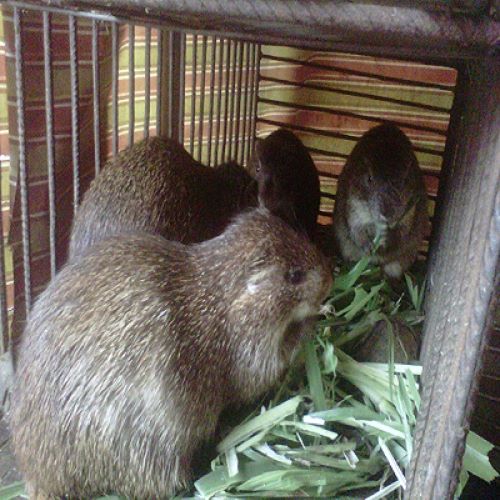
2. Cages: For this budget, we will utilize an already-made cage with about 15 rooms (the room mentioned here can accommodate a family of one sexually mature male and four sexually mature females). Remember, our breeding stock is expected to reproduce (each female can produce as many as five offspring at a go). Therefore, we need to acquire a tiered cage system that can accommodate their offspring. So for the cage, let’s budget GH₵ 2000.00.

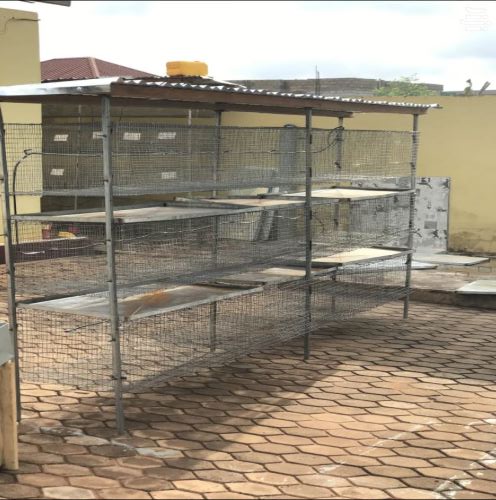
Grasscutter cage example.
Image Source: http://www.jiji.com

3. Feed: Because grasscutters feed on forage (for example, elephant grass), their feed can usually be found around your surroundings. But remember, when grasscutters are in the wild, they do not consume only grasses. They also consume sugar cane, cassava tubers, oil palm, fresh groundnut hull, etc. They consume these feeds for extra protein, minerals and vitamins. Therefore, if you are keeping grasscutters in captivity, and you feed them with only grass, they’ll likely not grow to their full potential. At the end of the 1st year, our initial breeding stock of five grasscutters may have produced an additional 20 grasscutters. Our grasscutters will consume around 389.2 kg of concentrate (feed made up of a mix of groundnuts, maize, oyster shells and wheat bran to supplement the animals’ regular grass diet). The total amount to be spent on the concentrate is expected to be GH₵ 878.00.

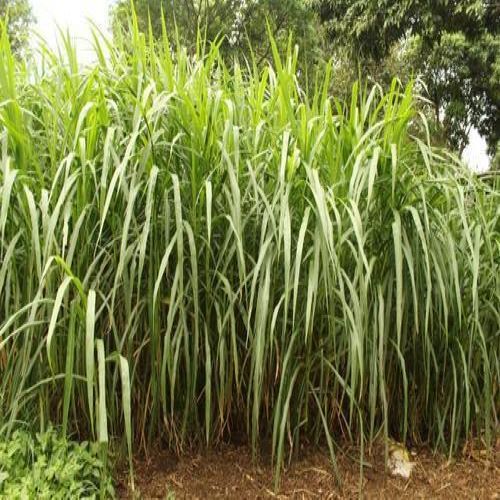
Elephant grass.
Image Source: Bing images.

4. Labour: According to research, it only takes around 10 minutes to tend to one grasscutter in a flock per day. Looking at the best-case scenario, i.e. the females get pregnant after one month of rearing them, we are going to have to wait another five months before they give birth. Therefore, in the first six months of operations, only around 50 minutes of work is required per day. But during the rest of the year, around 250 minutes of work will be required to be done on the farm since each female could produce five offspring each. Assuming you pay a worker GH₵ 2.50 for every hour of work done in the first six months, you are expected to spend only around GH₵ 375.00 on labour. For the remainder of the year, around GH₵ 1,875.00 is expected to be spent on labour. Therefore, our budget for labour for the first year will be GH₵ 2,250.00.

5. Veterinary: Grasscutters are generally disease-resistant in the wild. However, when they are being crowded on a farm, health issues may arise. So every now and then, there may be a need to visit the Veterinary Services. For the first year, we’ll set a budget of GH₵ 300.00 for this purpose.

6. Miscellaneous: During the course of production, we may encounter some unforeseen expenses. Therefore, we will set aside GH₵ 500.00 for this purpose. I didn’t include the cost of feeders and drinkers in the budget because many of these already made cages come with them (feeders and drinkers) already fixed. However, if your cage doesn’t come with them, then the miscellaneous budget may cover that cost.

In a nutshell, if you intend to start a backyard grasscutter farm with a breeding stock of one buck and four does, all you need as startup capital is around GH₵ 6,828.00 for the first 12 months. This amount could be further reduced if you take care of the animals yourself, thereby eliminating labour costs. So without labour costs, you could invest as little as GH₵ 4,578.00 to start this kind of grasscutter farm.

Now that you have an idea about the startup capital involved in starting a grasscutter farm, you may also want to know the potential returns you may obtain over five years. Contact us for a professional business plan that can provide you with this information. All you need to do is send us a WhatsApp message or call us on +233592239127.