Is It Still a Good Idea to Start a Poultry Farm in Ghana?

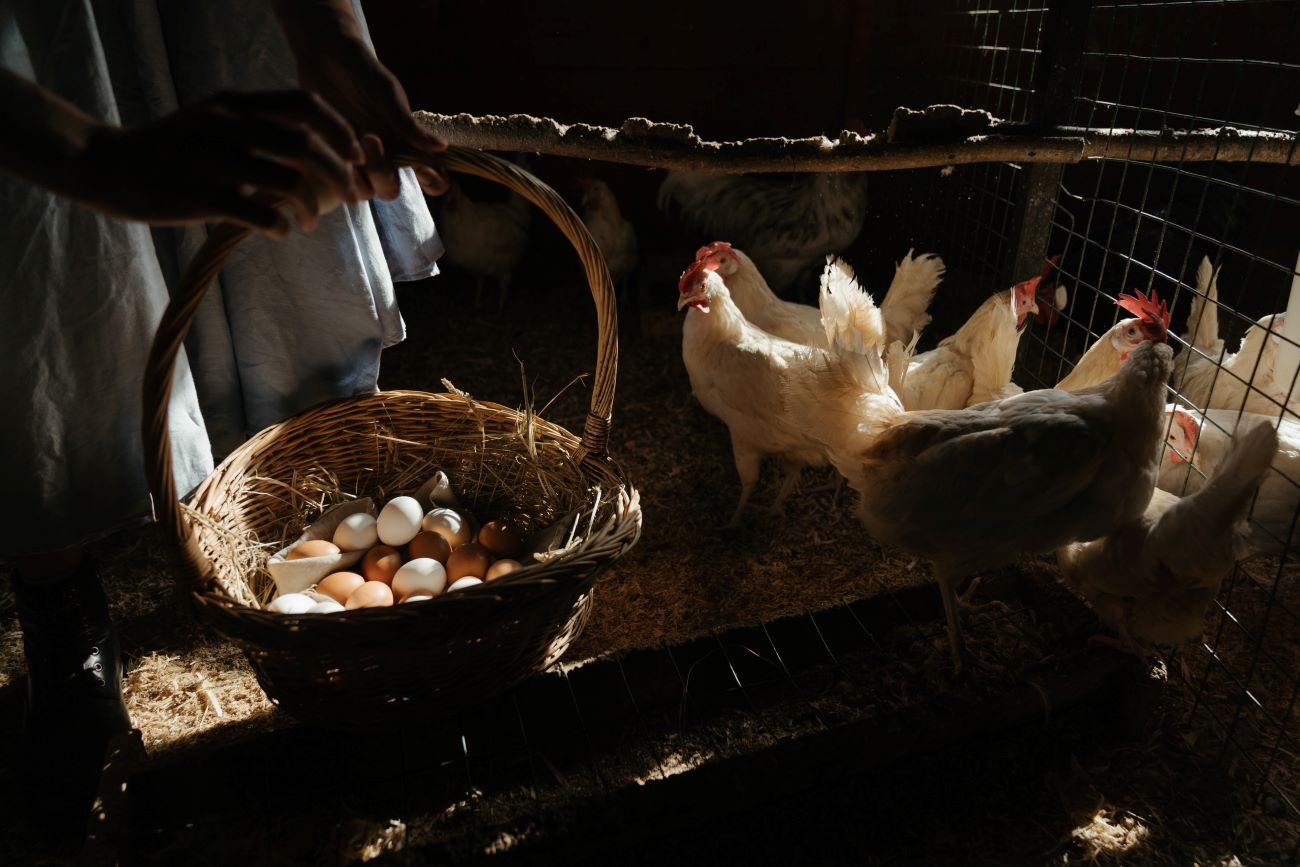
Photo by cottonbro from Pexels

In a previous article, I mentioned that feed prices had gone up by almost 50% in just seven months.  Anyone who knows a thing or two about poultry farming understands that feed is usually the highest operating expense incurred by farmers. Currently, if you want to rear 200 layers, you must prepare to wave a sum of GH₵ 9,000+ goodbye. Oh, wait! You must be thinking GH₵ 9000 is the total startup cost for starting a 200-layer farm. You couldn’t be any further from reality. That amount mentioned will only cover the cost of feed for the first eight months. I have already spoken about the reason why you should make a budget for eight months. Meanwhile, around November 2020, feed costs for the first eight months only amounted to around GH₵ 5,000 for 200 layers.

By the way, not only feed prices have gone up recently. The cost of Day-old chicks and building materials for pen construction have also risen. The average person will look at all this and conclude that poultry farming is no longer a business worth investing in. However, several steps can be taken to offset the impact of the rising cost of doing business which I will be discussing shortly.

There are way too many poultry farmers out there discouraging others from starting theirs. Which for the most part I believe they (poultry farmers) are doing so out of good intentions. This is because they don’t want others to lose potentially their entire life savings in the hopes of getting rich from poultry farming. Despite their good intentions, what they should be telling prospective farmers is that poultry farming has become highly capital intensive hence they need to be well-prepared financially before they start.

Now, starting a poultry farm with 200 layers could cost upwards of GH₵ 40,000, which is an amount impossible for most people to raise individually. However, people can explore other options, such as forming partnerships. In this case, instead of the financial burden of starting a farm falling on one person, multiple people can join forces to contribute towards a common goal.

Furthermore, you must keep accurate financial records. I say this because some farmers refuse to increase the prices of their eggs when feed costs go up. If your record-keeping is on point, you always have a full picture of where your farm is heading financially. This ensures that you always make the right decisions concerning your pricing. Now back to the farmers who refused to increase the prices of their eggs, many of them had to close their farms down because they were trying to compete with larger farms on price.

You may be thinking that increasing the prices of your eggs will cause you to lose customers. But if you are a farmer, you shouldn’t be relying too much on middlemen, especially when you have a relatively small farm. Middlemen are purchasing from you to sell to end consumers, therefore they’ll almost always want to knock down the prices as low as they possibly can for them to make more profits – trust me, they probably make more profit than you, the hardworking farmer. To protect yourself from overreliance on middlemen, you need to seriously upgrade your marketing skills and try selling more of your products directly to consumers.

In a nutshell, one cannot say for sure that starting a poultry farm in these current circumstances is a terrible idea or otherwise. It all depends on the prospective farmer’s situation. If she has the financial muscle, then she should be good to go. Also, once you are in business, you should ensure that you religiously keep track of your financial records to make better decisions.

In case you are interested in keeping accurate financial records of your farm, but you need help doing so, feel free to contact us, and we’ll offer you free bookkeeping services for three months. Again, you may want to start a new poultry farm but don’t know how much you need to invest, you can contact us, and we’ll draft a professional business plan for you at a very reasonable price.
Why Financial Literacy Is the Key to Success in Livestock Production

Now, imagine if you rear some chickens as a hobby and you do not feed them properly or fail to follow a proper vaccination schedule. What do you think will happen? Of course, your chickens will perish en masse. However, one thing we must understand is that the effect of losing birds to disease or starvation may not be as catastrophic to someone who is just rearing birds for fun as compared to someone who depends on his farm for a full time living. With that said, you still wouldn’t be happy to see your birds dying even if that event has zero significance on your chances of living a financially stable life. This is why we assume that anyone with common sense will try their possible best to keep their animals alive and healthy. Now, when you are rearing livestock for commercial purposes, suddenly, just keeping your animals alive and healthy isn’t enough. You need to figure out how to sell your products and keep your expenses as low as possible. Without further ado, let’s delve into the specific reasons why financial literacy is key to success in livestock production.

Firstly, before you even start operations, financial literacy could either make or break your business. Why do I say this? Imagine you had GH¢ 15,000 in your account, and you decide to rear 500 layers. You could easily afford to purchase 500 day-old chicks because a day-old chick currently costs around GH¢ 10. Therefore, 500 of those would cost GH¢ 5,000. But wait a minute, if I have GH¢ 15,000 and spend GH¢ 5,000 out of it, don’t I still have GH¢ 10,000 left, you may ask. Probably, you are forgetting that you need to spend some amount of money on feed, vaccines, labour, etc. For instance, if you want to rear 500 layers, you may need to spend GH¢ 7,850 on feed, GH¢ 340 on vaccines and GH¢ 2,000 on labour for the first 4 months. As you can see, your remaining GH¢ 10,000 wouldn’t even last for 4 months (assuming you have land and structure already). Hence, having good budgeting skills is very crucial for the success of your livestock venture.

Another good reason why being financially adept will take your farm to the next level is that you get to know when there is an opportunity to expand your farm. To illustrate this point, let me tell you a short story. Like I said in earlier posts, I used to do bookkeeping work for farmers and one time I had a poultry farmer client. I noticed that the demand for her eggs far outweighed what she was capable of supply – in a day, she could get close to 30 customers asking her if some eggs were available for sale, and she would almost always turn them away. And of course, me being me, not wanting to leave money on the table, suggested to her that we had a fantastic opportunity to expand the farm and make more profit (at the time, she had around 1000 layers and was making GH₵ 3,000 profit on average per month). Do you know what’s even sweeter about her situation? She was a government worker, which meant she could secure a loan against her salary. To cut everything short, I suggested she applied for a loan of around GH₵ 30,000 to immediately add 500 day-old chicks – This would have ensured that our monthly profits would be approaching GH₵ 5,000 in eight months. But as fate would have it, she disapproved of my plan citing reasons such as she doesn’t want to deal with employees and many other excuses. So sadly, we passed up such a great opportunity. So the moral here is that being financially savvy (you can achieve this by keeping up-to-date financial records) could help you recognize growth opportunities.

Finally, a good reason why farmers need to master the financial side of their business is to create a motivated workforce. Why do I say this? I’ve met far too many people, whose farms seem to be doing pretty well, but don’t really care about their employees’ welfare (the employees, especially farmhands are usually overworked and not very well paid). Now you may be saying, “My farm is a success. Who cares about some whiny employee’s feelings? – if anyone leaves, a thousand others are waiting outside the door willing to replace him”. Sure, even though many others may be willing to fill the role should any of your employees leave, you must consider that you could even take your farm to higher levels if farmhands or key employees stay longer in your farm. This is because they would fully understand the systems and how things are done. But when you always have employees leaving, you need to rehire and train new people which may cost a lot of money and time. Now, you can only know if your farm can afford to pay workers or perhaps, relieve them of their workload by employing more people if you keep accurate financial records. For instance, you are a pig farmer, and you have a farmhand catering to around 80 pigs, and he receives just GH₵ 500 monthly. Assuming you make around GH₵ 3,000 a month in profit, increasing his salary to GH₵ 600 will not impact your farm’s finances very much. And by so doing, it becomes less likely for him to leave.

Maybe you want to start a livestock farm in Ghana, but you don’t know much you need to invest in or the potential returns you could get from your investment. Don’t worry, we got you covered. Contact us for your professional business plan today, and we’ll be ever ready to assist you with a professional business plan. Also, in case you need help with financial record keeping, you can contact us.

Why People Need to Take Livestock Farming More Seriously

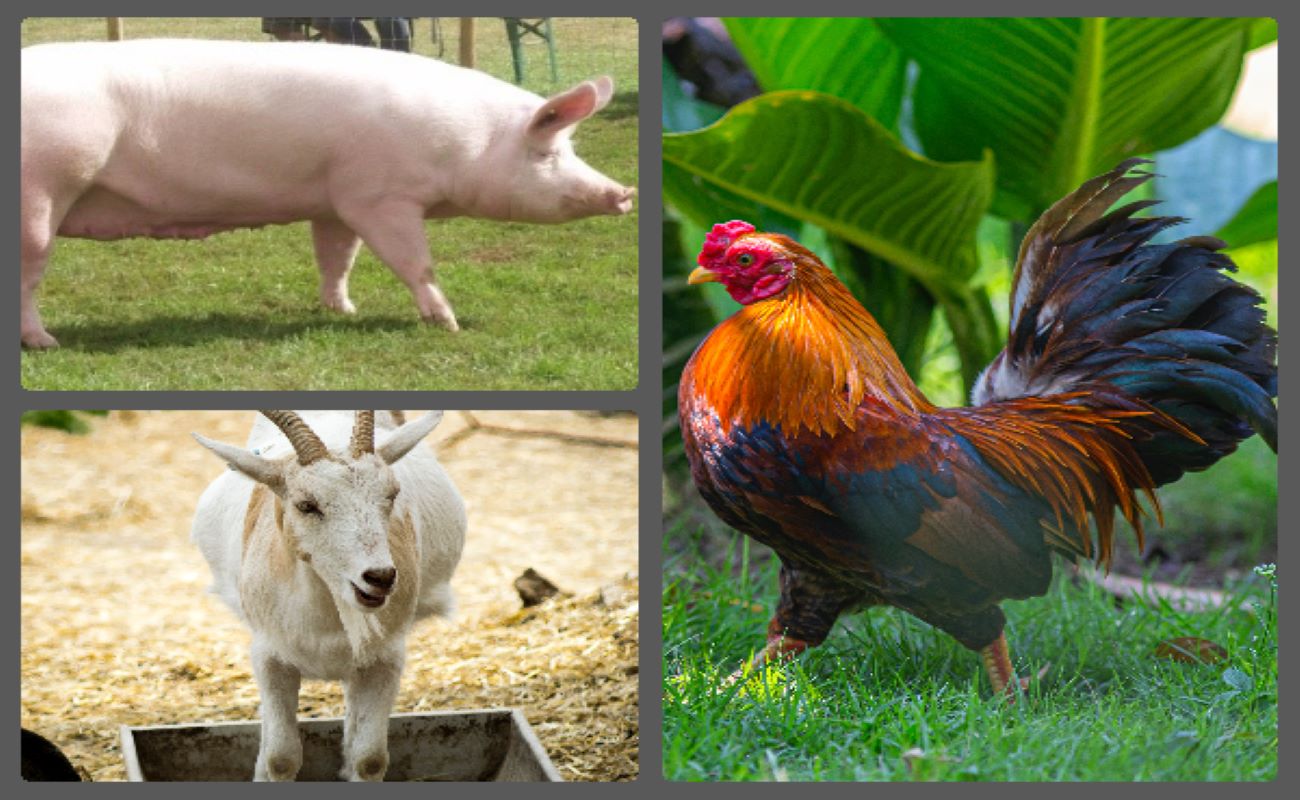
Photo description: A collage image combining photos of a chicken and a pig from Shutterstock and a goat from Freepik.

Gradually, more people in Ghana, especially the youth, are starting to find agriculture more attractive. However, I find it interesting that many of those I’ve met would have owned some chickens, goats, sheep and occasionally, some pigs, yet most of them (farmers) have made little to no effort to advance the business side of things.

You would be surprised to know that only a small percentage of farmers in Ghana have registered their farms. It is common knowledge that agribusiness in Ghana tends to be capital intensive. The fact that your business is not registered alone has the potential to block many funding opportunities. The reason is that banks usually only deal with lawfully registered entities, so if you want to increase your chances of being funded, do well to at least register your farm.

An old Chinese proverb says that “the faintest ink is more powerful than the strongest memory”. Yet, there are still many farmers in Ghana who don’t seem to care about keeping records. For instance, I once had a client who had a heated argument with a customer of hers.

The client I’m talking about was a poultry farmer, who like most people, didn’t care about keeping records, but I managed to convince her eventually. She later agreed to let me handle her bookkeeping. At the time, her eggs were in high demand to the extent that her customers had to pay in advance, two or three days before they had their eggs delivered to them.

Later on, I would record all of this info on my computer. Now, this client of mine received advanced payment from a customer, which she duly supplied her three days later. However, two days after my client claimed to have delivered the eggs, the said customer accosted her and complained bitterly about how she had still not received them.

Upon hearing them go back and forth, all I had to do was check my records. Lo and behold, it turned out that my client had indeed delivered the eggs. I later showed the proof of egg delivery to my client’s customer, and she apologized and left. So you see, keeping good records could save you from a lot of potential disputes and headaches.

Of course, if poultry feed prices increase by almost 50% in just seven months, you know that spells trouble, but I can’t help but apportion some of the blame to the farmers. One farmer was lamenting in a Facebook group post about how middlemen could sell eggs as high as GH₵ 30 but would complain bitterly when the farmers sell them (middlemen) eggs for just GH₵ 18.

 Now, this exposes a pattern where some farmers do not increase the prices of their eggs when feed cost shoot up. Instead of them putting in a little more effort and sell directly to consumers for a higher profit margin, they are content with offloading their products to middlemen. They (farmers) will later complain that the poultry industry is collapsing.

It is a good thing that more and more people want to venture into agriculture. However, to improve food security in Ghana and create wealth, we have to stop seeing agriculture as a mere hobby and ensure that all the necessary steps have been put in place to make our farms more economically viable.

If reading this article piqued your interest in starting your livestock venture, it will be in your best interest to write a good business plan. Even if you don’t necessarily have the time to write your own, don’t worry. Just send us a WhatsApp message by following this link https://wa.me/233592239127. And we’ll draft a professional business plan for you at a very reasonable price.
Are you tired of too much paperwork involved in keeping records on feed, egg collection, vaccination, mortality, profit and loss, etc.? Worry no more. We are developing a software application that simplifies poultry management. Follow this link if you are interested.

Finally, are you ready to start your dream poultry farm, but don’t know how to construct the chicken house, brood the chicks, source the right materials, etc.? Just follow this link https://wa.me/233592239127 for more enquiries.

Why Pig Farmers Should Consider Partnership

Image source: www.freepik.com

I recently published an article about how pig farming could literally change your life. People will read articles like this and think pig farming is highly lucrative, and rightly so. However, the mistake most people make is that they tend to want to enjoy the profits alone. They forget that with most things in life, there are always positives and negatives. Obviously, getting huge profits off a pig farm is very positive, but do you know what isn’t so positive? Having to potentially invest hundreds of thousands of Ghana cedis. Where are you even going to get this money?

You don’t necessarily need to take on this burden alone. Assuming you need to invest GH₵ 100,000 to run your pig farm for one year, partnering with two others would mean each partner would need to contribute GH₵ 33,333 if the amount is split equally. Of course, GH₵ 33,333 is still a huge amount for most people in Ghana to raise. However, if you have a job that pays you GH₵ 3,000 and above, you may be able to raise money to start a sizeable pig farm within a relatively short period. For instance, if you earned around GH₵ 3,000 monthly, and saved 33% of your salary, you could raise GH₵ 33,000 in 33 months (almost 3 years).

Finding business partners is not necessarily for raising capital only because different people bring different things to the table in terms of knowledge, skills, experience and contacts. For instance, if people team up to start a pig farm, one of the partners may have had prior experience in sales, hence she can take care of the marketing while another person may have a finance background so he can take care of the farm’s accounts. Now, if you are a sole proprietor, you do all these things yourself or hire people to do it for you.

Now, partnerships are not without their problems. Serious disagreements on the direction of the business and how each partner should be rewarded could occur. This could potentially lead to the collapse of the business. However, drafting a partnership agreement could help quell some of these issues.

If you read this article, there is a high chance that you may be interested in starting a pig farm. Don’t worry, we got you covered. Contact us for a professionally drafted business plan which will show you how much you need to invest and how long it will take for you to recover your investment.

New Poultry Feed Prices & Their Implications

Food photo created by freepik – www.freepik.com

Poultry farming is no longer a profitable business. I am going to sell off all my birds – a farmer lamented. This and many more complaints have been brought about by the recent hike in feed prices. Around November 2020, you could get a 50kg Layer mash for GH₵ 93. Fast forward to July 2021, the price is now around GH₵ 137 (a 47% increase in feed prices in just seven months). As gloomy as this sounds, all hopes of succeeding in poultry farming is not lost yet, and I will explain why.

First of all, let’s talk about the problems with the hike in feed prices. Poultry farming, even before the feed price increase, was a very capital intensive business to pursue. As of November 2020, farmers needed GH₵ 20,000+ to raise 200 layers which meant some farmers had to go into debt. Now, you can imagine the consequences of being in debt to your eyeballs only to learn that feed prices have increased another 15% – this could cause serious solvency issues.

To offset this solvency issue, you must, of course, increase the prices of your eggs. You might be thinking that if you raise your egg prices, sales will drop. Sure, maybe in the first week, some of your customers will complain, but eventually, they’ll get used to the new prices. However, you may find that some of your competitors may not necessarily increase their prices to reflect the rising feed prices.  

For instance, on the 6th of June 2021, you could get Eco Feeds layer Mash 2 for GH₵ 129, but approximately one month later, the same product would increase by 6.2% to GH₵ 137. Given this, assuming you were rearing 500 layers, and feed costs made up 63% of your total operating expenses, you could make an average monthly profit of GH₵ 1,262.67 (17.44% margin). However, the new increase in feed prices within this one month would reduce your average monthly profit to GH₵ 993.53 (13.72%) if you maintain your egg prices. Now, some people will be ok with this profit margin but settling for a 13.72% margin monthly when you could be making 17.44% or more is a very short-sighted business decision.

Sure, the increase in feed prices is undoubtedly going to increase the cost of starting a poultry farm and hence make your products more expensive but obviously, eggs will probably still be in high demand, so the recent price hikes shouldn’t necessarily discourage you from starting a poultry farm.

In a nutshell, contrary to what some people will tell you, poultry farming in Ghana is still a lucrative business despite the recent surge in prices. All you need to do is to channel your marketing toward direct customers, not middlemen. This way, you can sell your eggs for higher profit margins so that even in the event much bigger farms decide to absorb the feed price increases, you save yourself from being outcompeted.

This is the time for you to strategize properly before starting a poultry farm because a lack of capital could lead to the early demise of your business. Because of this, you can contact us for your professionally drafted business plan on poultry farming so that you can raise the right amount of money to commence or expand your farm.

How Do You Know Your Poultry Farm Is Making Progress?

Baby photo created by bearfotos – www.freepik.com

Recently, a poultry farmer complained to me about how his poultry farm was draining him financially. Believe it or not, his farm was making progress. You must be wondering how a farm can be making absolutely nothing for its owner, but still, be considered as “making progress”. You’ll soon find out why.

Now, let’s assume you raised GH₵ 112,000 to start a 1000-layer farm. This amount was able to cover your farm for the first five months since you needed GH₵ 75,000 to purchase fixed assets and GH₵ 37,000 to cover operating expenses. At this point, you are very excited because your birds have started to lay eggs, but there is a small problem. In the initial stages, not all your birds will be laying eggs, so you may have to wait another three months before your farm reaches its full potential in terms of revenue generation. Assuming within these three months, revenue from the sale of eggs is GH₵ 14,480 and expenses are GH₵ 31,396.08, you would need to invest another GH₵ 17,000.00.

Now, imagine if you earned GH₵ 3,000 per month from your job, you would face some financial struggle. This is because even if you chose to plough all of your monthly salary into the farm you would only be able to cover just GH₵ 9,000 of the extra GH₵ 17,000 required to keep the farm running.

Even though you might have accumulated debt to your eyeballs by this time, your farm would have made significant progress because it could be making monthly profits of around GH₵ 2,400 on average from the 8th month to the 11th month.

At this point, there is the likelihood that the demand for your products will be well beyond what you supply so you may decide to bring in another 500 day-old chicks at the beginning of the 12th month. The extra 500 day-old chicks will require feed, water, medications, etc. Also, since these new birds would not be mature enough to lay eggs, revenue from the older birds would be used to cater for the new ones hence we assume that you would break even for the 12th month.

To sum everything up, in the first year, you can project a total revenue of GH₵ 82,880 and expenses of GH₵ 91,106. This means your farm would have made a loss of GH₵ 8,226.

Fast forward to year 2, you still have 1,500 layers. However, the 500 layers that would be added later on in the first year will start laying eggs in month 4 of the second year. Again, you must understand that keeping layers for eggs will not be perpetually economically viable, therefore, you will have to sell off the first batch of 1000 layers as spent layers latest by the end of December. In anticipation of the sale of spent layers, it would make sense to order 1000 new day-old chicks around the 6th month so you can replace those that are going to be sold. Due to this, total revenue for the second year is projected to be GH₵ 207,520, while expenses are expected to be GH₵ 233,000. Therefore, a loss of GH₵ 25,480 is expected.

Notice that even though back-to-back losses are were recorded for years 1 and 2, total revenue grew by 150% from year 1 to year 2. Furthermore, going into year 3, 1500 birds would be laying eggs and this could yield a monthly profit of GH₵ 4,500.

In a nutshell, you can tell your farm is progressing if there is significant revenue and bird-population growth. However, this progress may come at a price because looking at the example illustrated in this article, the amount of money required to start with 1000 birds alone is well over GH₵ 100,000. You must also note that, whenever there was expansion (i.e. addition of new birds), I only spoke about the operating expenses, however, in reality, you may have to expand your structure, purchase more feeders, drinkers, etc. This would mean that in two years, the total amount of money that would need to be invested could well surpass GH₵ 200,000.

It would be painful to know that your farm is making significant progress, but you don’t have the capital to keep it running. One way to prevent this from happening is to write a good business plan to guide you on the correct farm capacity for your budget. Having challenges writing a good business plan for yourself? Worry no more. Contact us for your professionally drafted business plan on poultry farming to increases your chances of success.

HOW TO FIND INVESTORS TO FUND YOUR POULTRY PROJECT

Photo credit: Tawatchai07/Freepik

I published an article on how you could start a poultry farm with very little or sometimes no money. However, you are not running your farm as a hobby – you intend to make thousands, if not millions of Ghana cedis annually. To establish a poultry farm that can provide you with an exceptional standard of living, you need to invest a substantial amount of money. Unfortunately, the amount of money usually required to start such a poultry farm is unattainable by most people. Hence it would make a lot of sense to find investors.

Even though beginners or inexperienced farmers are the ones who need the money most to set up their businesses, it is usually those who have built a profitable business or have demonstrated some form of traction that attract most of the investors. It sounds like a paradox, right? I will soon explain why this is the case.

Supposing you owned a taxi, who would you hand over your car to, a driver who has five years experience or someone who doesn’t know how to drive but has promised that he will learn how to drive a car as soon as possible? Obviously, you would hand over your car to someone who actually has experience. The same goes with investors: they would prefer to invest in a company that is showing some potential or already gained traction. Therefore, instead of worrying too much about getting investors in the initial stages, try and start something small. After you have demonstrated impressive growth or have made some profit, usually after two years, you can confidently begin searching for investors.

Now that your farm has demonstrated some growth, what you would want to do is to approach some high-net-worth individuals (so-called “angel investors”) in your vicinity. These individuals can provide you with the capital to purchase more day-old chicks, expand your structure, hire more farmhands, etc. Before looking for investors, you must ensure that your farm is registered as a Limited Liability Company because angel investors typically provide capital in exchange for equity. Also, it may be more advantageous to start looking for wealthy individuals within your family and then maybe your friends.

You should know that investors aren’t going to dish out money to you without any reason. Therefore, it is imperative that you keep accurate financial records from day one. This way, you can easily prove the viability and long term prospect of your business. Also, potential investors may demand a business plan before they invest. A business plan is a written document that defines the objectives of a business and describes the strategies which would be employed to achieve those objectives.  Therefore, if you need a professionally drafted business plan for your poultry idea but don’t know how to start, you can contact us today.

Now, remember that getting funding for your poultry farm isn’t very easy. You may approach 100 potential investors and get rejected by all of them. Therefore, you shouldn’t give up. Keep talking to more people so that you can increase the chances of your farm getting funded.

How to Start a Poultry Farm Without Spending a Dime

Photo by Zahaoha from Pexels.

I know of a guy who was gifted two local chickens – a hen and a cock and decided to rear them.

He found some discarded wood, and just like that, he put up a small coup to house the birds at nighttime. Also, he allowed the birds to forage for their food and only fed them with leftovers on some occasions. Hence he did not spend a dime in starting his farm.


After some time, his total flock numbered ten birds in total, and he would occasionally sell one of his chickens to his neighbours. Now, he had a constant supply of eggs he could consume and at the same time make some money by selling some birds.

So this got me thinking, many people want to start poultry farming, but since they lack the capital, their dreams usually do not come to fruition. Is it true that without money, you can not start a poultry farm? The answer is no.

So assuming he sells 15 chickens in the first year for GH¢ 25 each, he gets to make a total revenue of GH¢ 375. If he manages to double the number of chickens sold from 15 to 30 in the second year, he gets to make a total of GH¢ 750, assuming the selling price remains the same as that of the previous year. Furthermore, if he sells 50 of his chickens in the third year but this time for GH₵ 30 each, he makes a total revenue of GH₵ 1,500.

Notice that even in year 3, where he is projected to have his highest revenue, he only gets to make GH₵ 1,500. This amount is not enough to cater for his living expenses. Therefore, although it’s possible to start a poultry farm with little or no money, it doesn’t necessarily mean that the farm would be able to cover all of your living expenses.

In conclusion, you need not wait till you raise thousands of Ghana cedis before you can start a poultry farm – you can even begin by rearing a few local chickens in your backyard. However, you need to be a bit patient because you will not be seeing high revenues immediately. Once you gain experience and marketing skills, you can bring investors on board. This way, your farm may be generating enough money to cater for your lifestyle.

If reading this article piqued your interest in starting your poultry venture, it will be in your best interest to write a good business plan. Even if you don’t necessarily have the time to write your own, don’t worry. Just send us a WhatsApp message by following this link https://wa.me/233592239127. And we’ll draft a professional business plan for you at a very reasonable price.
Are you tired of too much paperwork involved in keeping records on feed, egg collection, vaccination, mortality, profit and loss, etc.? Worry no more. We are developing a software application that simplifies poultry management. Follow this link if you are interested.

Finally, are you ready to start your dream poultry farm, but don’t know how to construct the chicken house, brood the chicks, source the right materials, etc.? Just follow this link https://wa.me/233592239127 for more enquiries.

Why Ghanaian Farmers Need to Take a Closer Look at Broiler Production

Photo credit: Iaroslav Konnikov/Shutterstock.

If you closely examine the Ghanaian poultry landscape, you will realize that most farmers are rearing chickens to produce eggs. Sure, layer farming can be very lucrative, but the returns you could get from investing in broiler farming could be staggering. Imagine if you produce and sell 400 broilers every two months. That would potentially fetch you GH¢ 96,000 in revenue (out of which GH¢ 9,600 is profit) in just a year.

You may be asking, “So if one could make this much from broilers, why don’t people venture into it?” The reason is unlike with egg production, most farmers find it impossible to compete on price since the cost of raising birds in Ghana is quite high.  For instance, you could get a box of chicken thighs (10 kg) imported from Brazil for GH₵ 110. In two months, the time required for a broiler to reach slaughter weight, a broiler will weigh around 4Kg. Since Ghanaian farmers typically have to sell broilers for at least GH₵ 40, approximately 10kg of the locally reared broilers would cost around GH₵ 100.

In hindsight, it may seem that the locally reared broiler is cheaper than the imported ones. However, the 4Kg mature broiler is not made up of thighs alone, but other components such as wings, feathers, feet and internal organs. These components may not necessarily be as marketable as chicken thighs. Hence if local farmers decided to assemble only chicken thighs in a 10kg box package, the price would surely approach GH₵ 150. Given this, most Ghanaian consumers would purchase the imported frozen chicken.

Does it mean that people do not purchase locally reared broilers? Obviously, not.  People still buy the local broilers, especially during festive occasions but what happens is that farmers struggle to sell all their birds. As you already know, broilers are reared to gain significant weight in a short period. Therefore, they are very prone to cardiovascular diseases. Hence the longer they are kept without being sold, the more the risk of mortality.

By now, you might be wondering what farmers must do to sell more broilers. Here are a few suggestions:

1. Start small: You see, broiler farming is not like layer farming. Eggs are much easier to sell in Ghana as compared to broilers. Therefore, if you want to venture into broiler farming, start with a relatively small number of birds so that as you perfect your marketing tactics, you can gradually expand operations. Mind you, it is common to find farmers offloading their birds for very low prices simply because they struggle to find buyers even in peak demand seasons.

2. Consider selling on credit: Since imported chicken is much cheaper, you can entice your customers by offering credit sales. Here, instead of selling one broiler for GH¢ 40, you can dress it and sell it for GH¢ 60. Only this time you do not receive the money immediately but after two weeks. If 40% of your sales come from this strategy, your total revenue for the year now becomes GH¢ 115,200 (out of which GH¢ 28,800 is profit).

3. Boost social media presence: I have already published an article on this. Even though it was more focused on egg production, the principles still hold for broiler production.

To conclude, broiler farming, even though slightly harder to navigate compared to egg production, could be the key to unlocking economic prosperity for many. The key is to improve your marketing skills then gradually, you can expand operations.

If you are reading this, my guess is you want to venture into broiler production but do not fully understand the financial requirement to start and how much return you can get on your investment. Worry no more. We can draft you a professional business that will provide you with all the necessary financial data to help your farm succeed. Just contact us, we will be glad to assist you.

Why Pig Farming Can Change Your Life

Photo Credit: Aleksandar Malivuk/Shutterstock

Probably, you might have thought about some ways to build wealth but pig farming never crossed your mind in the slightest. Without further ado, let’s delve straight into the reason why I believe you should consider pig farming.

First of all, pigs are very prolific animals. A sow (female pig) could produce as many as 20 piglets at a go but for this article let’s assume they will produce 10 piglets on average.

Assuming you start with only 5 pigs ( 4 sows and 1 boar), you may be able to sell only 40 pigs in the first year. This is because you may have brought in the parent stock when they were 4 months old, therefore you may have to wait another two months for the pigs to reach sexual maturity. Once the sows have been mated, it may take another 4 months for them to deliver 40 piglets. Seven days after weaning, the sows can be crossed again. They may produce another 40 piglets at the end of the year. Since it takes 6 months for pigs to reach slaughter weight, you can only sell the first batch of 40 pigs.

After the first year, you can produce and sell 80 pigs every year. So assuming you run this pig farm for 5 years, you would have sold around  360 pigs in total.

Now selling each pig for GH¢1400 means you could generate around GH¢ 504,000 (out of which 55,000 is profit) within 5 years. Now that’s life-changing money.

You might be wondering how much you need to invest to make such jaw-dropping profits. The answer is by writing a good business plan. In case you don’t know how to get started, you can contact us for your professionally drafted business plan on piggery.