Why Farmers Are Still Disrespected in Ghana

Photo Credit: Lakov Filimonov/Shutterstock

When George Floyd was murdered by a group of police officers who were mostly white, it resulted in the worldwide condemnation of police brutality and racial profiling in the United States and rightly so. However, it would shock you to know that some of the most unreasonable forms of discrimination are committed by black people on their fellow blacks.

Is it a crime to be a farmer? I went to look for a room to rent and the landlord said he can’t find me the room cos am a farmer. He wants government worker!!” – a disgruntled farmer.

You see, a Ghanaian is refusing to rent out his house to his fellow countryman not because the individual can’t afford the rent but rather, because of the person’s profession. Sounds absurd, right? Even though, I don’t have all the answers as to why people disrespect farmers in Ghana, I can make a few informed assumptions that I believe may be the cause.

Many Ghanaians associate living in rural areas with poverty, and opulence with major urban centres such as Accra, Kumasi and Takoradi. Since the main occupation of people living in rural areas typically hovers around agriculture, people assume that agriculture begets poverty.

Also, the attitude toward agriculture in this country is very appalling. I can bet with everything I have that at one point in time you were punished during your school days to weed the school farm or tend to some teacher’s backyard garden. This sort of punishment isn’t necessarily a bad idea because instead of caning someone, it may be more productive to have them take care of some crops or keep the school’s lawns attractive. However, when this form of punishment is abused, it may result in people living the rest of their lives believing that any form of agriculture is punishment instead of a noble source of income.

Finally, people view farming as a “dirty” job. The thought of spending long hours in the sun manually harvesting or clearing weeds isn’t particularly appealing to most people. However, what they fail to realize is that there are other modern methods of producing crops such as hydroponic farming which does not necessarily need to involve you spending hours in the sun. Again, agriculture isn’t just about crop production. Livestock production such as poultry farming, piggery and rabbitry is also a form of agriculture.

To conclude, I find it laughable that some people in Ghana look down on farmers and even go to the extent of refusing them accommodation. If people were smarter, they would hold farmers in high regard as they hold people like doctors because remember, he who controls your food source has immense power since without food there can be no survival.  Despite the disrespectful attitude shown towards agriculture by some, the company I serve as the CEO, Pkom Agribusiness Ltd, will always champion the cause of putting agriculture on a high pedestal through our posts on our website and social media accounts. God bless all Ghanaian farmers.

Why Ghanaian Farmers Need to be More Ambitious

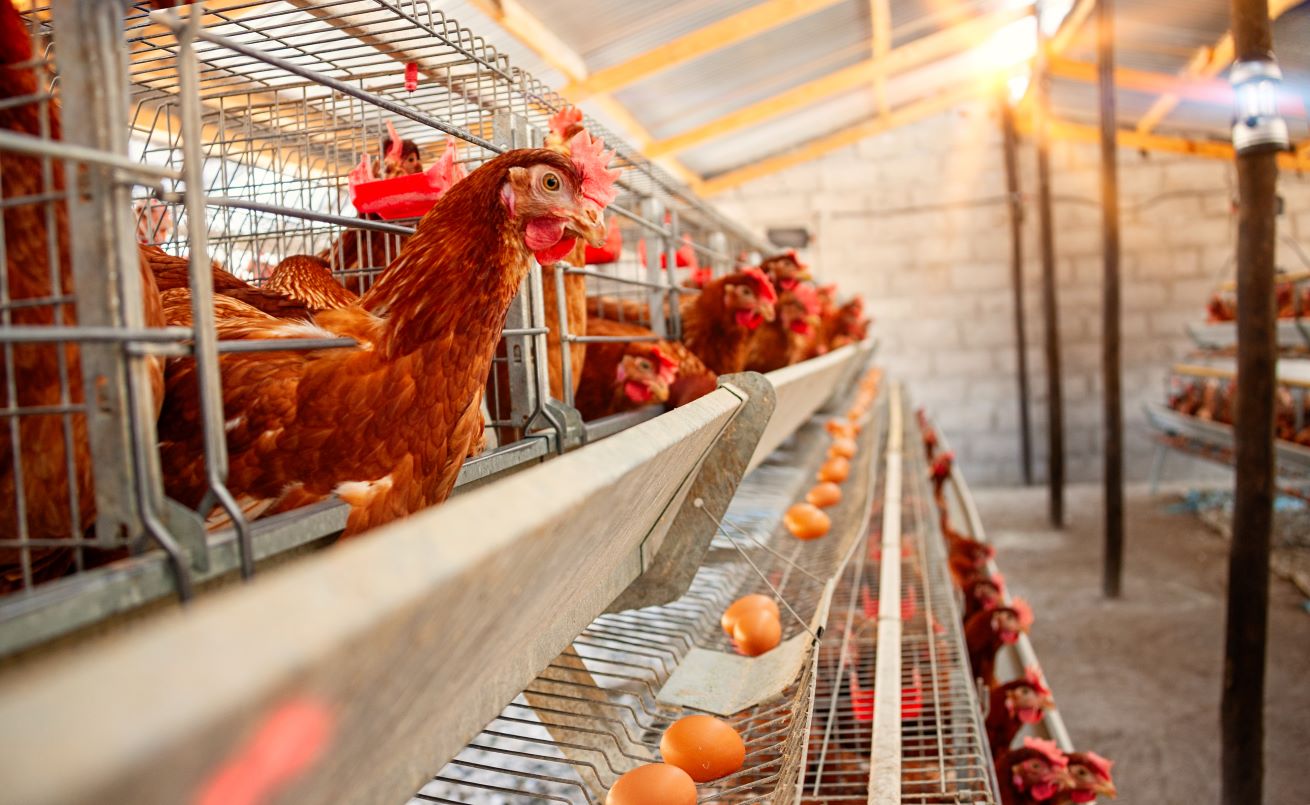
©Lucian Coman/Shutterstock: African egg farm at sunset with red hens in Botswana.

I saw this post on Instagram:

“Comfort is a drug. Once you get used to it, it becomes addicting. Give a weak person consistent stimulation, good food, cheap entertainment and they’ll throw their ambitions right out the window.”

IG: @valuetainment

I strongly disagree with statement above because you don’t necessarily need millions of cedis to be happy. With that said, even though you could make GH¢ 3,000 per month running a 1000-layer farm, that doesn’t mean you should rest on your laurels and you’ll soon find out why.

I used to do some bookkeeping work for one farmer and at the time, things were going pretty well. She had close to a thousand layers and used to rear broilers during festive occasions.  I identified at the time that the demand for her eggs far exceeded what she could supply so I believed that was the right time for focus on rapid expansion.

To ensure my expansion plan became a reality, I advised that she drew a monthly salary. By now, you might be wondering how drawing more money from a business you are trying to expand makes any sense, aren’t you?

You see, because she wasn’t drawing a regular salary, what she did was that whenever she wanted to purchase anything, she just took the money out of the farm’s coffers. Because of this, whenever I did the accounts, I realized that even though the farm was making a profit, I’d find that there was almost no money in the farm’s coffers. Hence if she had regularly drawn a salary, there would have been some portion of the profit left for reinvesting into the farm.

To put things into perspective, assuming at the time she was making an average monthly profit of GH₵ 3000. If she took out a salary of GH₵ 1,500 there would still be GH₵ 1,500 of the profit left over at the end of the month. Now, if she continually reinvested at least half of the profits she was generating, she would have doubled her flock from 1000 to 2000 layers in just three years.

When I confronted her about how she could potentially reach a 5000-layer capacity in five years if she just made a little tweak to how she managed her finances, she told me she didn’t need to grow her farm any bigger. Of course, she was right because at that time she also held a government job that paid her close to GH₵ 2,000 per month. Combined with her poultry earnings, and she was earning around GH₵ 5,000 every month which is more than enough to cater for her family.

The point I want to make is that even though a relatively smaller operation could make you live a fairly comfortable life, you should know that expanding your farm not only makes you rich but also impacts the lives of others. From the example above, assuming the farmer at 1000-layer capacity employed around 2 people, if she grew her farm to a 5000-layer capacity, she might have provided jobs for 7 additional individuals.

Now, becoming wealthy and providing jobs for others is very admirable however that doesn’t mean you should recklessly add new birds to your farm because remember, each new addition will require, feed, veterinary services, utility costs, etc. Therefore, you should get yourself a very good business plan to help you grow your farm sustainably.

Why Ignoring Record-Keeping Could Spell Disaster for Your Farm

Sure, it can be pretty tiresome or sometimes outright boring to keep track of every single cedi entering and leaving your farm but failure to do so could lead to certain consequences.

Just recently, a farmer DM’d us on Instagram about how she was bleeding cash because her birds (32 weeks old) weren’t laying to her expectations coupled with her customers not willing to pay high prices for her eggs.

Upon listening to her carefully, I concluded that she was overfeeding her birds because 5 ½ bags of feed a day should be enough to feed 2,500 birds who are between 30 and 36 weeks old. Hence with a bag (50Kg) of standard commercial feed going for GH¢ 120, she shouldn’t be spending more than GH¢ 19,800 a month on feed.

So clearly, if she is preparing her feed and she’s spending close to GH¢ 24,000 in a month on that, you could tell that there is a problem. Lo and behold I was right because it turned out that she was giving her birds 8 bags of feed a day instead of 5 or 5 ½ bags.

You see, because she wasn’t keeping track of her financial records, she couldn’t realize that it was possible to cut some expenses. Now if spending GH₵ 24,000 amounts to 12,000Kg of feed in a month, the standard 8,250Kg should cost the farmer just around GH₵ 16,500. Assuming feed makes up 66% of the total expenses, her total costs for raising 2500 birds should be around GH₵ 25,000 in a month instead of the current GH₵ 24,000 she’s spending on feed alone.

Also, she was complaining that her customers were not giving her a good price for her eggs. They were offering her GH¢ 16 for a crate of 30 eggs. Now assuming her 2500 birds produce 1,667 crates of eggs in a month, her total revenue is going to be GH¢ 26,672.

Now instead of making a loss of GH¢ 9,692 (I’m even assuming that her overfed birds will provide optimal laying results), she could be making a GH¢ 1,672 profit.

The point of this article is that if you are not religiously keeping up to date financial records, you can’t really tell the direction which your farm is going and even if you realize that things are going wrong, you may struggle to pinpoint the exact cause.

Now if you are reading this article, you may be interested in starting a poultry farm. Don’t just jump in naively. Get yourself a very good business plan before you start so you can avoid certain mistakes.

Also, if you are struggling to keep financial records for your farm, you can contact us for your professional bookkeeping service which would provide you with monthly, quarterly and yearly financial statements.

Why Ghanaian Farmers Need To Put More Effort into Marketing

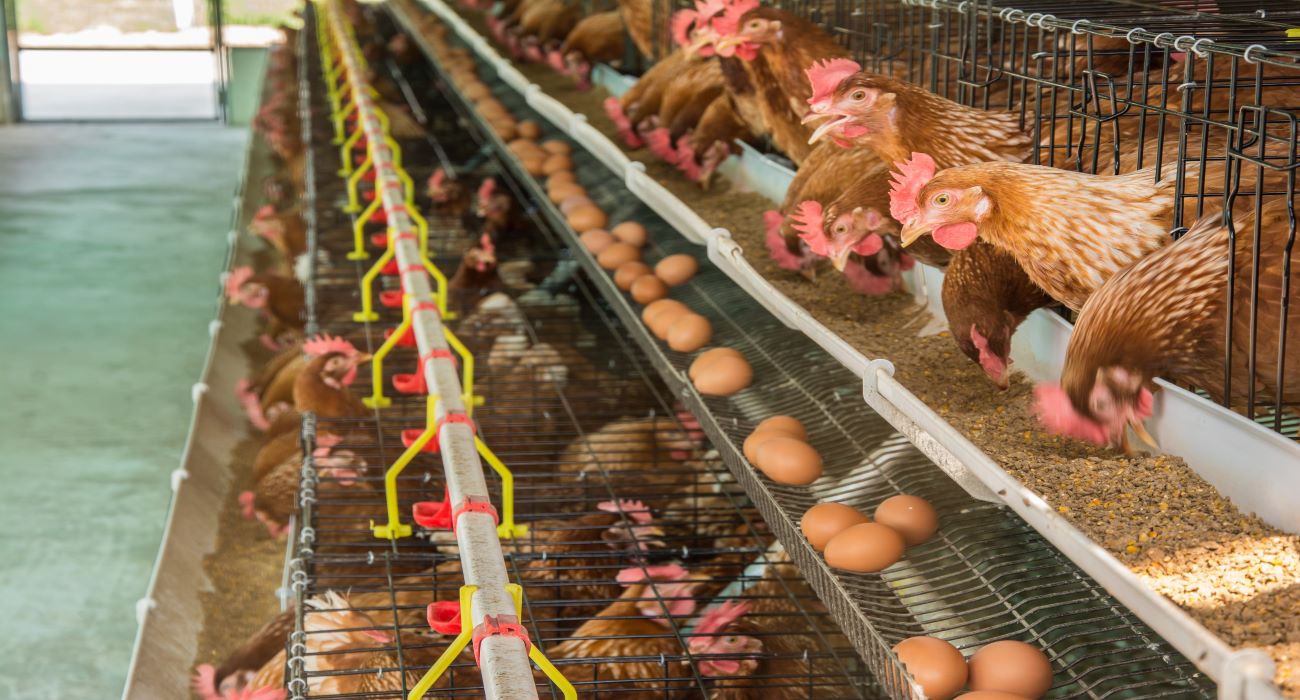
©Shutterstock Hen house business in Thailand.

On the 3rd of May, 2021, someone posted on a Facebook group about the need for poultry farmers to form a unified front when it comes to setting egg prices. As good as his intentions may sound, Ghana operates a free market system, and therefore, entrepreneurs can set prices for their goods for as low or as high as they deem fit.

Assuming you want to start a poultry farm of 1000 layers, you should expect your operating expenses to be around GH₵ 11,000 monthly on average after your birds begin to lay eggs. Given this, assuming each bird lays 5 eggs in a week, you should sell a crate of 30 eggs for at least GH₵ 16.5 to break even.

The problem with many poultry farmers in Ghana is that they expect a ready market for their produce with minimal stress. For instance, when they produce 667 crates of eggs they expect a buyer to knock on their door and provide them with bulk cash.

Now this isn’t such a huge problem when there are fewer suppliers (farmers), and prices of raw materials such as feed remain stable but in the current situation we find ourselves in, many small scale farmers keep reducing the prices of their eggs even though the cost of poultry production keeps going up. Later, they find themselves going out of business. Why do they suffer from this? Because they are targeting the wrong customers.

You see, when you are running a relatively large operation (5000+ birds), the cost of production per egg reduces. You know why? Because larger farms can get huge discounts on feed purchases, and also, they have enough capital to invest in automation hence may eliminate the need to hire more labourers. So for these folks, their cost of producing the same 1000 layers after they begin laying could be around GH₵ 9,000. Now at GH₵ 9,000 production cost, such a farmer can sell one crate of 30 eggs for as low as GH₵ 14 and still make a profit – and by GH₵ 14, I mean jumbo-sized eggs. 

So what then is the solution for farmers who run smaller operations? You need to start targeting consumers directly. This means instead of accumulating several crates of eggs over a week or two just to sell to a middleman for a slim or sometimes zero profit margin, you need to go directly to the consumer market where you can sell your eggs for much higher prices.

To further elaborate, I recently visited Shoprite, the Takoradi Mall branch and found that a crate of six “Eden” eggs was priced at GH₵ 6.49.  This means if you had 1000 layers, you could be making more than GH₵ 21,600 in revenue if you sell your eggs at the same price Shoprite sells their crate of six eggs.

Sure, you don’t even need to sell your eggs for a high as what Shoprite does. You can price your eggs as follows 6-egg-crate: GH₵ 6, 12-egg-crate: GH₵ 10, 30-egg-crate: GH₵ 20. Now assuming 40% of the total egg sales came from 6-egg-crates, 25% from 12-egg-crates and 35% from 30-egg-crates, this means if you have 1000 birds, you actually make more than GH₵ 16,800 in revenue. Do you remember we said earlier that you could spend as much as GH₵ 11,000 if you rear 1000 birds? Well, add an extra GH₵ 1,000 for extensive marketing, and the total expenses amount to GH₵ 12,000 – you are still going to make at least GH₵ 4,800 profit.

So you see, taking a close look at marketing could well be the difference between success and failure. To leverage the internet for more sales, it is imperative to open accounts or pages for your farm on some of the most popular social media outlets such as Facebook and Instagram. 

After building your social media accounts, you can start marketing your eggs. To reach a wider audience, you may have to invest some money in social media ads. If you handle your social media marketing well, you should see a return on your money spent on ads.

To conclude, there is still a high demand for eggs in Ghana. Despite this, some farmers still find it hard to find buyers because they are not putting enough effort into marketing their products. I believe there is so much untapped potential when it comes to generating wealth online so instead of farmers always relying on middlemen, I implore them to put in the extra effort to at least open a Facebook page. A simple decision such as this could help your target the right customers, make larger profits, and more importantly, stay in business.

 You may be interested in a more detailed analysis of potential revenues and expenses when starting a poultry farm but this article can only permit me to discuss so much. Feel free to contact us for your professionally drafted business plan on poultry farming for a more detailed analysis on operations, marketing and financials.

Should Money be Your Primary Motivation for Starting a Poultry Farm?

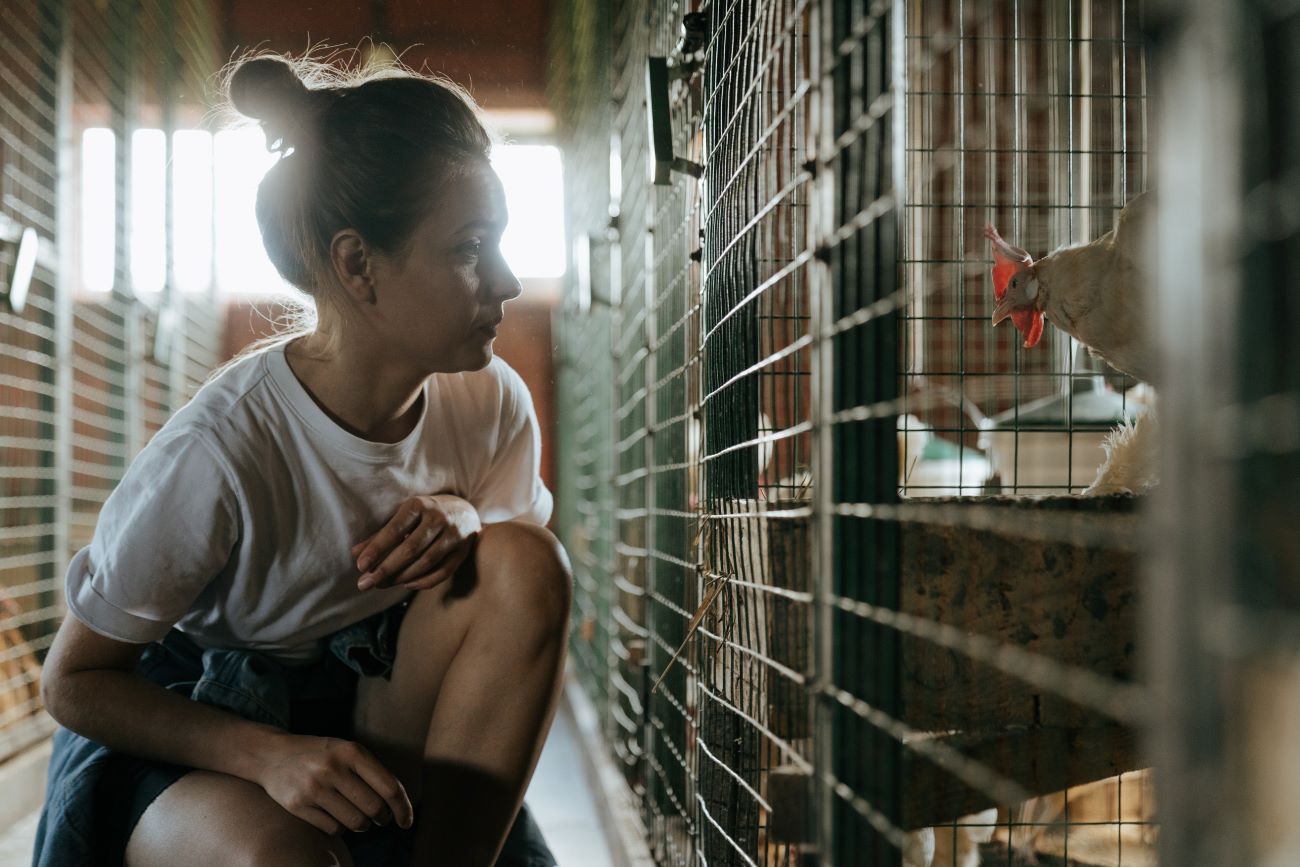
Photo by cottonbro from Pexels.

Some prominent figures in Ghana who are into poultry farming include Kwabena Darko, Ibrahim Mahama and Mr Beautiful. Now, it is safe to say that these individuals are making tons of cash from poultry farming. Given this, you may ask, “If Mr Beautiful and co can make money from poultry farming, why can’t I do the same? Sure, you can. But here lies the problem – even though you could actually make a lot of money, you are more likely to fail if your sole motivation is to make money. Sounds crazy right? Keep reading to find out why.

So let’s assume you want to start with 1000 birds, you probably need to raise around GH₵ 150,000 to run the farm for the first 8 months. But you must remember that layers will take around 18 weeks before they start laying eggs. This implies that your farm is going to incur expenses for 4  months straight without returning you a dime in revenue.

Furthermore, you’ll only get a small percentage of birds laying eggs in the initial stages coupled with the fact that the eggs may not necessarily be of marketable size. As a result of this, even though revenue may be generated in the first year, it still wouldn’t be enough to cover the expenses of the farm.

Also, you need to know that the birds will not productively lay eggs in perpetuity so at some point in time, you will have no other choice than to bring in a new set of birds to replace the outgoing ones.

Provided you always want to keep your customers happy, you’d want to ensure that your farm can maintain a regular supply of eggs. Because of this, you may decide to purchase an extra set of 1000 day-old chicks right at the end of the first year. Now, with this new purchase, you may require extra funds to expand your structure, purchase more feed, buying more vaccines, etc. Hence for the first two years of running a poultry farm, you are very likely to run at a loss.

By now, you may be thinking, “Why should I invest hundreds of thousands of Ghana cedis into a business which doesn’t guarantee me profit in the first two years?” This is why writing a very good business plan is important because if you did due diligence, you might have found out that depending on the farm’s growth strategy, profit could be made from year 3 onwards and at the end of the 5th year, you might have recovered whatever amount you have invested in the farm.

To conclude, even though, it is highly possible to make money out of poultry farming, if you are not passionate or driven enough (A.K.A money is your only motivation for starting), you are going to give up at the slightest hurdle you are faced with. Even more dangerous is starting a poultry farm without a business plan – this is because you may purchase an unreasonably high number of birds which you may not necessarily have the financial muscle to take care of, therefore in the quest to make more money you, unfortunately, burn through all of your savings.

For more information on how to get a professionally drafted business plan for your poultry farm please contact us.

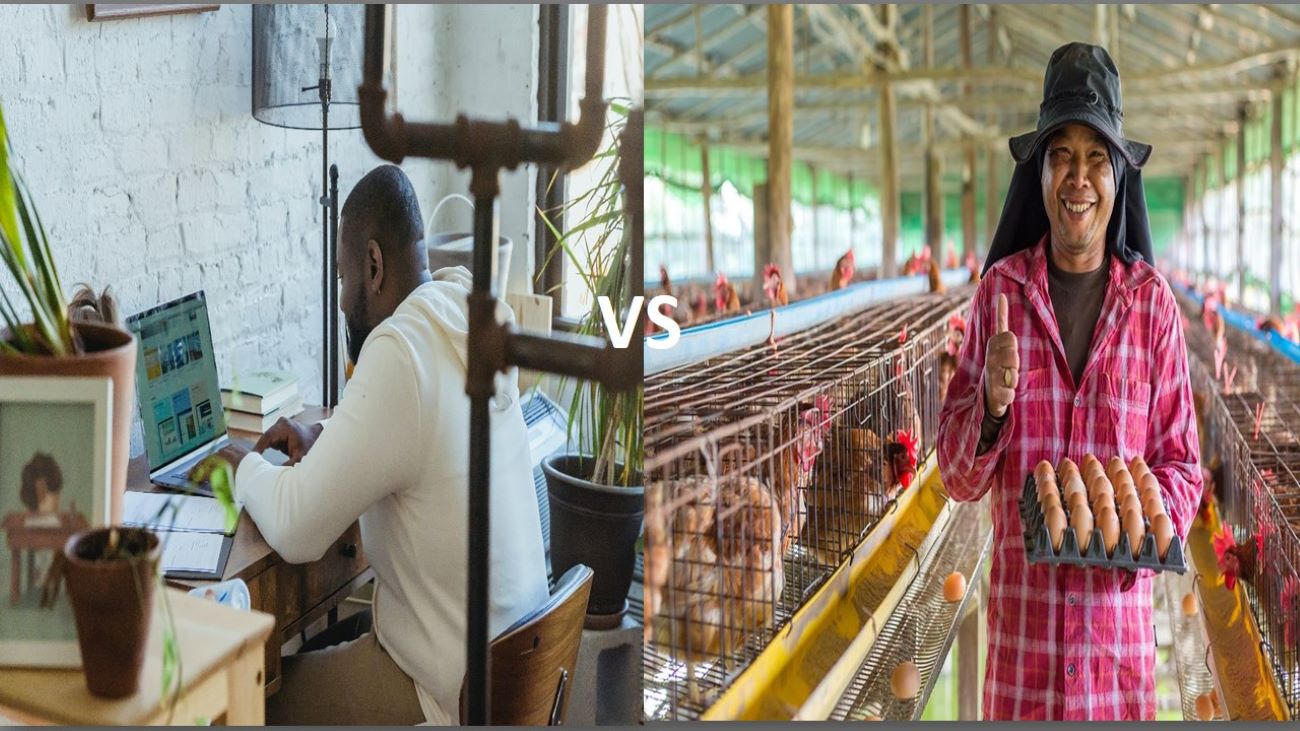
Should You Reject a Job Offer of GH₵ 3,000 per Month to Start a Poultry Farm?

Two photos were combined in the image above. Photo on the left is from Kiera Burton/Pexels while the photo on the right is from Shutterstock.

 Just a week ago, one gentleman contacted me asking for advice on whether to abandon a job offer of GH₵ 3,000 per month in favour of rearing 1000 layers and I thought it would be helpful to share the advice I gave him with you. The maximum revenue (from 1000 layers) you would probably make from egg sales in a month as of the time of writing this article is GH₵ 15,000 with a 20% profit margin, hence you basically make the same as someone who is receiving a GH₵ 3,000 per month salary. Now that it has been established that both options could generate the same income, you might be tempted to believe that this is just a matter of choosing any one of them but you’ll be intrigued to find out that this choice is not that simple to make. Keep reading this article to find out why.

Before giving anyone advice on this matter, certain details of the individual such as risk tolerance, age, marital status and number of kids must be known.

Before starting any enterprise, you need to check your risk tolerance. Are you comfortable with the prospect of losing as much as GH₵ 150,000 in a year? If your answer is yes, you can start a poultry farm of a thousand layers. If not, you better find some relatively safe investment such as treasury bills to put your money in.

The fact that you are risk-tolerant, doesn’t necessarily mean you should just jump head-first into poultry farming and reject the guaranteed monthly income. You need to consider how old you are. Assuming you are between the ages of 25 and 30, single and with no kids, you practically have very little to lose. Sure, losing GH₵ 150,000 isn’t fun but you know what else isn’t fun? Using your life savings to start a poultry farm and watch everything crumble before your eyes when you have kids and other important commitments to take care of. This is why I would advise someone who is 35 years or older with major commitments to take the GH₵ 3,000 salary.

So does it mean if you 35 years or older, you shouldn’t start a poultry farm? The answer is no. Even though poultry farming involves some risk, writing a good business plan and having an experienced farmer or consultant guide you through the farming process significantly increases your chances of success.

In a nutshell, it would probably be smarter to take the job offer and run the poultry farm on the side so even if your poultry investment goes south, you know you have the security of a regular monthly income to protect you. However, if you are relatively young without major commitments and have the stomach for risk, you can forgo the job offer and concentrate solely on the poultry farm.

If you would remember, I made mention of the fact that when you write a good business plan you increase your chances of succeeding as a poultry farmer, however, you might require some help. For a professional business plan on starting a poultry farm, feel free to contact us.

Is this the Easiest Way to Reach 15,000 Layers in Only Five Years?

©Shutterstock Poultry farm full of white laying hens.

You have big dreams – you dream of the day when you could travel anywhere you want in the world, the day when you could go shopping without ever worrying about the price and then probably, the day when you get to provide your family with the best life money can buy. Now to achieve this lofty dream of yours, you know there is something you need – yes of course you need money and lots of it. The question now is “how can you make the money?” You reflect on it and remember that an uncle of yours has been into poultry farming for ten years now and is super-rich. So you say to yourself, “Alas, this is the right business opportunity for me.” Upon further investigation, you realized that if you raise 15,000 layers you can make as much as GH₵ 188,000 in monthly revenue. Ok, we have now established that 15,000 layers will help you hit the jackpot but there is a little problem – you need to raise not less than GH₵ 1.5 million if you have any plans of raising this many egg-laying birds. Finally, you conclude that you can’t raise such an amount of money in such a short timeframe so you change course and decide to rather reach this target in five years. How can you achieve this? Keep reading to find out how.

Well, if you are going to establish a poultry farm of this magnitude, you would want to have business partners. Of course, unless you have bucket-loads of cash, it makes sense to share the financial burden of starting such a capital intensive venture with others.

The first step is to look for two other partners and register the farm as a limited liability company. Once you have found the partners, the three of you can contribute and raise money to start a farm of 1000 layers – this may seem far off from the 15,000-layer target but hey, every successful company had humble beginnings. With 1000 layers you’d probably have to split a startup capital of around GH₵ 140,000 equally among three people meaning each partner would have to contribute approximately GH₵ 47,000.

After each partner has contributed the required amount, all of you now own an equal amount of shares. Now assuming you registered the company with 1 million shares, each shareholder will own 333,333 shares (representing 33.33% of the total shares).

After the registration and share allocation, you move straight to the farm setup.  After you’ve set the farm up, keep rearing the initial 1000 birds until they are 12 months old before you bring in a new set of 1000 day-old chicks – the rationale behind this is to ensure that the farm generates enough revenue to cater for a new set of birds and also to ensure that when the initial set of birds grow past productive egg-laying capacity, the new birds would replace them.

When the initial 1000 birds reach 20 months of age, you sell them off as spent layers for GH₵ 25 each, making a total of GH₵ 25,000. Furthermore, within the first two years, the farm is expected to generate GH₵ 197,360 from egg sales and incur total costs of around GH₵ 339,173. Since the three co-founders would have already invested GH₵ 140,000 the amount of money that will be left at the end of year 2 is expected to be GH₵ 23,187.

Going into the third year, we still have the second set of 1000 layers producing eggs but they would be sold off in the 7th month potentially bringing in an amount of GH₵ 28,000 (Assuming the price of a spent layer increases to GH₵ 28.00). However, since you don’t want your farm to be empty by the seventh month, you would procure 1,500 day old chicks right at the beginning of the third year. By so doing, your farm generates a total of GH₵ 231,740 in egg sales and sale of spent layers and incurs a total cost of GH₵ 286,537. Also, you need to remember that GH₵ 23,187 was projected to be leftover by the end of year 2, hence adding it to the total amount generated by the farm, we get a total of GH₵ 254,927 which implies that the founders would need to raise an extra GH₵ 31,610 to run the farm for the third year.

For year 4, if you maintain a 1,500-bird population, you get to make as much as GH₵ 174,225 for the first eight months from egg sales alone but that was not your goal – your goal was to have 15,000 birds in five years. So what do you do? You go in for external investment. Before going for any investment you’ll need to value your company. Given that your farm is expected to have generated close to GH₵ 500,000 in egg and spent layer sales by this time, you can value your farm at around GH₵ 1.5 million. After valuing your farm, the management of the company will issue 1 million additional shares and distribute them to investors for GH₵ 750,000. At this point, the total shares issued is 2 million with each co-founder’s share in the company diluted from 33.33% to 17% while investors’ shares represent 50%.

Still, on year 4, let’s assume the GH₵ 750,000 investment is made at the beginning of the first month. Straight away, we procure 5,000 day-old chicks. Since the 1500 birds were procured at the beginning of the third year, they will keep laying eggs for 8 months before they are sold as spent layers in year 4. Inferring from how the farm is being run, the farm is expected to generate around GH₵ 720,000 and incur costs of GH₵ 1,130,000. This implies that at the end of year 4, GH₵ 340,000 is expected to be left.

Now, in the 5th and final year, we bring in 10,000 day-old chicks taking our total number of birds to GH₵ 15,000 (5000 day-old chicks procured in year 4 included). Obviously, if you have a farm of such a capacity you may be thinking of building a hatchery to produce your own chicks but for the sake of this article let us maintain purchasing day-old chicks.  Since 10,000 chicks will be procured, more investment would be needed. At this point, your farm would already have generated over GH₵ 1 million hence you can comfortably give it a valuation of GH₵ 3.3 million.  After the valuation you issue 200,000 more shares and distribute them to investors for GH₵ 300,000 – this means total shares issued now totals 2,200,000 with each co-founder having 15.45% while investors take up the remaining 54.55%. During year 5, the company is projected to generate GH₵ 2,344,560 and incur costs of GH₵ 2,960,000 and since GH₵ 340,000 would be leftover from year 4, coupled with a GH₵ 300,000 investment in year 5, GH₵ 24,560 is expected to be leftover.

Obviously, running a 15,000-layer capacity farm is a very fantastic prospect that could generate as much as GH₵ 261,000 (15% profit margin) in egg sales after 5 years. Hence a profit of GH₵ 52,000 can be generated in a month. Furthermore, assuming the board of directors decide to distribute 60% of the monthly profits (GH₵ 31,200) to shareholders, each of the three co-founders (you included) would receive GH₵ 4,680 while the remaining GH₵ 17,160 of the distributed profits go to the investors. Another thing to note is that salaries are also expenses, therefore, profits are calculated by subtracting total expenses (including salaries) from total revenues within a given period. Hence, since you may be serving as the CEO of this company, it is not far-fetched for you to receive a salary of GH₵ 3,500 per month when the farm reaches a 15,000-layer capacity, thereby taking your total earning per month to approximately GH₵ 8,000.

To conclude, you would have achieved the 15,000 layer target in 5 years but mind you, this might require you to invest around GH₵ 60,000 and find co-founders and investors who will provide an extra GH₵ 1,000,000. Sure, it is not easy to reach 15,000-bird capacity in five years but it isn’t impossible either. This is why I have presented you with a strategic way to achieve just that.

How To Start a Poultry Farm While Working Full-time

Photo by Artem Beliaikin from Pexels

So people ask me how I’m able to combine working full-time and managing a poultry farm. I tell them I’m not a magician. I’m bent on taking advantage of an industry that has so much potential while creating multiple streams of income for myself.

You must be out of your mind if you think it’s easy. It’s brain cracking, financially draining and tiring – but with the right balance of determination, hard work and right advice – it shouldn’t be a difficult thing to do.

We have been advised not to make the mistakes of our fathers who depended solely on their salaries and went on retirement with almost nothing. Life becomes tough for the average Ghanaian upon retirement.

Heeding to the advice, I went into something I have dreamt about since my Senior Secondary school days – taking inspiration from an English textbook. It was about a man who left his job at the Ghana News Agency and became Ghana’s national best farmer.

I put up the structure with the help of a partner after I completed college and we committed more resources to it when we secured jobs. It hasn’t been easy but it’s been worth it.

It’s important to have a partner if you don’t have enough resources to start. To be very honest with you, poultry is a very capital intensive venture and the average person would struggle to get it up and running.

You can raise money via debt financing but poultry business has so many uncertainties – so it’s important to get a partner who shares your vision.

Get a workable business plan detailing everything you need to start the business and what to anticipate. That should be a very good guide – in case you need assistance in drafting a professional business plan, feel free to contact us. Like they say, if you fail to plan, you plan to fail.

Get a trusted employee, most likely, a relative. I work around Koforidua and my farm is in Weija but everything goes on very well. The nature of my job is such that I get some months off. I join in the farm and work alongside the one who manages my farm.

It’s important to have oversight on the farm no matter where you find yourself. A dishonest and lukewarm manager will make your resources go down the drain. Be very selective in choosing someone to manage your farm while you are at work.

I’m unlucky to be far away from my farm when I move to my station. I have a friend who runs his farm himself even though he’s working full time. He makes sure the feeders and water troughs are very full before he leaves for work. Sometimes, he only goes there once a day. The risk associated with this is that you may lose a lot of birds who are weak or who lack something which only you can provide.

I remember I brought in some chicks and I forgot to take out a piece of wood I placed by the wall. The wind blew the stick and it fell on 3 birds. I went back 3 hours later only to find these chicks stuck under the wood. They all died later. If I had gone there earlier, I’m sure I would have saved their lives – and reduce my losses.

It’s very important to know so much about handling poultry birds before you order them. It’s very key to the success of your farm. Get someone to coach you. If you don’t have any. Pkom is here for you. I have travelled to lots of places to coach and train people on handling birds and setting up. We’ll gladly assist you.

Keep records on the feed you give them (the birds) while you record their age, in days, every other day. It’s very key.

It’s important to create multiple streams of income for yourself. Your salary is hardly enough to meet your expenditure. You should take a second look at entering into this business. Surely, your future is here. With the right advice and training – and plan, you should succeed.

Is Poultry Farming a Waste of Time?

Photo by Artem Beliaikin from Pexels

Poultry farming is a massive industry in Ghana responsible for the employment of thousands of people and also serves as a reliable source of additional or full-time income for farmers. With that said, one would wonder why someone would think poultry farming is a waste of time. Please continue reading the article to find out why.

First of all, poultry farming is capital intensive. For instance, if you want to raise 1,000 layers you may have to spend as much as GH¢ 150,000. Oblivious to this vital information, some people would assume that because they can afford to purchase 1,000 day-old chicks, they are good to go. They later go ahead and bring in the chicks but they find out that they cannot afford to purchase the feed for their birds so, in their desperation, they take on as much debt as they can till they reach the inevitable point where they have no choice but to sell off the birds.

Next to that, a lot of the farmers who do not succeed in poultry farming are quite negligent.  Every experienced poultry farmer knows that it is crucial that you do not miss any vaccination schedule as that could spell disaster but for some reason, some new farmers think it is okay to skip certain vaccination commitments and later complain bitterly when they start losing their birds in droves.

Furthermore, some farmers never learn. Usually, sticking to old ways of doing things or never innovating is the surest way to cause stagnation or sometimes worse, the decline of your farm. For instance, if you join an association of poultry farmers in your community and constantly meet with them to share ideas, someone might recommend a certain supplement or herb which may contribute to increased egg or meat yield. Also, during your discussions, someone might introduce you to new technology, perhaps, a new type of low-cost automatic water delivery system which may cut down your labour costs.

Finally, some farmers think they can do it all. Sure, you don’t necessarily need anyone’s help if you intend to raise birds on a subsistence basis but the moment you decide you want to venture into commercial poultry farming, you should understand you can’t do it all and you should seek help. Looking at the second paragraph, for instance, let’s assume you consulted with experts and you found out that to start a poultry farm of 1,000 layers you have to spend as much as GH₵ 150,000. You would have instead opted to begin with 250 birds assuming you only had GH₵ 50,000. This in effect means that by paying a relatively small fee to the expert you get to potentially save yourself from losing GH₵ 50,000. In case you are reading this article and you want to start a poultry farm but don’t know how much you need to start, please contact us.

To conclude, I don’t think that starting a poultry farm is necessarily a waste of time but in my opinion, I believe that people with the traits mentioned above shouldn’t start a poultry farm in the first place because it’s very likely that much-needed resources like money and time would just go down the drain.

Pay Your Farmhands an Above-Average Salary if You Want to Succeed as a Farmer

©Anton Zolotukhin/Shutterstock Industrial Poultry Farm.

I recently visited a pig farmer at Benso with our Chief Technical Officer and we had a very lengthy conversation with him (the pig farmer). Upon our conversation, the farmer complained bitterly about how difficult it was for him to find farmhands to work on his farm and worst of all, the ones (farmhands) he could get wouldn’t stick around for even a year.

Hearing this, I felt sad for the farmer of course, so I decided to find out the root cause of the matter. I went to speak to one of the farmhands and asked him how much he was receiving monthly as wages. To my surprise, it turns out he was receiving only GH₵ 450 per month without any form of Social Security (SSNIT) contribution from his employer. Upon further investigation, I found out that there were some small scale mining activities (galamsey) going on in the area and this was a real eye-opener.

Even though these galamsey operations are very risky for the obvious reasons, most people will still prefer to do a job where they could potentially make as much as GH₵ 100 in a day than to toil all day and make a measly GH₵ 450 per month.

Without further ado let’s delve straight into some of the very good reasons why you should pay your farmhands an above-average salary.

  1. To attract top talent: Assuming you are a poultry farmer, you’d realize that certain aspects of the business are quite technical. For instance in administering certain drugs or vaccines, certain calculations have to be made and if your farmhand isn’t smart enough to make such calculations, you could end up with unusually high mortality rates or decreased meat and egg production rates. If you offer wages between GH₵ 600 and GH₵ 800 per month depending on which part of the country your farm is located, you a very likely to attract someone who has graduated from an agricultural training college to work for you but if you offer very low salaries, say between GH₵ 350 and GH₵ 500 be rest assured that you’ll struggle to find yourself any qualified individual to assist you with your farming operations.
  2. Farmhands will stick around longer: More important than being able to attract top talent to your farm is your ability to retain them. For instance, in the current climate where there is high unemployment, you could still manage to employ reasonably skilled talent for very low pay. But what happens when you employ someone who is unhappy and struggles to meet his/her basic needs? They won’t give their 100% when they are working because they are probably spending more time looking for a job with better prospects than focusing on making your farm successful. Eventually, they will leave your farm and you will be left with the task of rehiring another employee and training him/or her. The advantage of keeping farmhands long-term is that they fully understand the systems and how things are done in your establishment hence productivity is higher but when you always have to rehire and train employees, you know that a lot of valuable time and money will be lost.
  3. More dedication to work: When you pay your workers a higher salary you can expect higher output and commitment from them. Normally, farmhands who are well-compensated go the extra mile in certain situations. For instance, in a poultry farm, a well-compensated farmhand may notice that some of the birds are unusually inactive. He or she would quickly separate the suspect birds from the rest of the stock and carry out further investigations. A negligent and poorly paid farmhand could ignore these signs and if the problem happened to be an infection in the birds, the problem could spread to the rest of the flock causing decreased production of eggs or meat.
  4. Reduced Incidence of Theft: Another problem of paying your workers poorly is, of course, they may try to steal from you to make up the difference in their lack of financial stability. You’ll be surprised that certain situations may tempt otherwise good people to engage in unethical activities so to greatly reduce or eliminate the likelihood of theft on your farm, you can do well to pay your workers a livable wage.