Four Ways to Maintain Customer Loyalty as a Poultry Farmer

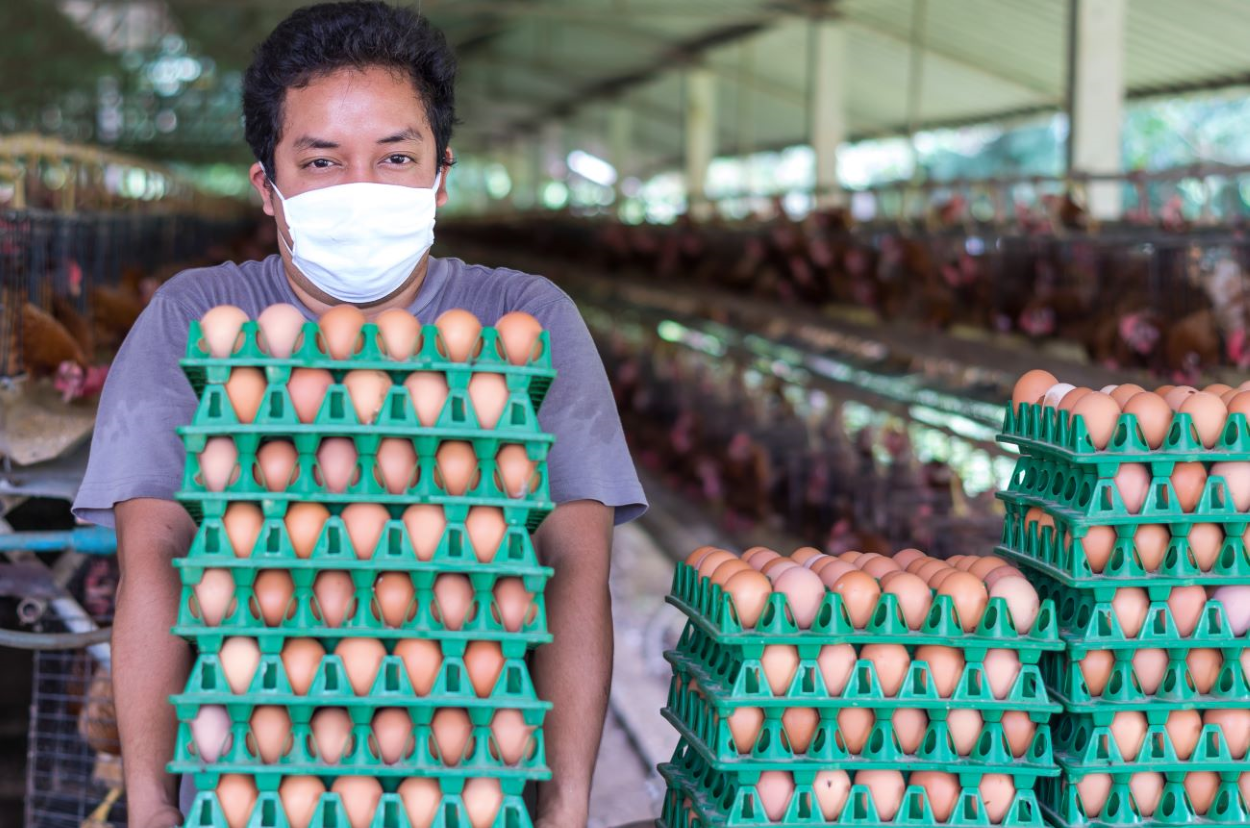
©Shutterstock Young Farmer holding the egg trays on the egg chicken farm after collection process.

Learning how to get your birds laying or ready for the market is as equally important as getting them sold to customers. The most important part of the whole production is to get market for your poultry products.

Poultry farming is a full-blown business and as such, profit is expected to be made at the end of the financial year.

Your customers are the ones who bring in the money and for that reason, you’ll need to find strategies to get them coming to you every other day which is why we state below, some four strategies which can help you maintain their loyalty.

  1. Provide Good Customer Service

People often forget that the customer is very important in business. Without customers, your business ceases to exist. I have been to shops and service providers – and it feels like the shop owners or workers do not place a premium on their clients. Excellent service is what creates lifelong customers, avoids negative word-of-mouth and differentiates you from the competition. Listen to your customers and address their concerns promptly. Make it easy for them to get in touch you. Give out your phone number and ask them to call you as many times as they can. Treat your customers well and they’ll always return.

2. Get their phone numbers

Get a book with the names and contact details of all customers. Get in touch when you have products to sell. Call them regularly to check on them. It’s very important because it makes the relationship go beyond just business as usual.

3. Don’t neglect existing customers

The quest to get in more customers for the poultry products means you may be tempted to neglect existing clients. To avoid frustrating your loyal customers, make sure that you keep in touch regularly.

4. Be reliable

In my former workplace, I was always selected for workshops and conferences. It wasn’t because I was some extraordinary person. I was very reliable so my bosses always had me in mind. If customers are to trust you, then it’s important to make yourself a reliable person. This means if you promise a product to be delivered within 48 hours after the purchase, then make sure delivery occurs within that time frame.

If reading this article piqued your interest in starting your poultry venture, it will be in your best interest to write a good business plan. Even if you don’t necessarily have the time to write your own, don’t worry. Just send us a WhatsApp message by following this link https://wa.me/233592239127. And we’ll draft a professional business plan for you at a very reasonable price.


Are you tired of too much paperwork involved in keeping records on feed, egg collection, vaccination, mortality, profit and loss, etc.? Worry no more. We are developing a software application that simplifies poultry management. Follow this link if you are interested.


Finally, are you ready to start your dream poultry farm, but don’t know how to construct the chicken house, brood the chicks, source the right materials, etc.? Just follow this link https://wa.me/233592239127 for more enquiries.

Understanding Corporate Social Responsibility From a Poultry Farmer’s Perspective

©Shutterstock 8 March 2020, New Delhi, India; Group of a hungry poor children are being feed by social workers in the global pandemic of corona virus. Free food for homeless people, distribution of food.

I’m pretty sure most Ghanaians have heard of the “Think Heart, Save a Child” project which is a collaboration between MTN Foundation (the philanthropic wing of MTN Ghana) and 3 Foundation (the philanthropic wing of TV3 Ghana) to help pay for the surgeries of children suffering from hole-in-heart conditions. By engaging in such philanthropic activities, companies want to prove to you that they are not here to always take from society but to give something back.

In Ghana, many poultry farmers complain that they find it difficult to sell broilers because they are unable to compete with foreign frozen chicken imports but I believe that corporate social responsibility (CSR) can be seamlessly integrated into the marketing effort to help improve brand perception of Ghanaian poultry products. Below, I indicate some CSR strategies which you can implement to establish your brand.

  1. Giving away free meals: Even though Ghana’s economy has shown steady growth and with more people being lifted out of poverty than ever before, there are still some segments of the population, especially children who find it hard to come by good nutritious food so as part of company policy you can decide to allocate let’s say 5% of company profits to do a Christmas party involving maybe some jollof rice and Ghanaian chicken every year for needy children. This way, people would associate buying your product with a greater societal good rather than just making you richer.
  2. Training women on sustainable agriculture: Perhaps you would love to prepare your own feed to cut some costs. You must understand that the cost of feed depends on the prices of commodities such as maize and soybean so it could be a great strategy to grow the crops yourself instead of purchasing them. And one way to positively impact your community is to set up a farm which employs women, especially widows and other from disadvantaged backgrounds to explore environmentally sustainable ways of planting the crops using other alternatives such as composting to conventional farming methods.
  3. Contributing to relief efforts: For instance, during the early stages of the pandemic when lockdown measures were enforced, many companies donated food items, PPEs, etc. to communities which have had devastated economies due to the lockdown measures. Poultry farmers can also play their roles during crisis periods by donating items to help lessen the impact of such catastrophes.

Conclusion

We want people to eat made in Ghana chicken but how do we explore strategies to help attach greater importance to our products rather than just patriotism? The answer is simple – corporate social responsibility.

How To Prevent Employee Theft And Other Fraudulent Activities From Happening On Your Farm

©Shutterstock Chicken farm, preparing to move in a new location.

Many poultry farmers complain that employees steal from them and this has discouraged some farmers from even attempting to hire people. Remember, it will be very difficult to grow your farm without the help of some farmhands so deciding not to employ anyone could mean losing out on some great opportunities. With that said, the concern about some employees engaging in fraudulent or inappropriate activities is legitimate and here are some tips to safeguard your investment.

  1. Keep track of the average number of products produced within a given period: So let’s assume you raise 1000 Layers for egg production and you have studied that the birds produce around 19 crates per day on average, the moment the laying rate drops drastically to say 15 crates per day, you can suspect something fishy going on. In short, employees would be deterred from stealing a significant amount of egg or products when they know they’ll be found out.
  2. Open a bank account specifically for your farm: Keeping large amounts of cash in-house may not exactly be the brightest strategy because the cashier may steal some of the money collected and connive with the person collecting the eggs to report that lower number of eggs were collected on that day as compared to what is usually collected but storing the bulk of the company’s money in the account reduces the risk of theft. Obviously, you may need some amount of money to handle minor expenses such as the purchase of supplies such as rubber bands so you can set aside a small amount for that purpose.
  3. Separate employee duties: So let’s assume you rear broilers and usually, farmers sell broilers on credit in large quantities to restaurants, cold stores, etc. so you may decide to hire salespeople to help sell your products and one way to motivate them to sell more is by giving them bonuses for every product sold. So now let’s suppose the very same people who are meant to sell your products are the same ones who approve credit. What do you think they do? Since they’ll receive bonuses for every product they sell, they may not due diligence on the creditworthiness of a potential customer, they’ll only care about inflating sales figures to beef up their bonuses.  Once you separate these two functions there will be less fraud as the person approving credit wouldn’t want his/her image to be tarnished by approving credit sales to unworthy customers.

Conclusion

Employees may not necessarily be inherently evil but sometimes, people can get tempted to engage in unethical practices for reasons best known to them so it is in your best interest as a farmer to safeguard your investment by implementing controls aimed at preventing or drastically reducing unethical behaviour.

Why Poultry Farmers Need to Master the Art of Negotiation

©Shutterstock Farmers checking the modern technology.

As previously discussed in our plethora of articles, poultry farming is a full-time business and for that reason, its entails all elements a normal business has.

You’re producing eggs or raising broilers to sell. The end game is that your end product will get purchased by direct consumers or retailers – either way – you’re expecting to make a return on your investment.

A good business person looks to maximize profit from less investment with efficiency – and the end product not compromised. It’s for this reason that negotiation skills should be one of your key skill-sets as a poultry farmer.

What is negotiation in the first place? Negotiation is a process where two or more parties with different needs and goals discuss an issue to find a mutually acceptable solution. In business, negotiation skills are important in both informal day-to-day interactions and formal transactions such as negotiating conditions of sale, lease, service delivery, and other legal contracts.

So how is negotiation important to you as a poultry farmer? Feed for the birds is estimated to constitute about 60 to 70% of the cost buildup of poultry production. For that reason, it’s important to get your negotiation skills in the upper echelons if you’re to succeed in this industry. The aim is to keep the cost of feed low as much as possible. It all boils down to negotiations. Negotiations here doesn’t mean go to the sellers and ask them to sell their feed to you at a certain price – and that you’re not ready to listen to anything they say.

Remain calm, cool and collected and have a very good conversation with the sellers. You aim to get your cost of production low in other to maximize profit. Try to be friends with these sellers. Have long conversations with them without necessarily talking about business. Let them know that your interest goes beyond business and that you care about them genuinely.

I have a friend who is the CEO of a popular education program in Ghana. He once told me that, before he discusses any business with clients, he spends around 2 hours having general conversations. That has been his trick. He has never looked back since.

That approach can open doors for you. They’ll give you good counsel that will benefit you in the long run.

Don’t be confrontational. Neither should you be emotional or blame the other party if you don’t get exactly what you set out to achieve. These things do not order well for you. Keep your emotions in check once you agree to go into this business.

It shouldn’t just be business as usual. It should be more about the human touch. If you go in strictly for business, the other parties will treat you as such.

Be clear and consistent in your approach during negotiations. Do well to ask plenty of questions, pay so much attention especially to little details and put things into writing. No one has infinite memory.

You must go into negotiations looking to reach a compromise with the other party. It shouldn’t always be about you.

As a poultry farmer, I go into lots of transactions – meaning I meet a lot of people. I go into these transactions prepared for anything that will happen. I try to make the most out of these transactions.

Selling the finished products is very vital. I usually look at satisfying my clients over profit. I often look at the future. I made losses 2 years running because I accepted the prices that the clients offered. I didn’t play hard. It worked out well later. I’m not saying this is the best strategy. Sometimes, you have to lose something to gain something.

You can never downplay the importance of negotiations. Make it a key part of your strategy and trust me, you’ll be on your way to poultry farming greatness.

Four Qualities of a Good Poultry Farmer

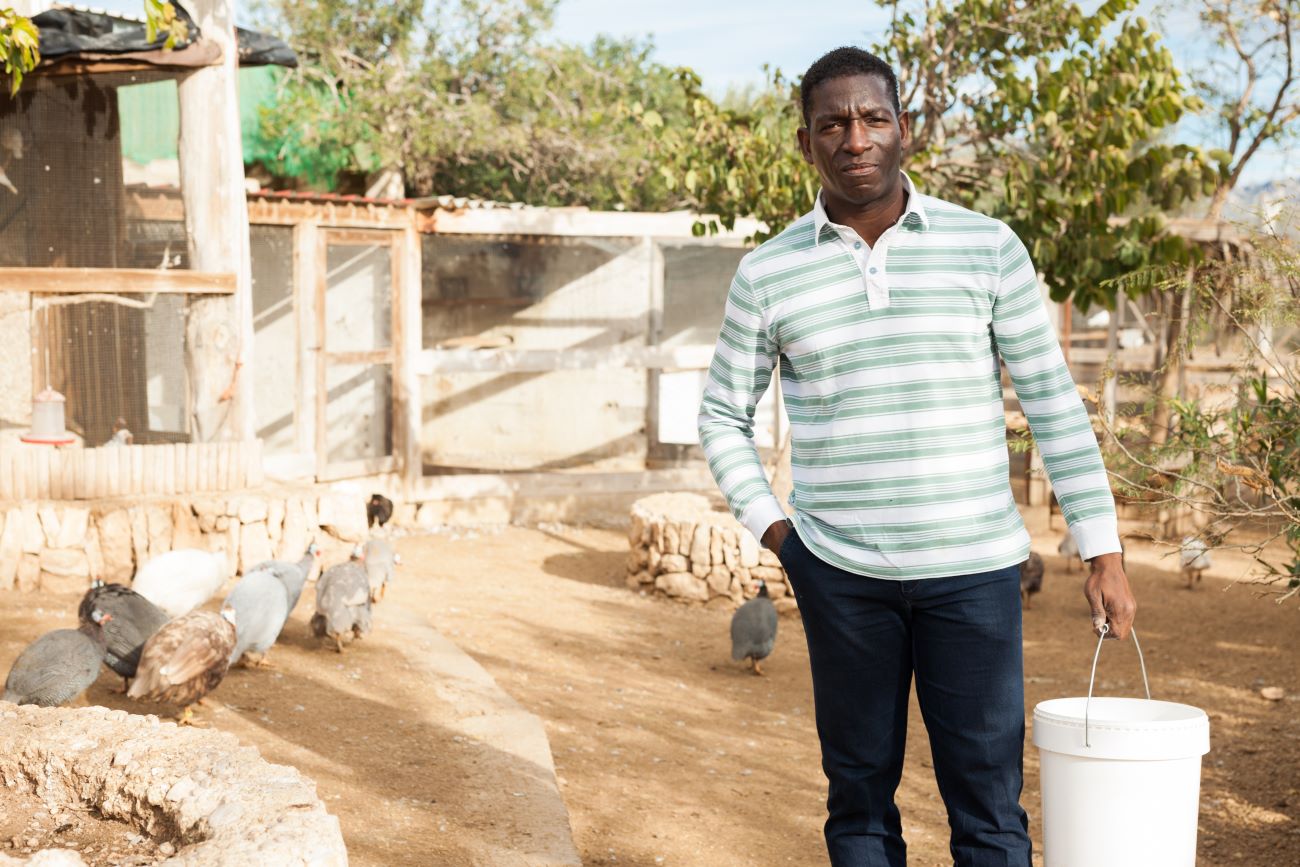
©Shutterstock African American farmer feeds poultry in the backyard of the farm.

Poultry farming is a crucial part of Ghana’s economy. The industry has created job opportunities for thousands of people and provided a source of much-needed protein in our diets.

However, if Ghana is to be completely self-sufficient in terms of poultry production, we will need more top farmers to reach this lofty target. 

Below, I describe four qualities which are a must-have for any poultry farmer who has ambitions of becoming a top player in the industry.

Problem-solving abilities

As a poultry farmer, you must be innovative and keep a cool head no matter how dire the situation is. Assume you have 1000 white layer birds. You left for some meeting with fellow poultry farmers. Upon return, you realise that ten of your birds lay lifeless on the ground and another ten are seriously bleeding from their vent.

What do you do in this situation? Would you panic or take your time to find the cause of this situation? In this situation, cannibalism was likely the cause. So you may want to start debeaking the birds and take note of the particular period in which this happened. This way, you will not lose as many birds next time.

Time management proficiency

Poultry farming is not your typical 9 to 5 job, where you wake up, shower, go to work, close, and finally, come home and watch TV. As a farmer, you’ll probably have to wake up at 6 am, feed the birds and occasionally watch out for their behaviour from time to time. 

Again, you may hear your birds making some noise. If you lack proper time management skills, you may ignore them and watch TV. But the noise emanating could be because a foreign animal has invaded the pen. The birds could be startled, resulting in a stampede. Hence proper time management can help you better respond to crises.

Interpersonal Skills

As a poultry farmer, you might be leading some farmhands, and it is very crucial that you communicate well with them and also show empathy. This way, they will likely push harder to ensure you become successful. Again, as a poultry farmer, having good negotiation skills will enable you to get the best prices for your products.

Financial management skills

Since poultry farming is a commercial activity, knowledge about cash flow and debt management can go a long way to help your farm grow and prosper. Actually, most farmers in Ghana don’t see this as a necessary skill to hone. Because after all, they sell products every day, so what could go wrong?

Conclusion

I hope this write-up has helped change your perception of poultry farming and that you are now going to approach this lucrative industry more holistically.

If reading this article piqued your interest in starting your poultry venture, it will be in your best interest to write a good business plan. Even if you don’t necessarily have the time to write your own, don’t worry. Just send us a WhatsApp message by following this link https://wa.me/233592239127. And we’ll draft a professional business plan for you at a very reasonable price.

Are you tired of too much paperwork involved in keeping records on feed, egg collection, vaccination, mortality, profit and loss, etc.? Worry no more. We are developing a software application that simplifies poultry management. Follow this link if you are interested.

Finally, are you ready to start your dream poultry farm, but don’t know how to construct the chicken house, brood the chicks, source the right materials, etc.? Just follow this link https://wa.me/233592239127 for more enquiries.
What is the production cost per egg in 2021?

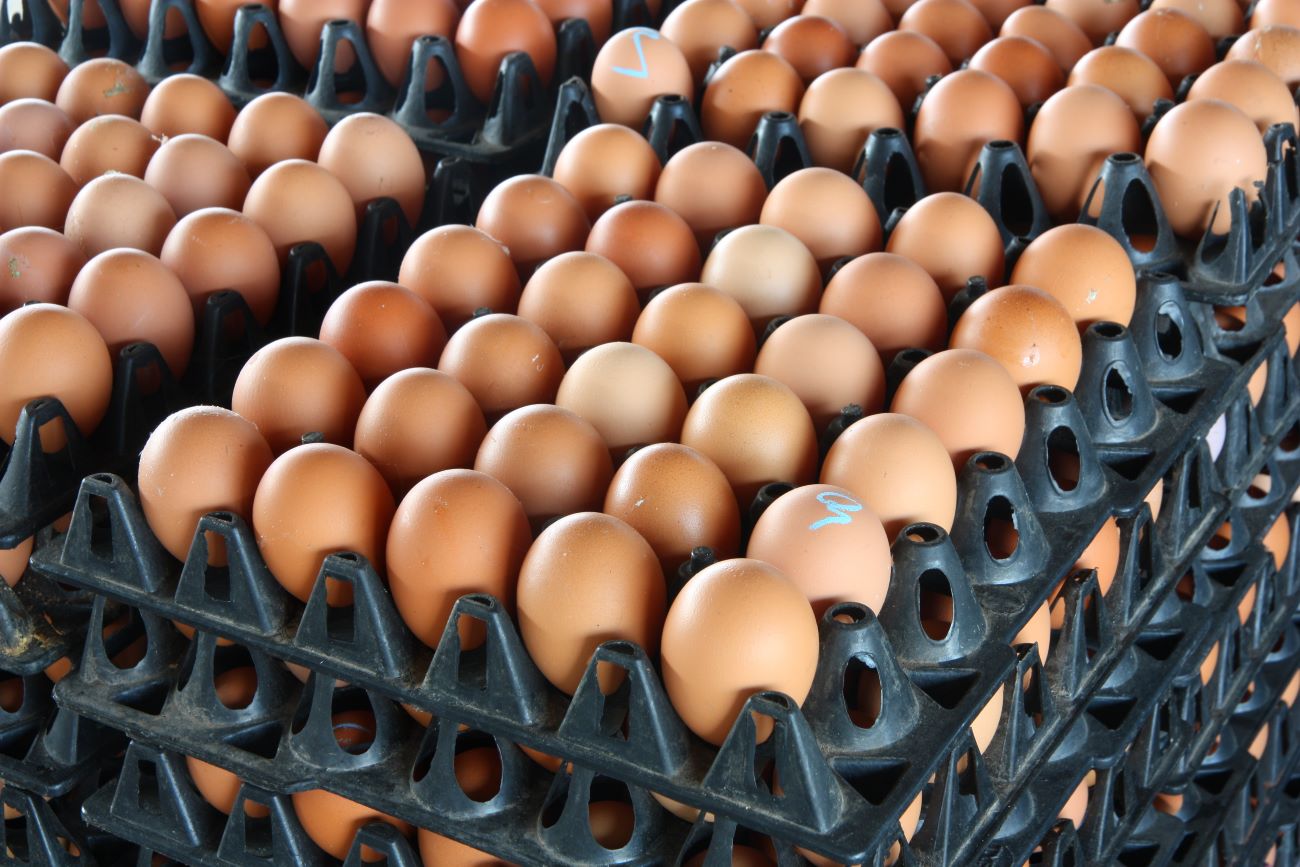
©Shutterstock Fresh eggs from farm.

So you have decided to start a poultry farm purposely for the production of eggs. Congratulations! But do you know the production cost per egg? You may be thinking you have more than enough capital to start of poultry farm. However, if you understand the unit cost of production, you already have one foot in the door of success as a poultry farmer. Below are three reasons why you should know the production cost per egg.

1. To operate profitably: To make a profit from the sale of any good, your cost of producing the good should be lower than what you sell it for. Assuming you purchased a pack of 100 toffees for GH₵ 15, you know that to make a profit, you need to sell each toffee for more than Gp 15. However, with egg production, estimating production costs is not as simple. You need to account for operating expenses such as feed, vaccines, wages, etc. After that, you must ensure that revenue from the egg sales outpaces your total operating expenses. You must note that assets such as land, the structure and day-old chicks are not considered as expenses since they are purchased for the long term, therefore they don’t immediately factor in when we are talking about egg production costs.

2. To gain a competitive advantage: Let’s assume most of your competitors sell a crate of eggs for GH₵ 22.00. Then upon your investigations, you find out that the production cost per crate of eggs is around GH₵ 15.90 for you. You may decide to sell yours for GH₵ 18 and still make a 12% profit margin while blowing your competition out of the water.

3. To understand the significance of economies of scale: Economies of scale is a concept which explains how larger scale business operations tend to have a lower cost of production for every unit of a product or service created. As a small farmer, you may find it very challenging to purchase the recommended feed for your birds. And this forces some farmers to attempt to find cheaper alternatives that may not necessarily be good for the birds. Again, as a farmer running a smaller farm who wants to give your birds the recommended feed, you might have to take out a potentially high-interest loan for that purpose. But for a large scale farm, they can likely purchase feed on credit and even receive some discounts when they pay back on time. In the example I used here, the large scale farmer avoids interest payment and at the same time enjoys a discount. This essentially means that she pays a relatively lower price per feed purchased as compared to the small scale farmer.

How the production cost per crate is calculated

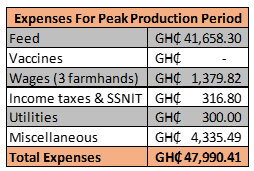
To explain this concept we are going to use the sample table of expenses below.

The above table shows the expense to be incurred by a 5000-capacity layer farm (battery cage system) in period spanning from the beginning of the 31st week to the end of the 34th week (peak production). Within the 4-week period, 90,000 eggs were produced. Therefore, to calculate the cost of producing an egg, you divide the total expenses by the number of eggs produced (GH₵ 47,990.41 / 90,000 eggs = GH₵ 0.53 per egg).  Therefore, in this example, the farmer will spend 53 Ghana pesewas per every egg produced.

Conclusion

Even though in our example, the production cost per egg is 53 Ghana pesewas (GH₵ 0.53 or Gp 53), several factors may come into play which could cause the figure to be higher or lower in your case. For instance, someone starting a farm with 200 birds may have to employ one farmhand while someone rearing 1000 birds could also make do with the same number of farmhands. In this scenario, both farmers are potentially spending the same on wages but the one with 1000 birds is probably making 5 times as much revenue. Therefore, the more birds you have, the lower your cost of production per egg.

A Farmer Saved His Flock Just by Reading an Online Article

©Shutterstock Farmer checking some technical parameters.

Poultry farming is one of the most sought after options for young guys choosing the entrepreneurial path. As a poultry farm consultant, I have many people contacting me for information on the business and I’m always elated when such enquiries are made.

In the past, the rule was you study hard, make good grades and secure a high-paying job after school but current unemployment rates prove that this strategy may have outlived its usefulness. When the National Service is drawing to a close, service personnel send their CVs all over the place – and are often left disappointed. That probably explains why there is a surge in young graduates seeking to invest in this industry but the capital intensive nature of the business makes this dream unachievable for most of them.

How do you expect a young guy who is not working to raise an average of 15,000 Ghana cedis for this business – especially when there are no guarantees?
As a potential poultry farmer, it’s important to read wide to look for ways and means to raise capital to invest in this business. There are so many resources on the internet that will do you a lot of good and here is one of them.

I remember some time ago when my chicks were only five weeks old, I went to the farm and realized one of them had died and another on the brink of death. It was a very depressing moment so I decided to investigate the cause. After doing some research online I found out that a portion of the flock was infected with a disease so I isolated and treated them (the sick birds) to prevent further spread. Also, by reading a lot, I came about various creative strategies to market my broilers.

Reading wide has helped me solve many problems on my farm. I believe it can help you too.

Does a Poultry Farmer Need to be Good at Math?

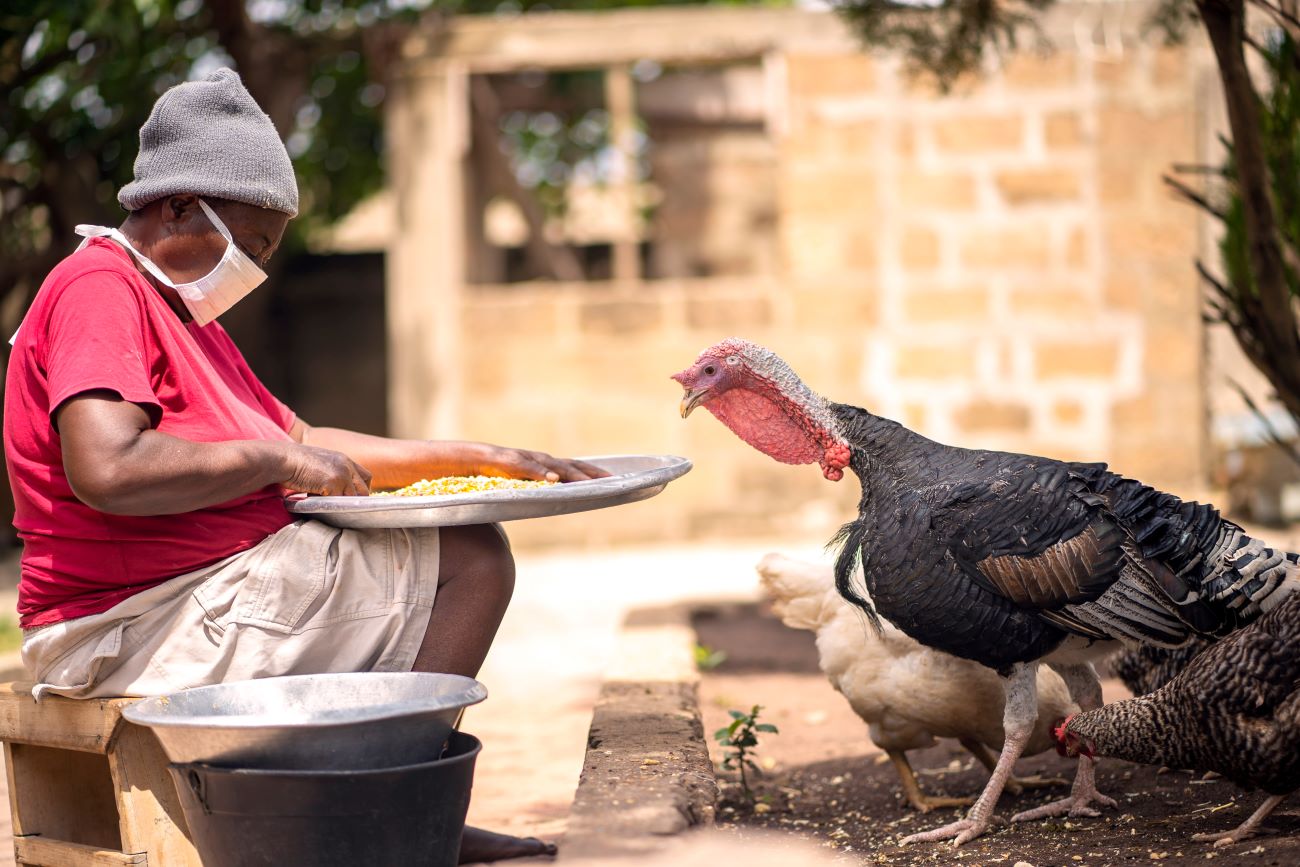
©Shutterstock Woman in nose mask feeding her turkey.

As previously mentioned in our previous articles, poultry farming is a full-blown business similar to the businessperson who imports from abroad and sells at Makola or the individual who produces sachet water for the market. Basic knowledge in arithmetic is very vital for every business in the world. Similarly, poultry farming involves a lot of math.


From the very day the chicks arrive, you’d have to monitor them by marking them day by day in other to help know the drugs to administer or the type of feed that will suit them at every point in time. Calculations would have to be done to ascertain the amount of money spent on feeding in other to help know if you’re on course or going wayward; a business plan will give you a reference point to track your progress.

You don’t need to have a degree in Mathematics to effectively manage a poultry farm – all you need to know is addition, subtraction, multiplication, division and maybe percentages. There are thousands of businesses out there who don’t keep books but have survived for years. That’s not to say I’m endorsing businesses who don’t keep books. That’s against everything I have learned as a trained Accountant (all I’m trying to say is basic math skills like addition and subtraction may be enough). However, in recent times where the poultry industry has been projected to be one of the biggest industries in the coming years, farmers need to take notice of whatever they do. You’d one day need a loan in other to expand your business. Financial institutions will surely ask you to present your set of books on the business in other to ascertain your creditworthiness.


I always ask farmers to hire professionals like accountants who will do a neat job on the finances of the business and keep books that will always help to know the financial standing of the farm. PKOM Bookkeeping has been doing this for years and we have got you covered if you wish to hire people to run your books. In this day and age, you can’t afford not to keep books on your poultry business because you’ll be missing out on so many advantages.


At PKOM Bookkeeping we’ve got you covered relative to everything poultry business.
Math is important in this business and if you have a weakness there, I’ll advise you to get someone to keep tabs on your farm relative to arithmetic data.

Is Poultry Farming a Risky Venture?

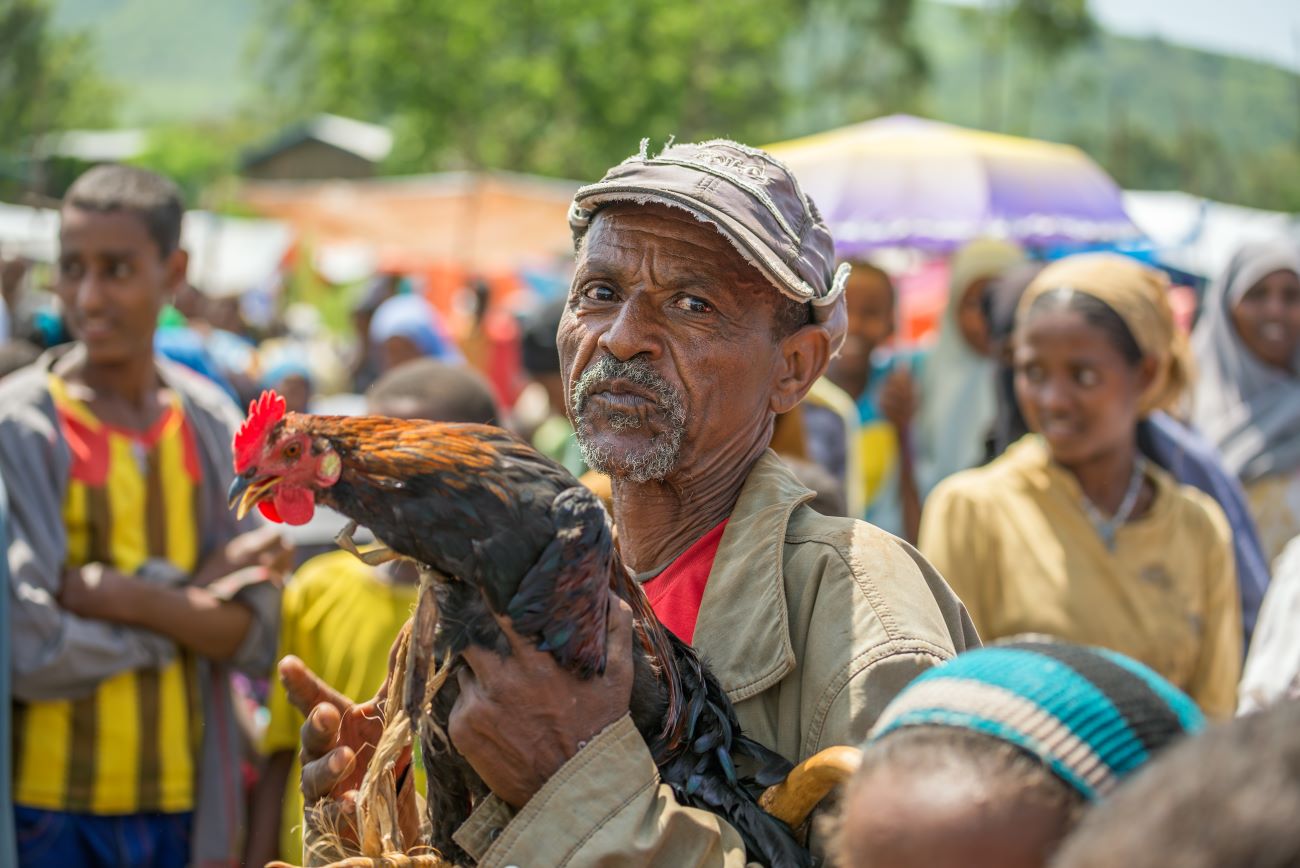
©Shutterstock Old Ethiopian man selling a rooster in a market.

In the past, farmers went into poultry farming mostly on a subsistence basis – basically, to feed their household and sell what’s leftover in the market. Same cannot be said these days. Poultry farming has become fully commercialized. The fact that it is a business means you are either going to gain or lose depending on factors in and out of your control.

What is a business in the first place? A business is any activity which involves the exchange of benefits for both parties involved. There are risks associated with business and for that reason, if we classify poultry as such then – of course – it is a risky venture. Every business is risky. You have to play your cards well and with good fortune, you’ll make it.

Back in school, my friends and I before graduation tried to start a business. We agreed on three but due to capital constraints, we agreed on going into farming.
We travelled from Accra to a town in the Ashanti Region. I still don’t remember the name but on your way from Accra to Kumasi, before getting to Konongo, you branch to your right.

We secured land in that area and started orange farming. We lost our investment over land litigation. But as business people, we knew we could lose our investment so we weren’t too surprised.

Without fear of contradiction, I’d like to say that poultry farming has some element of risk. In the first place, it involves so much money and as a consultant, I advise people to make sure that they are ready to lose whatever they invest.
I have dealt with so many people who tell me how they failed miserably after spending so much to start a poultry farm. I asked them if they sought advice before going into it and they answered in the negative.

Poultry farming is a bit complicated and you’ll need to be coached and mentored before you make an attempt. Don’t take things for granted.
It’s for this reason we ask you to get a business plan which helps you to know exactly what to expect and the amounts involved. It’s reckless to start a business by spending so much when you have little practical knowledge or no plan at all.

With the right advice and plan, you’re on your way to success as a poultry farmer. It’s better to spend time in preparing to start than to rush, start and fail; in the process, losing so much of your life savings.

From afar poultry farming looks rosy and one to make so much money from. It’s a false belief. The potential of diseases outbreak may threaten your investment. Reptiles eat the chicks very often especially depending on your location. It’s important to take the necessary biosecurity measures.

I have witnessed people lose half of their birds due to bad practices. The weather conditions can be worrying too especially at the early stages.
Businesses face risk and uncertainty but with the right measures and advice, you’re on your way to succeeding as a poultry farmer.
Keep the faith.

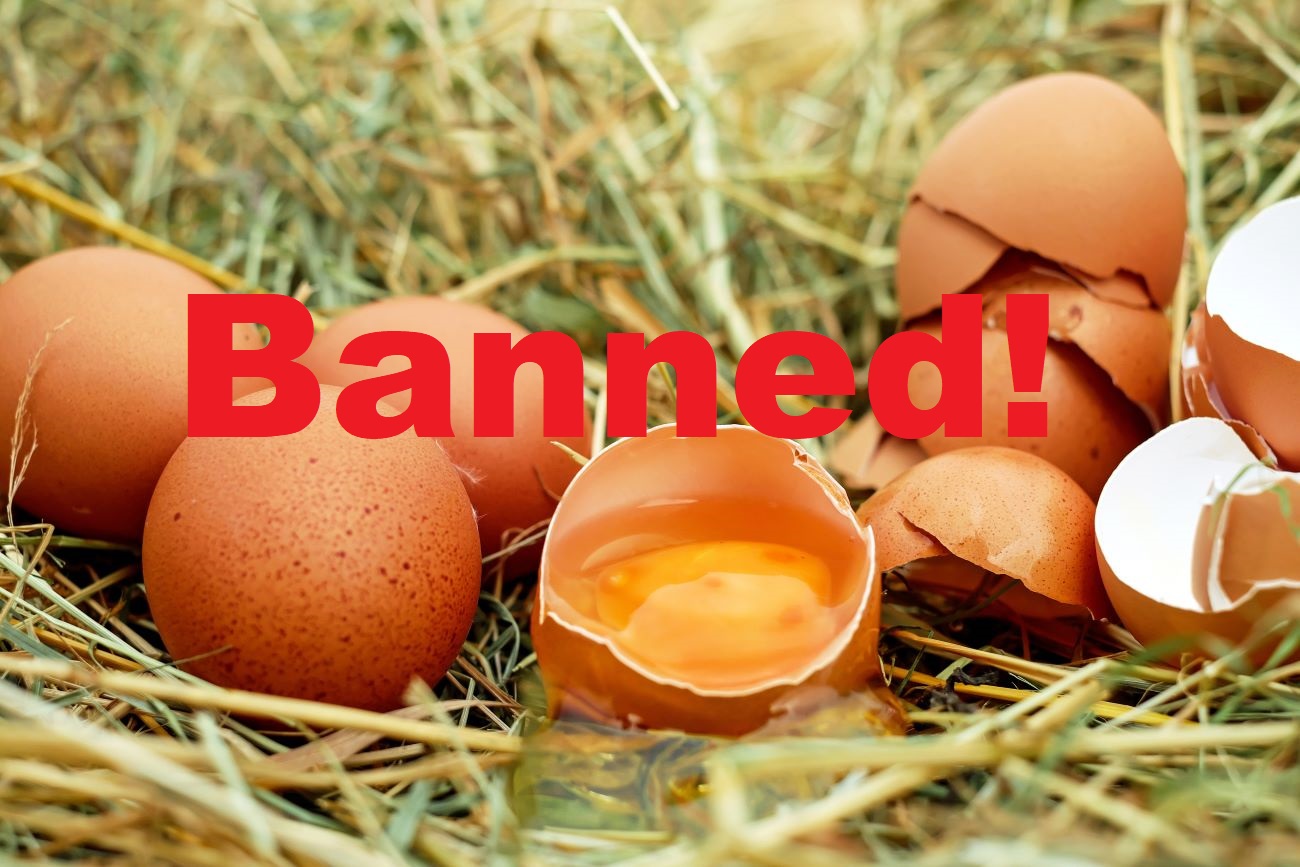
Eggs Produced in America are Officially Banned in the U.K and Vice Versa

I was surprised when I read on a British news portal that Eggs from the United States of America have an embargo on them relative to entering EU territory.

For me as a poultry farmer and someone very much interested in the happenings in the industry, I tried to dig further. Apparently, the United States has done the same to the UK. Eggs from the UK are banned from entering the North American country.

I asked myself a simple question, but an egg is an egg so why all these?

I got my answers in full and of course, I’m willing to share them with you. A synopsis of the whole matter has got to do with hygiene.

America has its own way of dealing with eggs while the United Kingdom also have their way of going about their eggs. That’s the point of departure – and for that reason – they have resorted to banning eggs from entering into each other’s jurisdiction.

Eggs from the US are said to be washed to remove bacteria from the shells. Unfortunately, the washing process is said to remove the bacteria and virus-resistant naturally occurring film that protects eggs from contamination. US eggs need to be refrigerated from the moment they are washed onward.

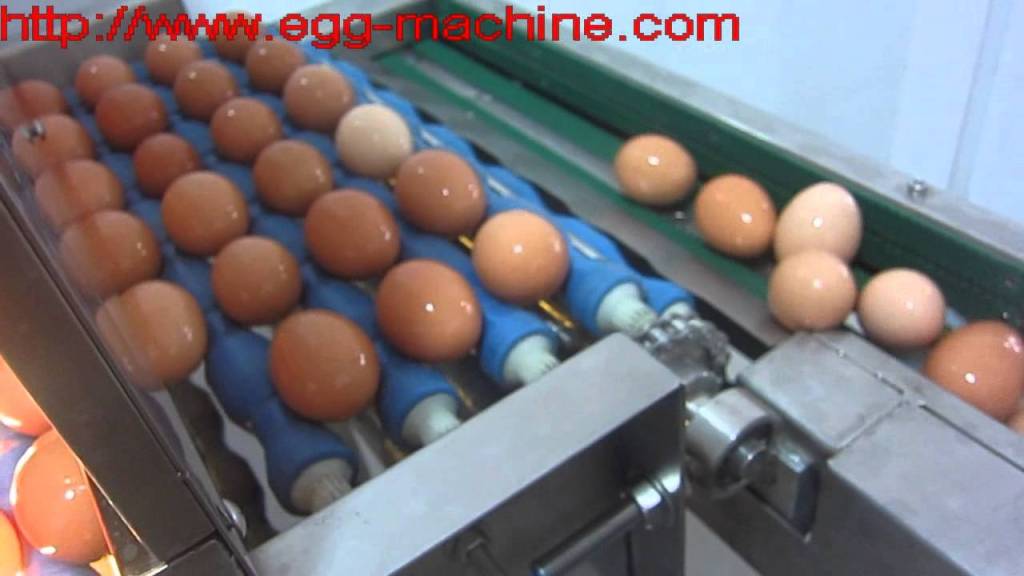
Egg washing process in the United States.

Washing eggs is not permitted within the EU and refrigeration is both completely unnecessary and strongly discouraged as it can lead to the natural protective film being breached.

The EU Regulation that covers it is:

In general, eggs should not be washed or cleaned because such practices can cause damage to the eggshell, which is an effective barrier to bacterial ingress with an array of antimicrobial properties. However, some practices, such as the treatment of eggs with ultra-violet rays, should not be interpreted as constituting a cleaning process.

Moreover, Class A eggs should not be washed because of the potential damage to the physical barriers, such as the cuticle, which can occur during or after washing. Such damage may favour trans-shell contamination with bacteria and moisture loss and thereby increase the risk to consumers, particularly if subsequent drying and storage conditions are not optimal.

Basically, it says that a thin layer on the exterior of the egg called the cuticle is damaged by washing and this opens up the egg for microbial ingress, the damage to that cuticle is why US eggs have to be refrigerated to slow down the microbial activity.

Well, so there you have it. It’s very interesting, isn’t it?