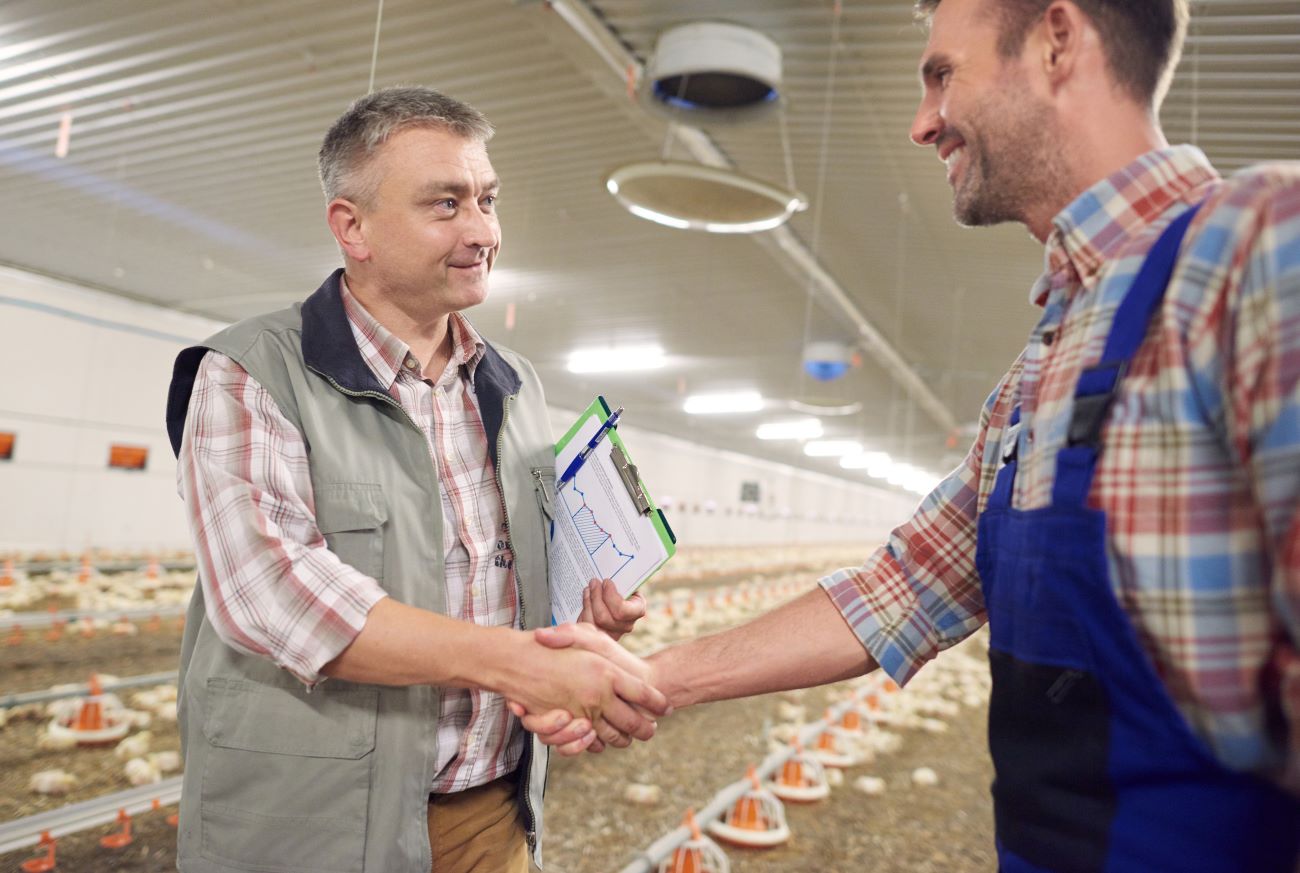
If you thought poultry farming was all about raising birds and then selling them in the end to make a profit, then you may be mistaken. Poultry farming is truly a team sport and you’ll soon find out why. Below is a list of individual or entities you should form good relations with if you are serious of succeeding as a poultry farmer.
Suppliers: The quality of your final product largely depends on the quality of the raw materials you use, therefore, it is highly imperative you find good suppliers for your day-old chicks, feed, supplements, etc. Again, cultivating a good relationship with a feed distributor could help you conserve cash flow since you may be able to purchase the items on credit.
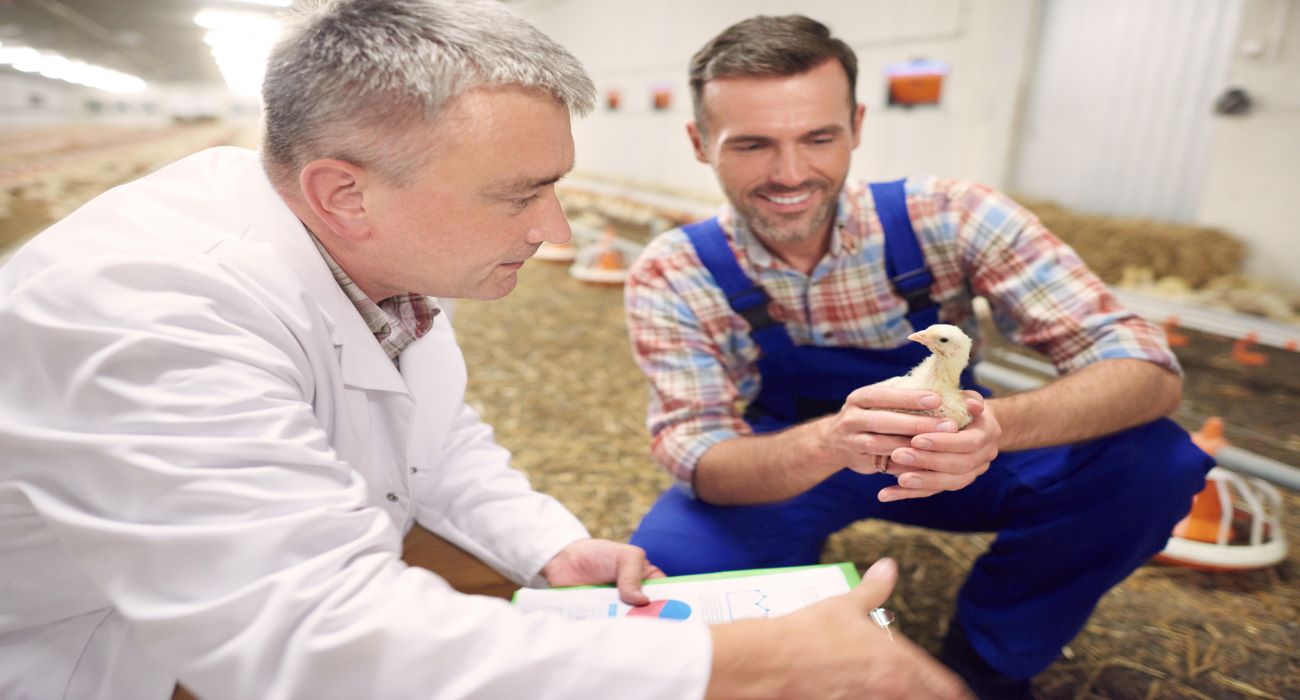
Veterinary practitioners: These experts can give you valuable tips on how to maintain good health for the birds. Sometimes the consequences of poor health don’t necessarily have to result in the death of the animals but sometimes may lead to decrease productivity – low egg-laying rate and unsatisfactory weight for meat production.
Bookkeepers and Accountants: As you might have realized by now, poultry farming is a business hence, the monetary aspect must be well catered for. Sure, in the beginning, you can handle the financials on your own but very soon the business may outgrow your ability to adequately handle its finances hence you may have to hire some experts to take charge.
Consultants: Probably animal husbandry experts or experienced poultry farmers will do for this one. They have been in the industry for quite long so they can offer you quality advice which could prevent from making certain mistakes.
Conclusion
You may not immediately afford to put together a full team for your poultry farm but you can do so gradually so that in the end you may reap the maximum rewards.
What do you think of when you see the National Theatre? Did people wake up and decide to just put up such a magnificent structure? No! Different experts from land surveyors, town planners, architects, and civil engineers to laborers were involved from the conception of the idea to the final construction of the building. The poultry industry is the same – you don’t just have that egg or chicken on your plate by accident – there are many processes that have to be carried out.
The poultry value chain involves the set of activities that are undertaken to ensure that poultry products reach the end customer. Below, I am going to describe the various stages in poultry production for both meat and eggs:
Egg Production Value Chain
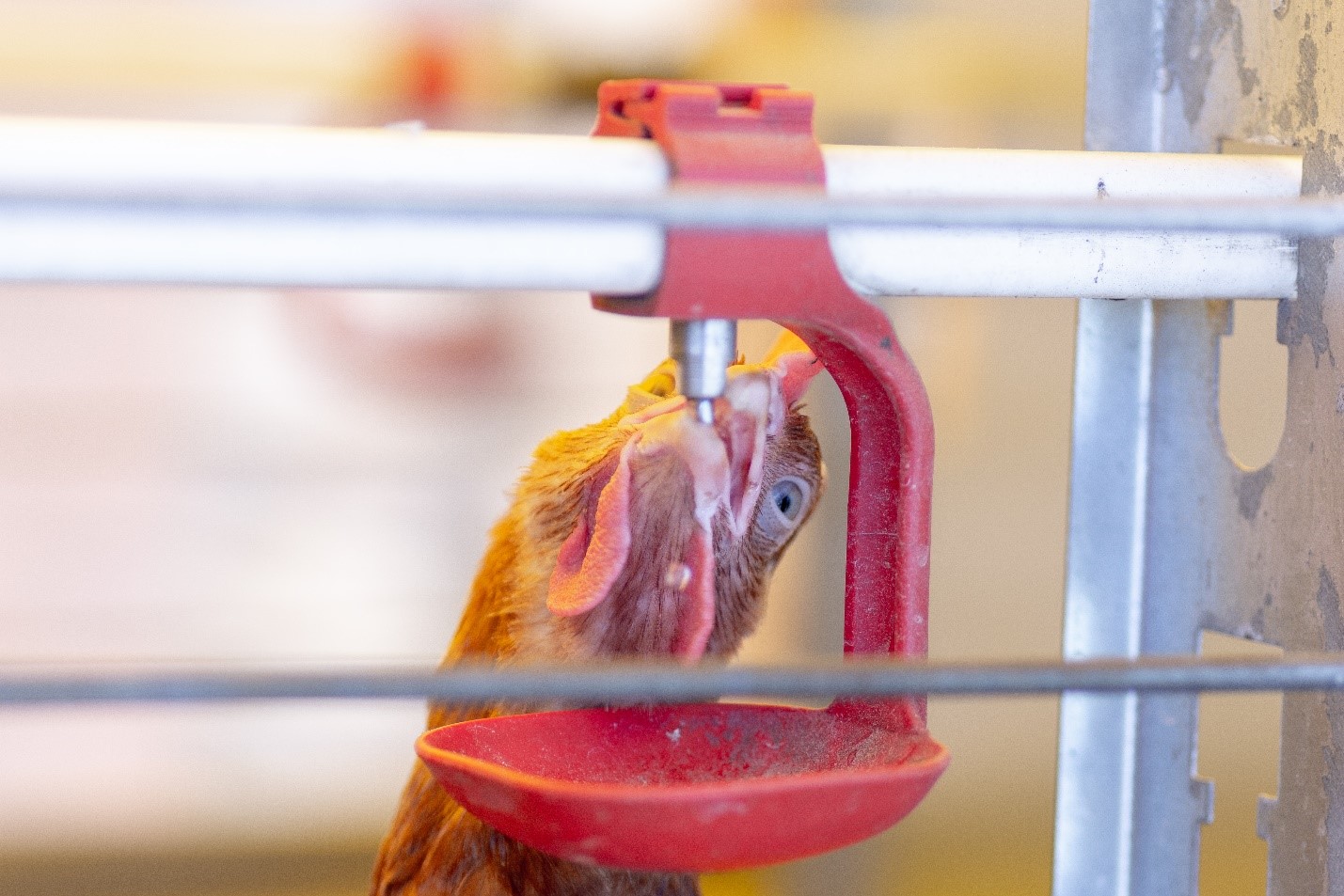
Feed production: Chickens are living organisms so they require quality nutrition to perform at optimal levels (i.e. produce more meat or lay more eggs).
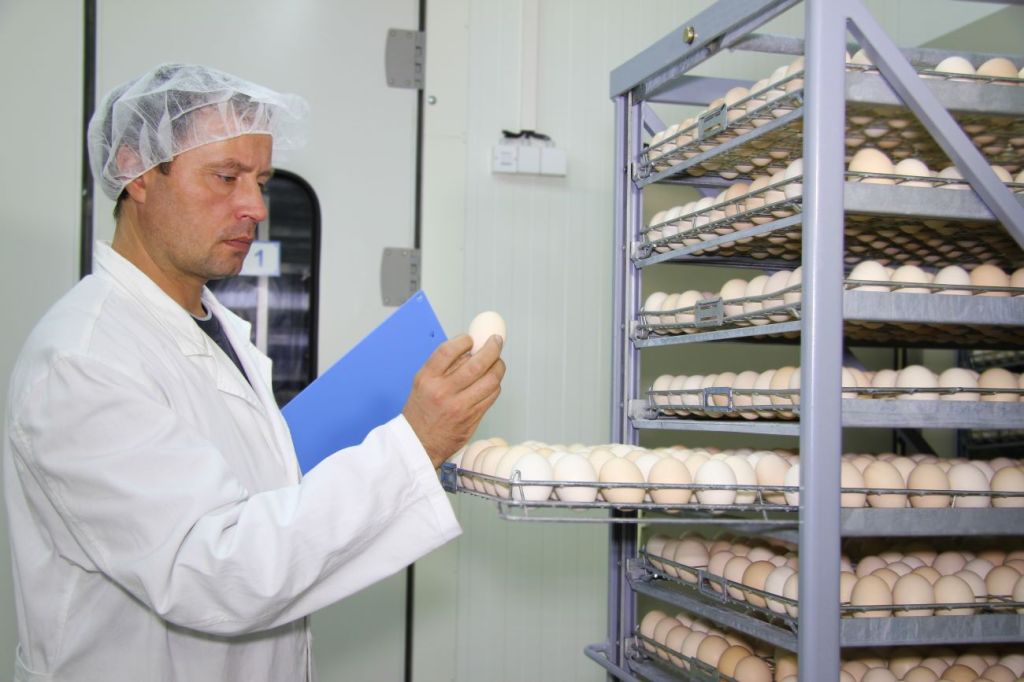
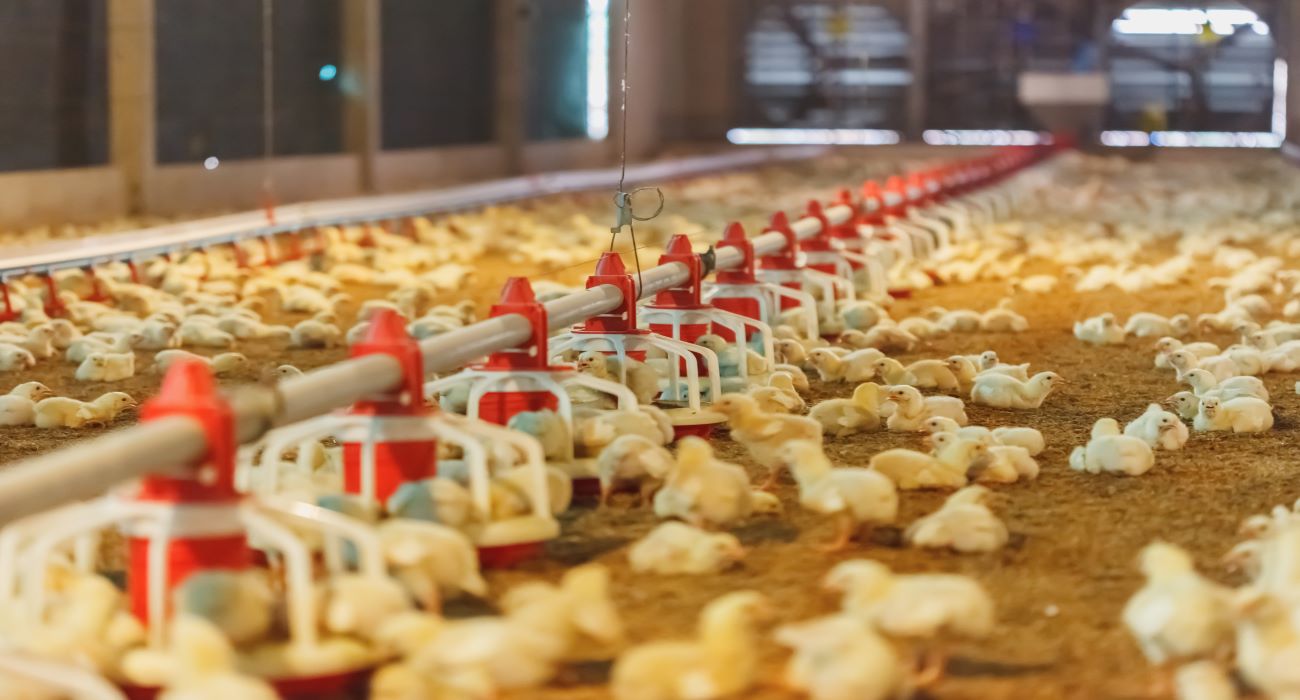
3. Hatching: After the eggs have been fertilized, they are kept under optimal temperature conditions in incubators until they are hatched. After the eggs have been hatched, they are then distributed to poultry farmers as day-old chicks.
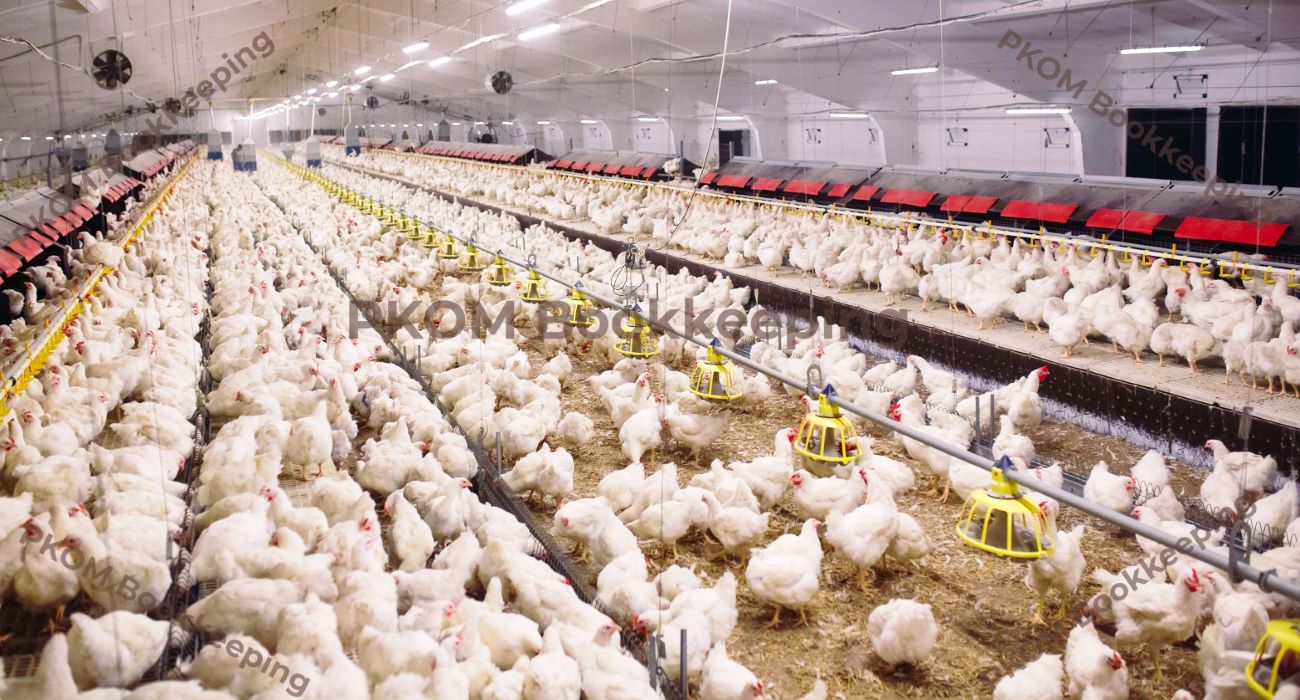
4. Poultry farming: Farmers will raise the chicks until they mature to slaughter weight or lay eggs.
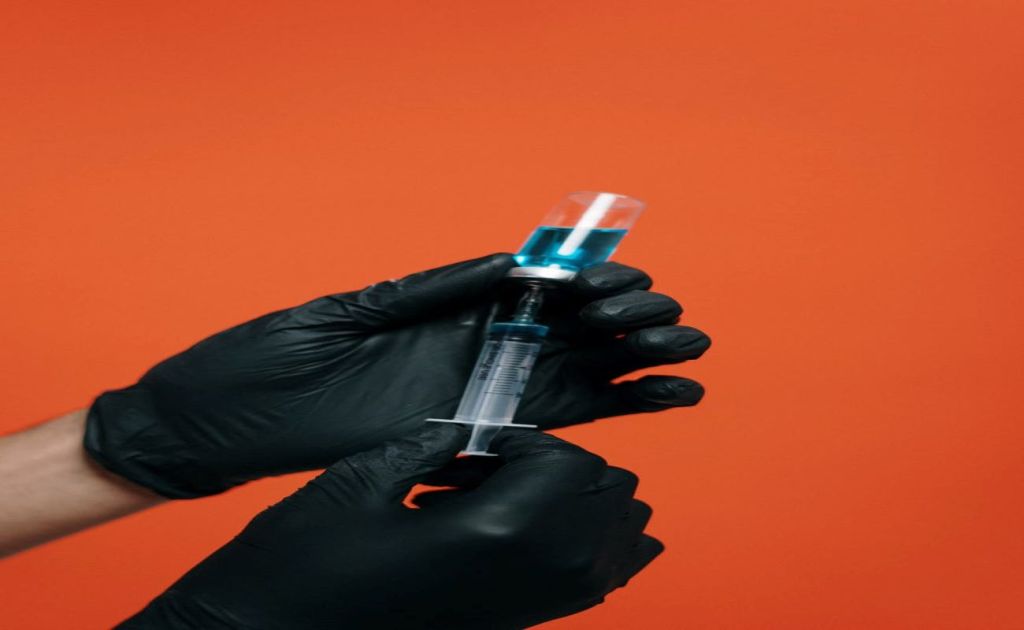
5. Vaccination: Again, chickens are living things just like us so they are also prone to infections and one way to mitigate this is by vaccinating them.
Image from Pexels Person holding a vaccine with black gloves
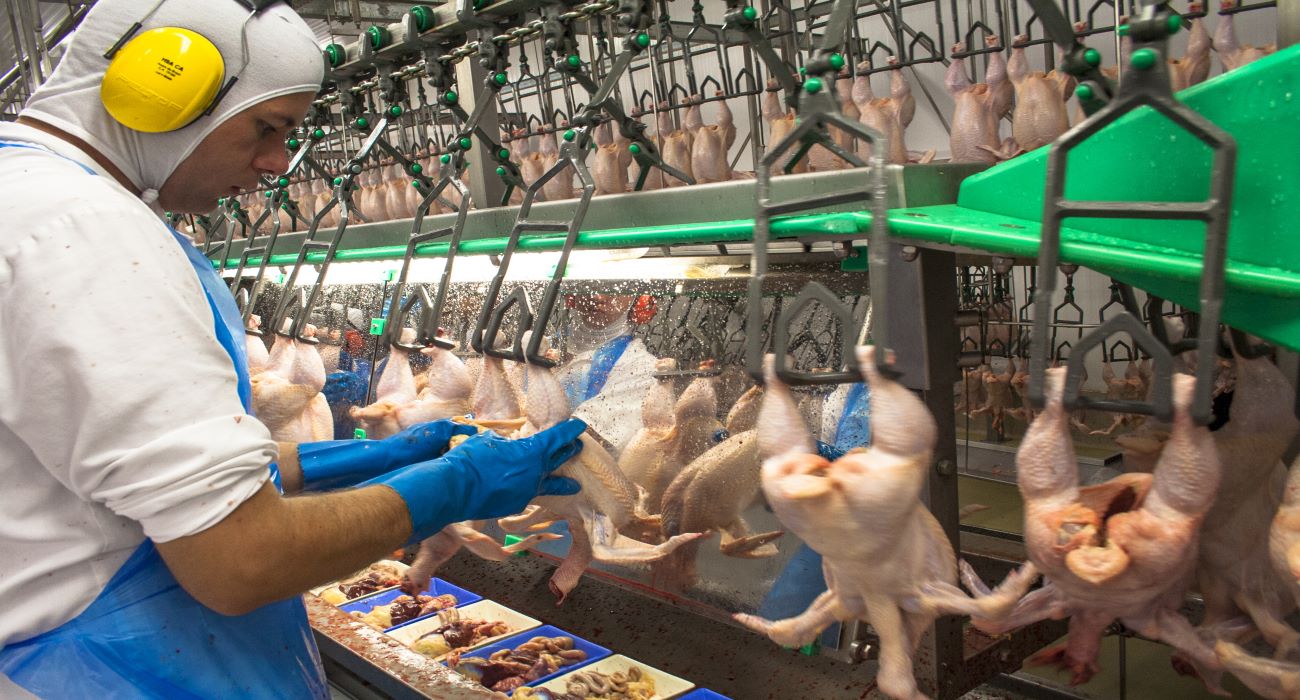
6. Packaging or Processing: After the eggs have been produced they are usually packed in crates while broilers are dressed and refrigerated.
7. Marketing: After producing the chicken or eggs, you definitely have to sell them and this is where marketing comes to play. Various strategies can be employed here like opening a cold store or egg depot or selling your products over the internet.
8. Transportation: Sometimes there may be a need to send the products directly to your customers as against them coming to your physical store location. This is especially true for online-based operations.
9. The customer finally receives the product.
Conclusion
I hope this write-up has opened your eyes to different possibilities in the poultry industry. For example, you may decide to set up an egg crate-producing factory or formulate poultry feed – all I’m trying to say is you do not necessarily need to be a farmer to reap the full benefits of the poultry industry.
If reading this article piques your interest in starting your poultry venture, it will be in your best interest to write a good business plan. Even if you don’t necessarily have the time to write your own, don’t worry. Just send us a WhatsApp message by following this link https://wa.me/233592239127. And we’ll draft a professional business plan for you at a very reasonable price.
Are you tired of too much paperwork involved in keeping records on feed, egg collection, vaccination, mortality, profit, loss, etc.? Worry no more. We are developing a software application that simplifies poultry management. Follow this link if you are interested.
Finally, are you ready to start your dream poultry farm, but don’t know how to construct the chicken house, brood the chicks, source the right materials, etc.? Just follow this link https://wa.me/233592239127 for more inquiries.
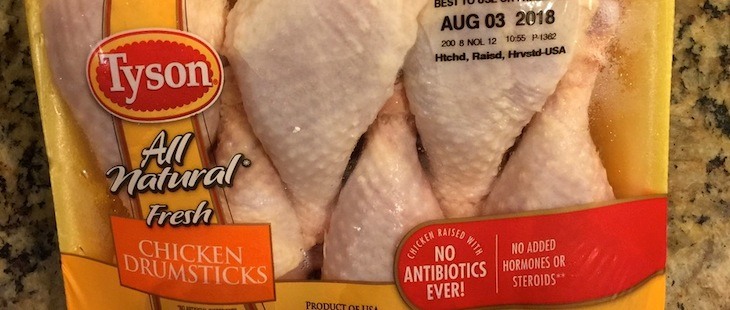
This question may seem simple to answer for you – “Oh yes ban them so that our farmers can be rich!” But things are much more complicated than they may seem.
First of all, an outright ban on the importation of products from foreign countries can be viewed as a protectionist trade policy. What is protectionism? Protectionism simply refers to government policies put in place to limit the importation of goods into a country to protect certain industries of the import-competing sectors in that country from foreign competition. In our case, what a protectionist policy such as banning the import of frozen chicken seeks to achieve is to protect local farmers and workers from losing their source of income or even in some cases increase their incomes.
Before we even think of banning the import of chicken into Ghana, let us first examine some possible reasons why Ghanaian consumers prefer imported chicken.
Perhaps, Ghanaian-reared broilers are more expensive than their imported counterparts but per that logic, wouldn’t you think Ghanaians farmers should purchase locally hatched day-old chicks over foreign ones since they (local day-old chicks) are much cheaper than those from abroad?
Let’s analyze this scenario. You need to withdraw money from a bank to purchase some household items and you have two accounts with different banks. One of the banks has enough cash in it reserves to allow you to withdraw money in bulk so that in one day you could purchase some soaps, cutlery set, kitchen utensils, and perhaps some foodstuffs all at once. On the other hand, the other bank only allows you to withdraw money once every month for 5 months, the same money you could have withdrawn in the aforementioned bank at a go – this means you can buy foodstuffs in the first month then the following month you buy utensils, then another month you buy soap. Like WTF! Do I have to wait three months before I can properly take my bath? I’m pretty sure you’d close the second account because you’ll consider it useless. This scenario can be likened to Ghana’s broiler industry. Production of broilers in Ghana is so insufficient that it barely scratches the surface of the demand.
I believe that Ghanaian broiler farmers must invest more in marketing as customer purchasing behaviour is not always dependent on pricing as was clearly illustrated by the day-old chick case study. Furthermore, any attempt to abruptly ban imports will lead to abnormally high demand and low supply which would be great for the farmers but disastrous for the consumers. The best way we can ramp up local production is through lower taxation to incentivize larger-scale operations and also, by helping farmers gain access to cheap credit (government interventions).
In short, I believe it is a bad idea to ban the importation of frozen chicken into the country. Before we even think of such a drastic measure we must first fix the underlying problems; one being the lack of proper marketing for Ghanaian chicken and the other being low production capacity.
Why are chicken vaccinations so important? Most chicken raisers ask this question, and simply assume they are unimportant.
Poultry vaccines are widely applied to prevent and control contagious poultry diseases. Their use in poultry production is aimed at avoiding or minimising the emergence of clinical disease at farm level, thus increasing production.
Vaccines and vaccination programmes vary broadly in regard to several local factors (e.g. type of production, local pattern of disease, costs and potential losses) and are generally managed by the poultry industry.
In the last decade, the financial losses caused by the major epidemic diseases of poultry (avian influenza and Newcastle disease) have been enormous for both the commercial and the public sectors.
The potential threat of disease outbreak in vaccinated poultry flocks cannot be 100% avoided but losses can be minimized to the very minimum.
Vaccination protects millions of birds from contracting contagious and deadly diseases – and have resulted in improved flocks and production efficiency. This, however doesn’t necessarily protect birds in unhygienic and unsafe environments.
Vaccines can provide benefit in terms of reducing the presence and severity of symptoms, and mortality, caused by diseases even for unvaccinated chickens. Spending on vaccines is important because failure to do so has dire ramifications.
I’m sure you’d rather lose 500 cedis on vaccines than lose birds worth over 10,000 cedis.
Vaccinations enhance immunity for birds, or at least some. Most vaccinations provide full immunity to birds where if they are exposed to the disease, they will get no illness. Some vaccinations such as the one for Gumboro Disease, give birds some immunity such that even if diseases strike their effects wouldn’t be devastating.
When you vaccinate your birds against diseases, you make the job easier for yourself in the long run. It may seem like a hassle to pay for the vaccine, do it yourself or have a vet do it, and having to be careful not to stress out your chickens, but if it prevents diseases it’s all worth your time.
It’s frustrating walking into the coop with dead, lame, paralyzed chickens. It stresses the owner out a lot, because they have to quarantine, find out what their bird(s) have, cure it, and keep them healthy in the future. All the frustration could be simply stopped by vaccinating your birds. One of the depressing parts of poultry production is to go to your farm and find a bird(s) dead. If vaccines will prevent that, why not?
Conclusion: Vaccinating your birds gives your birds good immunity to disease, prevents outbreaks of diseases, and makes the job of raising chickens easier for you. So look into vaccinations, vaccinated chicks when you get them, and keep your birds healthy!
Paper money in itself has no inherent value but it is the lifestyle that money can bring which motivates people to work for it (money) so the tendency to save money at all cost defeats the purpose of having it in the first place and even in some cases may lead to the collapse of your farm.
By now, you might be thinking, “But we do business to make money so if my business is saving money, how does it collapse?” Well, usually, a person who is totally obsessed about saving money will want the highest quality of a product or service but wouldn’t want to pay the appropriate price. To put this in perspective, this particular individual would want to extract the maximum value possible from his employees while paying them below minimum wage, mix his own feed and also, would not pay for services such as bookkeeping.
The consequences for trying to save money could be dire for instance, trying to stiff your employees of wage payment may lead to low-morale and might even encourage activities which may collapse your business such as theft and fraud. Again, trying to formulate your own feed may be risky business if you don’t have the expertise because you may expose the raw materials to pathogens which may harm your birds. Finally, not hiring a bookkeeper could cause you to lose money since you may find it difficult to track your finances.
In conclusion, all I’m trying to say is inasmuch as you’d like to keep your expenses in check, make sure you don’t compromise on quality and long term sustainability of your farm.
So, high dopamine-releasing activities such as watching porn, playing video games, watching movies, etc. make you feel good for the moment but do they give you long term happiness? The journey to success is by no means a pleasurable experience – while your mates are bingeing on Netflix, you are busy finding strategies to prevent your birds from being exposed to diseases. Again, while your contemporaries are spending the Friday night partying, you are wondering where next you are going to get money to fund your business because you’ve already invested the entirety of your salary. The doctor didn’t attend medical school to be happy but rather, to be fulfilled because he or she has the potential to positively impact the community by healing sick people. Probably, if the doctor chose to pursue happiness, he’d spend most of his medical school days on Instagram or Twitter and end up getting expelled from college for poor performance. Similarly, establishing a successful poultry farm is not easy but I’m sure you’ll forget the struggles you went through when you can now send your children to top universities and also have the admiration of everyone in your community.
In conclusion, don’t make happiness your goal in life because if you do so, you’ll pursue only short-term pleasures at the detriment of your well-being and development but rather try to take on difficult tasks that will pay dividends in the long run.
Poultry farming is a very delicate business. It requires a lot of dedication and hard work to pull off successfully and there’s no better way to run your business than by entrusting it in the care of a loved one, right? Well, maybe, maybe not.
Actually, employing a family member, for example, your brother is a double-edged sword. On the one hand, you can get a loving and dedicated worker who wants to see the farm succeed to boost the family’s image but on the other hand, you may have a parasitic individual who will steal from you and mismanage your business because after all, you are siblings so he knows you probably wouldn’t take any strong action against him.
Conclusion
All I want to say is you should always base your hiring decisions on competence not on emotions and if you happen to have a relative who is running your business to the ground, don’t hesitate to show him or her the door.
I know you might be saying this in your head, “I want to save money and grow my farm but PKOM is telling me to draw a salary from it – WTF!” But please, hear me out first. What you must understand is salaries are part of business expenses. I believe you understand that poultry farming can be pretty labour-intensive so whenever you are preparing your budget, you must make sure to include salaries even if you are the sole worker.
Benefits of drawing a salary
It provides you with a decent standard of living in the early stages: Wow! I need to eat and also a place to stay. Visionary! PKOM! Very Visionary! Enough of the sarcasm. Yes, I agree it is obvious that these necessities must be met to survive but it will shock you how many new farmers try to cut back on certain necessities in a bid to increase profitability. My brother, my sister it is far better to draw a salary of GH₵ 1,000 per month and break-even than to go without a salary and end up with GH₵ 1,000 profit.
It helps you manage your finances better: This is where drawing a salary can actually help improve your farm’s profitability. Let’s assume you take a salary of GH₵ 1500 per month from your farm’s coffers. Since you know you have a fixed amount of money to spend every month, you do not indulge in reckless spending hence your business is almost always in good financial standing but when you don’t set a fixed amount of money to spend every month, it is very difficult to keep track of the money flowing out of your business because you may have seen a nice dress which costs GH₵ 100 so you immediate withdraw money from your farm’s account another time, you hear of the release of the latest I-phone so again you withdraw money. This can go on and on and if not checked, you may ruin your business and may not even realize where all that money went.
Conclusion
Even if you are taking out a loan to start your business, allocate some portion of it to pay your salary because it is also a business expense. Also, I believe that drawing a salary will help your farm in the long run because you will learn how to separate personal expenses from those of your farm.
“Poultry farming is great and all, I get it but where I’m I going to get the money to start?” You may ask. I have already discussed how you can raise money to start but on this occasion, let us examine whether taking out a loan is the best strategy.
The moment you take out a loan is the moment you’ve admitted your first defeat – that you are incapable of running your business with your own resources, therefore, you need external intervention to keep your business afloat. With that said, a loan in itself is not inherently good or bad – like fire, it depends on when and how you utilize it.
In my opinion, taking out a loan to start a venture you understand very little about is reckless. It is better to start small and when you gain some experience, you can go for other people’s money to expand your venture.
Conclusion
Remember, starting your poultry farm in itself carries some risk so don’t exacerbate the risk by taking someone else’s money when you cannot guarantee the success of your new venture.
If reading this article piques your interest in starting your poultry venture, it will be in your best interest to write a good business plan. Even if you don’t necessarily have the time to write your own, don’t worry. Just send us a WhatsApp message by following this link https://wa.me/233592239127. And we’ll draft a professional business plan for you at a very reasonable price.
Are you tired of too much paperwork involved in keeping records on feed, egg collection, vaccination, mortality, profit and loss, etc.? Worry no more. We are developing a software application that simplifies poultry management. Follow this link if you are interested.
Finally, are you ready to start your dream poultry farm, but don’t know how to construct the chicken house, brood the chicks, source the right materials, etc.? Just follow this link https://wa.me/233592239127 for more inquiries.
Most people establish poultry farms to make money and for very good reasons however, many of them get distracted and move on to the next “shiny thing.” You see, poultry farming requires a lot of dedication and hard work so some people might view it as a waste of time and energy if they have a “get rich quick” mindset. Without much ado, let me jump straight to 4 reasons why you should invest in poultry farming.
Income generation
No doubt about it, poultry farming is a great source of generating income. For instance, with just 500 cedis you could raise 100 broilers for 6 weeks before you put them up for sale. Typically, a 6 weeks old broiler is sold for around GHS 30 or GHS 35.
Employment
If you dream of becoming your own boss, then poultry farming provides an excellent avenue for you to achieve just that. Trust me, there are so many activities likes brooding, vaccination, debeaking, etc involved with poultry farming so be rest assured that there is never going to be a dull moment.
Poultry farming is a continuous source of income
Poultry farming generates income continually either daily, weekly or monthly. How? For instance, if you invest in layers you could be making money daily from the sale of eggs. You could also win a contract from a school or restaurant where they would pay you weekly or monthly but be careful not to put all your eggs in one basket, try your best to diversify your customer base as much as possible.
Poultry droppings serve as a natural fertilizer
This is another point I want us to examine very well. Did you know you could sell chicken droppings? Yeah, bird poop literally. Of course, you can. How? Vegetable farmers need this product you regard as waste to nourish their plants which explains the demand for chicken droppings.
Conclusion
By now, you would have realized that investing in poultry farming could prove to be a very good decision. If you do things correctly, I can assure you that you are not going to regret entering into this massive industry (poultry farming).


 Pkom
Pkom 