
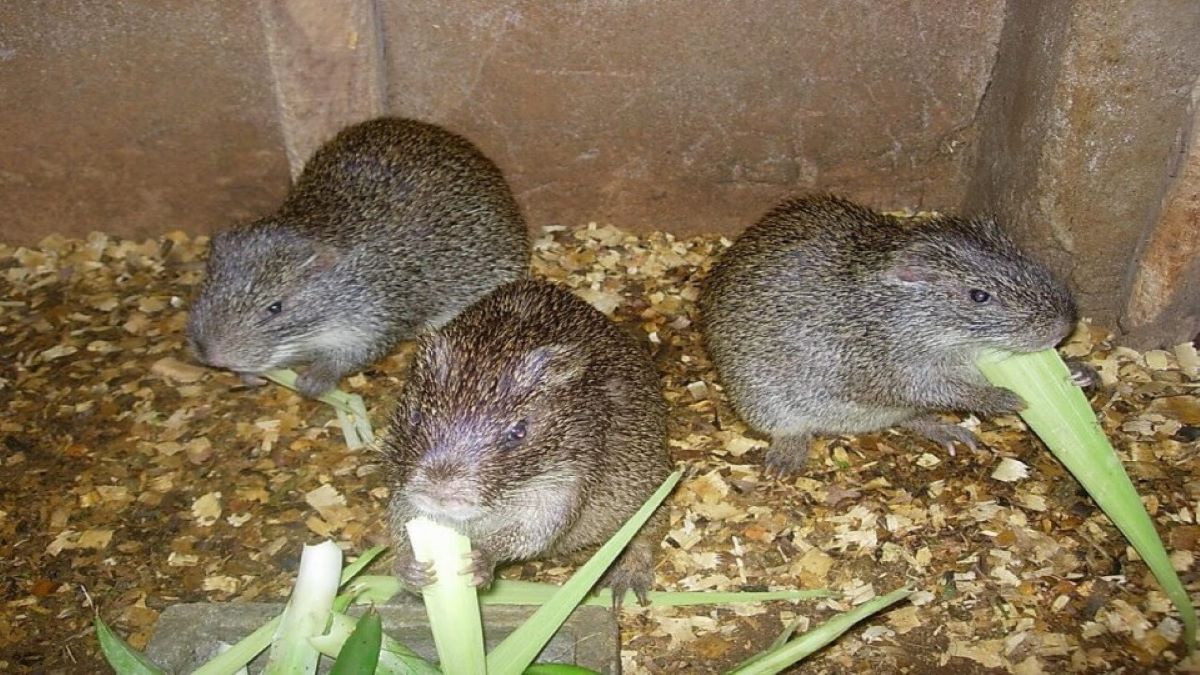
Image source: agricdemy.com
According to numerous studies, grasscutter farming is one of the most lucrative forms of livestock production in Ghana. Furthermore, many people agree that its profitability is comparable to poultry farming. Judging from how grasscutter meat is one of the most popular “bush meats” on the menu of many local restaurants (“chop bars”) in Ghana, it is not hard to see why grasscutters can be so lucrative to rear. Mind you, the meat of this animal is considered a delicacy. Therefore, their prices don’t come cheap, especially in urban areas. With a breeding stock of one buck (male grasscutter) and four does (female grasscutters), a farmer can produce as much as 40 grasscutters in a year. Hence assuming your farm experiences a 15% mortality rate, you now have 34 grasscutters you could potentially sell in a year. Therefore, assuming each grasscutter goes for GH₵ 300.00, you could make a revenue of GH₵ 10,200.00 in a year.
Now that we have understood grasscutter farming’s potential to be very lucrative, let’s jump straight into how much money you need to set up such a farm.
NB: The intended duration of this budget is 12 months, and is also based on a breeding stock of one buck and four does.
1. Breeding stock: This is the most important aspect of the budget. The size of the grasscutter housing, amount of feed (concentrate) to be purchased and labour requirements all depend on this single aspect. For our budget, we are starting with a breeding stock of 1 male and 4 females (all at 5 months old). You can get a 5-month-old grasscutter for around GH₵ 180. Therefore, in total, our breeding stock will set us back at GH₵ 900.00.
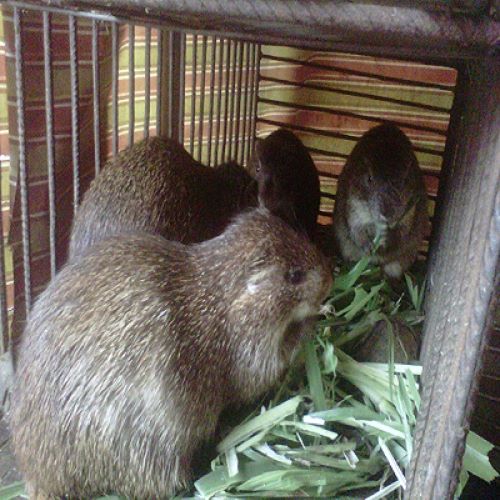
Image source: nairaland.com
2. Cages: For this budget, we will utilize an already-made cage with about 15 rooms (the room mentioned here can accommodate a family of one sexually mature male and four sexually mature females). Remember, our breeding stock is expected to reproduce (each female can produce as many as five offspring at a go). Therefore, we need to acquire a tiered cage system that can accommodate their offspring. So for the cage, let’s budget GH₵ 2000.00.
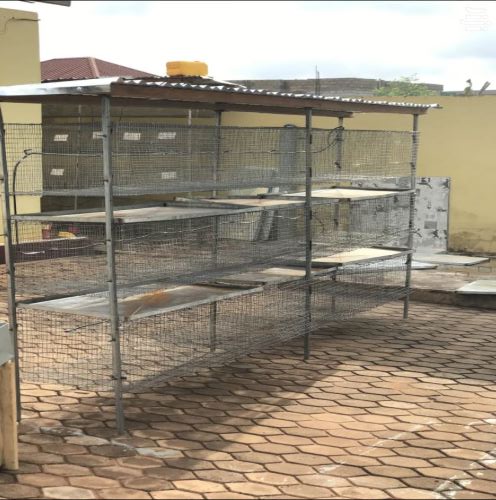
Image Source: http://www.jiji.com
3. Feed: Because grasscutters feed on forage (for example, elephant grass), their feed can usually be found around your surroundings. But remember, when grasscutters are in the wild, they do not consume only grasses. They also consume sugar cane, cassava tubers, oil palm, fresh groundnut hull, etc. They consume these feeds for extra protein, minerals and vitamins. Therefore, if you are keeping grasscutters in captivity, and you feed them with only grass, they’ll likely not grow to their full potential. At the end of the 1st year, our initial breeding stock of five grasscutters may have produced an additional 20 grasscutters. Our grasscutters will consume around 389.2 kg of concentrate (feed made up of a mix of groundnuts, maize, oyster shells and wheat bran to supplement the animals’ regular grass diet). The total amount to be spent on the concentrate is expected to be GH₵ 878.00.
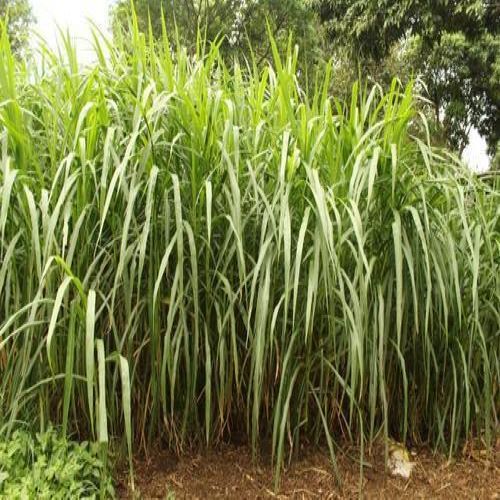
Image Source: Bing images.
4. Labour: According to research, it only takes around 10 minutes to tend to one grasscutter in a flock per day. Looking at the best-case scenario, i.e. the females get pregnant after one month of rearing them, we are going to have to wait another five months before they give birth. Therefore, in the first six months of operations, only around 50 minutes of work is required per day. But during the rest of the year, around 250 minutes of work will be required to be done on the farm since each female could produce five offspring each. Assuming you pay a worker GH₵ 2.50 for every hour of work done in the first six months, you are expected to spend only around GH₵ 375.00 on labour. For the remainder of the year, around GH₵ 1,875.00 is expected to be spent on labour. Therefore, our budget for labour for the first year will be GH₵ 2,250.00.
5. Veterinary: Grasscutters are generally disease-resistant in the wild. However, when they are being crowded on a farm, health issues may arise. So every now and then, there may be a need to visit the Veterinary Services. For the first year, we’ll set a budget of GH₵ 300.00 for this purpose.
6. Miscellaneous: During the course of production, we may encounter some unforeseen expenses. Therefore, we will set aside GH₵ 500.00 for this purpose. I didn’t include the cost of feeders and drinkers in the budget because many of these already made cages come with them (feeders and drinkers) already fixed. However, if your cage doesn’t come with them, then the miscellaneous budget may cover that cost.
In a nutshell, if you intend to start a backyard grasscutter farm with a breeding stock of one buck and four does, all you need as startup capital is around GH₵ 6,828.00 for the first 12 months. This amount could be further reduced if you take care of the animals yourself, thereby eliminating labour costs. So without labour costs, you could invest as little as GH₵ 4,578.00 to start this kind of grasscutter farm.
Now that you have an idea about the startup capital involved in starting a grasscutter farm, you may also want to know the potential returns you may obtain over five years. Contact us for a professional business plan that can provide you with this information. All you need to do is send us a WhatsApp message or call us on +233592239127.
 Pkom
Pkom 
Is my pressure to make a large farms of animals. I really likes animals especial grass cutters
LikeLike